EdX

Electricity Distribution (edX)

Electricity Distribution (edX)

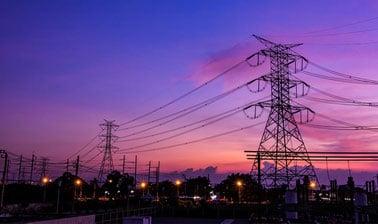
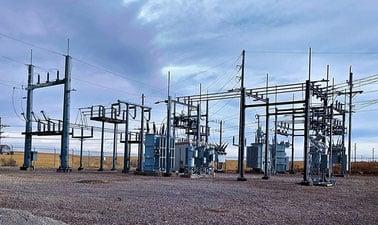
This course is designed like a field trip. Let’s travel together around the world, visiting solar farms, substations, and transformer rooms! Learn how to identify major components in electrical substations, learn about 3-phase electricity, and all about the ins and outs of electrical grids. We cover generation, transmission, and distribution. Welcome!

Class Deals by MOOC List - Click here and see EdX's Active Discounts, Deals, and Promo Codes.

In this class, learners will learn all about electricity infrastructure, including electricity generation, transmission, use and safety. The focus is on actual installations, so students can learn about electrical substations, 3-phase power distribution, typical power plant voltages, large transformers, as well as single-phase, split-phase, and 3-phase circuit breaker boxes and wiring setups found around the world. Learners will understand the importance of AC in an electricity grid, as well as grounding/earthing, pole transformer setups, as well as residual current/ground fault interrupt and safety setups and lightning protection.

What you'll learn
At the end of this MOOC, the learner will be able to discuss:

  • Wire gauge
  • Why AC is generally used for transmission instead of DC
  • Why three phase is used and how to calculate line and phase voltages
  • Circuit breakers, metering, fuses, lightning rods, residual current/GFCI devices, and grounding rods
  • Star and delta transformers and electrical substation layout
  • The electricity grid, and how it is generally designed
  • Split phase, single phase, 2-phase, and 3-phase consumer units/breaker boxes
  • How power is injected into the grid
  • Typical grid voltages and power plant capacities
  • Grid challenges with renewables, power output from solar farms

Syllabus

Week 1: Introduction (4 videos)
Week 2: Circuit Breakers and Residual Current Devices (7 videos)
Week 3: Polyphase power (6 videos)
Week 4: 3-phase transformers (3 videos)
Week 5: Split-phase power (3 videos)
Week 6: Electricity generation (5 videos)
Week 7: Electricity distribution (6 videos)

Go to Class
MOOC List is learner-supported. When you buy through links on our site, we may earn an affiliate commission.

Related Courses

Electricity and Magnetism: Maxwell’s Equations (edX) EdX
MIT,MITx

Electricity and Magnetism: Maxwell’s Equations (edX)

In this final part of 8.02, we will cover Faraday’s Law, Circuits with Inductors, Maxwell’s equations, and electromagnetic radiation. This introductory Electromagnetism physics course will require the use of calculus. Electricity and Magnetism dominate much of the world around us – from the most fundamental processes in nature to cutting edge electronic devices.

Self Paced
Self-Paced
Circuits and Electronics 3: Applications (edX) EdX
MIT,MITx

Circuits and Electronics 3: Applications (edX)

Learn about cool applications, op-amps and filters in the design of microchips used in smartphones, computers, and the internet. Want to learn how your radio works? Wondering how to implement filters using resistors, inductors, and capacitors? Wondering what are some other applications of RLC and CMOS circuits? This free circuit course, taught by edX CEO and MIT Professor Anant Agarwal and MIT colleagues, is for you.

Self Paced
Self-Paced
Solar Energy: Photovoltaic (PV) Technologies (edX) EdX
Delft University of Technology,DelftX

Solar Energy: Photovoltaic (PV) Technologies (edX)

Explore the main PV technologies in the current market. Get in-depth knowledge on the design and processing methods of solar cells. The technologies used to produce solar cells and photovoltaic modules are advancing to deliver highly efficient and flexible solar panels. In this course you will explore the main PV technologies in the current market.

Self Paced
5-12 Weeks
Electricity and Magnetism: Magnetic Fields and Forces (edX) EdX
MIT,MITx

Electricity and Magnetism: Magnetic Fields and Forces (edX)

Learn how charges create and move in magnetic fields and how to analyze simple DC circuits in this introductory-level physics course. Electricity and Magnetism dominate much of the world around us – from the most fundamental processes in nature to cutting edge electronic devices. Electric and magnet fields arise from charged particles. Charged particles also feel forces in electric and magnetic fields. Maxwell’s equations, in addition to describing this behavior, also describes electromagnetic radiation.

Self Paced
Self-Paced
Solar Resource Assessment in Desert Climates (edX) EdX
Hamad Bin Khalifa University - HBKU,HBKUx

Solar Resource Assessment in Desert Climates (edX)

Learn how to use the components of solar radiation, solar spectrum, forecasting and meteorology to advocate and plan for deploying PV in desert climates. Desert regions may seem optimal for solar energy and the deployment of photovoltaic (PV) applications. However, the heat and dust experienced in the region poses a challenge for the optimal performance of PV modules and reliability of the applications.

Self Paced
Self-Paced
Solar Energy: Photovoltaic (PV) Energy Conversion (edX) EdX
Delft University of Technology,DelftX

Solar Energy: Photovoltaic (PV) Energy Conversion (edX)

Learn how solar cells generate electricity, and about the semiconductor physics and optics required to design and manufacture solar cells. The key factor in getting more efficient and cheaper solar energy panels is the advance in the development of photovoltaic cells. In this course you will learn how photovoltaic cells convert solar energy into useable electricity. You will also discover how to tackle potential loss mechanisms in solar cells.

Self Paced
5-12 Weeks
The Mechatronics Revolution: Fundamentals and Core Concepts (edX) EdX
Georgia Institute of Technology,GTx

The Mechatronics Revolution: Fundamentals and Core Concepts (edX)

In this course, students will learn to harness the power of microcontrollers, sensors, and actuators to build useful and interesting robotic devices. The Mechatronics Revolution is upon us. Never before has it been easier to build robotic devices and computer-controlled machines. The confluence of low-cost embedded computers, sensors, and actuators has made experimentation and prototyping easier than ever.

Self Paced
Self-Paced
Solar Energy 3 (edX) EdX
Delft University of Technology,DelftX

Solar Energy 3 (edX)

Solar photovoltaics (PV) is the cheapest source of electricity in many parts of the world. Learn to both design a complete PV system and to perform technical and economic assessments for PV systems ranging from large solar farms to residential systems. In the third course of the program Solar Energy, you will learn to design a complete photovoltaic (PV) system for any application and location, from utility scale solar farms to residential scale systems. For these scales, both grid-connected and stand-alone solutions will be examined.

Self Paced
Self-Paced