EdX

Real-Time Bluetooth Networks - Shape the World (edX)

Real-Time Bluetooth Networks - Shape the World (edX)

Learn the design fundamentals of a real-time operating system (RTOS) and how to build a Bluetooth network in this hands-on project-based course. The increased demand by consumers and businesses for more utility, connectivity and smarter and more efficient electronic technology not only creates a need for more embedded systems but also for engineers in the embedded systems field.

Class Deals by MOOC List - Click here and see EdX's Active Discounts, Deals, and Promo Codes.

In this lab-based computer science course, explore the complexities of embedded systems and learn how to develop your own real-time operating system (RTOS) by building a personal fitness device with Bluetooth connectivity (BLE). An operating system (OS) is a software system that computers use to manage the resources of a computer. The OS decides which tasks are performed when and decides how resources are utilized. Simple embedded systems, which are a combination of electrical, mechanical, chemical, and computer components designed to perform a dedicated function, originally did not need an OS. However, as embedded systems have evolved, so have their complexities. To manage this, an RTOS is now required.
Embedded systems are often deployed in safety-critical situations such as automotive, military, industrial, and medical applications. In applications such as communications and consumer electronics, response time and processing speed are important. A real-time system not only needs to arrive at the correct answer, but must also get the correct answer at the correct time. A RTOS manages a computer's resources so that tasks are performed in a timely mannner.

In this computer science course, students will learn the design fundamentals of an RTOS from the bottom up and use these fundamentals to build practical real-time applications. We will provide a board support package (BSP), so students will be able to focus on the RTOS and Bluetooth network without needing prior experience in circuits and I/O device driver software. This is a hands-on project-based lab course, where you will incrementally build a personal fitness device with Bluetooth connectivity.
This course is intended for students and professional engineers wishing to improve their skills in the fields of embedded systems, product development, computer architecture, operating systems, and Bluetooth networks.
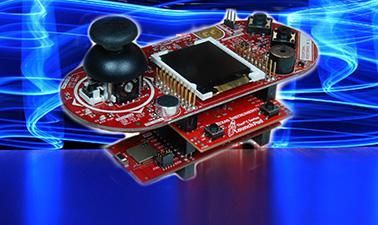
To complete this course, you will need to purchase a lab kit including a microcontroller board, an I/O board, and a Bluetooth module.

What you'll learn:

  • Enhance your embedded system skills
  • Write your own real-time operating system
  • Design, develop and debug C code
  • Implement a personal fitness device
  • Communicate using Bluetooth

Course Syllabus

Lab 1) Introduction to I/O using the BSP and debugging

  • Learn about Keil compiler and debugger
  • Understand what the MK-II boosterpack measures
  • Learn how to perform timing profiles of the software system

Lab 2) Thread management for a personal fitness device

  • Multiple threads
  • Real-time periodic threads
  • Spinlock semaphores
  • Round robin scheduler

Lab 3) Thread synchronication and scheduling for a personal fitness device

  • Timer-based real-time threads
  • Thread sleeping
  • Blocking semaphoresr with first come, first serve scheduler

Lab 4) Real-time operating system for a hand-held video game

  • Edge triggered interrupts
  • Blocking semaphores with priority scheduler

Lab 5) File system using the flash ROM of the microcontroller

  • Logging data onto flash/playback of data

Lab 6) Bluetooth personal area network

  • Interacting with the device from a smart phone

Go to Class
MOOC List is learner-supported. When you buy through links on our site, we may earn an affiliate commission.

Related Courses

Internet of Things: Communication Technologies (Coursera) Coursera
University of California, San Diego

Internet of Things: Communication Technologies (Coursera)

Have you wondered how “Things” talk to each other and the cloud? Do you understand the alternatives for conveying latency-sensitive real time data versus reliable signaling data? Building on the skills from the Sensing and Actuation course, we will explore protocols to exchange information between processors.

Oct 5th 2026
4 Weeks
Introducción al Internet de las Cosas (edX) EdX
Galileo University,GalileoX

Introducción al Internet de las Cosas (edX)

Prácticamente cualquier objeto puede conectarse al Internet. Desde lavadoras hasta componentes sofisticados de aviones y aún cultivos inteligentes. La habilidad de conectar cosas y capturar información útil está transformando a las organizaciones en cada sector de la industria y está abriendo nuevas especializaciones de carrera. Descubre esto y más en este curso de introducción al internet de las cosas.

Self Paced
Self-Paced
Architecting Smart IoT Devices (Coursera) Coursera
EIT Digital

Architecting Smart IoT Devices (Coursera)

This course will teach you how to develop an embedded systems device. In order to reduce the time to market, many pre-made hardware and software components are available today. You'll discover all the available hardware and software components, such as processor families, operating systems, boards and networks. You'll also learn how to actually use and integrate these components.

Sep 21st 2026
5-12 Weeks
Build Your First Internet of Things (IoT) Application on Arm (edX) EdX
Arm Education,ArmEducationX

Build Your First Internet of Things (IoT) Application on Arm (edX)

Learn to build functional IoT solutions such as an environmental sensor and an activity monitor that you can feature in your CV or portfolio of work - showcasing your skills to peers, professors or prospective employers. Arm technology powered the smartphone revolution, and now it’s helping power the Internet of Things (IoT). This online course will provide beginners with an accelerated path to gain the knowledge necessary to thrive in a world transformed by innovations in IoT.

Self Paced
Self-Paced
Social and Economic Networks: Models and Analysis (Coursera) Coursera
Stanford University

Social and Economic Networks: Models and Analysis (Coursera)

Learn how to model social and economic networks and their impact on human behavior. How do networks form, why do they exhibit certain patterns, and how does their structure impact diffusion, learning, and other behaviors? We will bring together models and techniques from economics, sociology, math, physics, statistics and computer science to answer these questions.

Sep 28th 2026
5-12 Weeks
Development of Real-Time Systems (Coursera) Coursera
EIT Digital

Development of Real-Time Systems (Coursera)

This course is intended for the Master's student and computer engineer who likes practical programming and problem solving! After completing this course, you will have the knowledge to plan and set-up a real-time system both on paper and in practice. The course centers around the problem of achieving timing correctness in embedded systems, which means to guarantee that the system reacts within the real-time requirements.

Sep 21st 2026
5-12 Weeks
Cybersecurity Fundamentals (edX) EdX
Rochester Institute of Technology,RITx

Cybersecurity Fundamentals (edX)

Learn cybersecurity fundamentals, including how to detect threats, protect systems and networks, and anticipate potential cyber attacks. In this introduction to the field of computing security, you will be given an extensive overview of the various branches of computing security. You will learn cybersecurity concepts, issues, and tools that are critical in solving problems in the computing security domain.

Aug 17th 2026
5-12 Weeks
Blockchain Scalability and its Foundations in Distributed Systems (Coursera) Coursera
The University of Sydney

Blockchain Scalability and its Foundations in Distributed Systems (Coursera)

Blockchain promises to disrupt industries once it will be efficient at large scale. In this course, you will learn how to make blockchain scale. You will learn about the foundational problem of distributed computing, consensus, that is key to create blocks securely. By illustrating limitations of mainstream blockchains, this course will indicate how to improve the technology in terms of security and efficiency. In particular, this course will help you: understand security vulnerabilities of mainstream blockchains; design consensus algorithms that tolerate attacks, and; design scalable blockchain systems.

Sep 28th 2026
5-12 Weeks
Internet of Things: How did we get here? (Coursera) Coursera
University of California, San Diego

Internet of Things: How did we get here? (Coursera)

It is hard to imagine life without your Smartphone – you have come to rely on it so much – for your work; to stay in touch with family and friends; to capture and share those special moments; to find your way around in a new neighborhood. Did you ever wonder how and when all this happened? Or how and when GPS sensors came to be in your cell phone?

Sep 21st 2026
2 Weeks
IoT Networks and Protocols (edX) EdX
Curtin University,CurtinX

IoT Networks and Protocols (edX)

Learn about IoT networks and the protocols and standards associated with the Internet and how these apply to the IoT. The Internet of Things (IoT) is expanding at a rapid rate, and it is becoming increasingly important for professionals to understand what it is, how it works, and how to harness its power to improve your business.

Self Paced
Self-Paced
Microcontroller Applications with RISC-V (edX) EdX
Linux Foundation,LinuxFoundationX

Microcontroller Applications with RISC-V (edX)

Create simple embedded applications with a RISC-V microcontroller using a user-friendly integrated development environment (IDE). This course provides some basic experience in designing and developing deeply embedded bare metal applications using a microcontroller with a RISC-V core. The course is the first step to creating embedded systems using a host of new microcontrollers that use an open instruction set architecture (ISA) as an alternative to a proprietary option.

Self Paced
Self-Paced