EdX

Embedded Systems Essentials with Arm: Get Practical with Hardware (edX)

Embedded Systems Essentials with Arm: Get Practical with Hardware (edX)

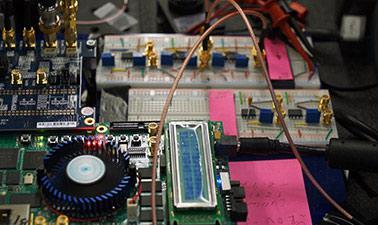
Spark your creativity with Arm. Level up your Embedded Systems skills by developing working embedded prototypes using the Mbed API and an Arm-based development board, and unlock the boundless opportunities of the Internet of Things. Embedded systems are the fundamental building blocks of our connected world, and Arm-based devices are the industry standard. This course will provide you with the practical skills and confidence to build your own embedded system using the popular and affordable ST Nucleo F401RE development board.

Class Deals by MOOC List - Click here and see EdX's Active Discounts, Deals, and Promo Codes.

Connected home appliances, biomedical devices, autonomous vehicles and IoT applications all rely on real-time operating systems (RTOS) to manage multiple digital and analog inputs, and efficient communication protocols to handle the transfer of data between peripherals and a microcontroller. By enrolling in Embedded Systems Essentials with Arm: Get Practical with Hardware , you will discover why these are powerful tools for any aspiring Embedded Systems designer.
You’ll begin by obtaining an understanding of the basic principles of serial data communication and learn how to implement synchronous and asynchronous serial links on the ST Nucleo F401RE board. You’ll then be introduced to the powerful multitasking capabilities of RTOS. Using this new-found knowledge, you'll discover how to manage microcontroller peripherals in a concurrent manner, utilizing threads and other RTOS capabilities.
Along the way, you'll get access to practical lab exercises using the ST Nucleo F401RE board , so you can obtain real-world experience in implementing these key concepts on an Arm-based microcontroller.
This is the 2nd course in our Embedded Systems Essentials Program. The 1st course – Embedded Systems Essentials: Getting Started – focuses on using a simulated microcontroller using the Mbed API. In this second course, you’ll get hands-on experience working with a development board building embedded systems applications, and it can be taken independently of the first.
As we continue to create increasingly complex IoT applications, driven by the advances of Artificial Intelligence and 5G, the next generation of developers will need to have a practical understanding of these processes on Arm-based microcontrollers. Upon completion of this course, you will have taken your next step into the exciting future of computing.
This course is part of the Embedded Systems Essentials with Arm Professional Certificate.

What you'll learn

  • Learn key serial communication protocols used in the embedded environment including SPI, UARTs and I2C; evaluating their benefits and limitations.
  • Learn the features of a Real-time Operating System (RTOS) and how it facilitates multitasking in an embedded system.
  • Develop working embedded prototypes using the Arm Mbed API, the ST Nucleo F401RE board and low cost parts.
  • Learn hardware and software theory, immediately applied in practice.
  • Apply your knowledge to create a user interface, temperature sensing system, and music player - with ideas to develop each further.
  • Apply threads, mutex, semaphores and interrupts to write a fully-functioning multitasking program.
  • Learn deeper programming skills with C/C++, applying these to use of the powerful Mbed API.
  • Learn staged circuit development and troubleshooting skills.
  • Experience working with component data sheets to seek out and apply essential technical detail.
  • Gain a firm foundation to move towards more complex programming, distributed sensing and the IoT, through critical evaluation of systems developed

Syllabus

Introduction to Serial Communications
Understand the principles of simple serial data communication serial links using the Mbed API.

Further Serial Communications
Recognise the benefits of enhanced example serial data links and learn how to select their preferred application.

Introductory Real-Time Operating Systems (RTOS)
Understand the features of an RTOS and implement simple examples using Mbed.

Further RTOS
Understand and implement features of an RTOS which facilitate multitasking.
Go to Class
MOOC List is learner-supported. When you buy through links on our site, we may earn an affiliate commission.

Related Courses

Introduction to Software Defined Networking (edX) EdX
Curtin University,CurtinX

Introduction to Software Defined Networking (edX)

Learn and apply practical skills in Software Defined Networking for IoT applications. During the past decade we have witnessed a phenomenal growth in Industrial IoT applications (IIoT) and autonomous systems. This has resulted in a paradigm shift in the networking domain. As a networking professional, it is essential to understand how traditional networking has evolved into Software Defined Networking.

Self Paced
Self-Paced
Internet of Things: Communication Technologies (Coursera) Coursera
University of California, San Diego

Internet of Things: Communication Technologies (Coursera)

Have you wondered how “Things” talk to each other and the cloud? Do you understand the alternatives for conveying latency-sensitive real time data versus reliable signaling data? Building on the skills from the Sensing and Actuation course, we will explore protocols to exchange information between processors.

Oct 5th 2026
4 Weeks
Open Source and the 5G Transition (edX) EdX
Linux Foundation,LinuxFoundationX

Open Source and the 5G Transition (edX)

Open source software and standards are driving the transition to 5G, AI and IoT. Learn what open source technologies matter most and why. 5G networks are being built with open source software and standards. Operators and vendors are integrating these technologies on an unprecedented level in order to realize the promise of 5G. Open source allows operators to experiment with business models and deliver new services, and it allows businesses to derive more value from their neworkarchitecture.

Self Paced
Self-Paced
Capstone: Autonomous Runway Detection for IoT (Coursera) Coursera
EIT Digital

Capstone: Autonomous Runway Detection for IoT (Coursera)

The students will develop a larger system using the learning outcomes from these courses, and the students will evaluate the developed system in a real-world programming environment. This course is a true engineering task in which the student must, not only implement the algorithm code, but also handle the interfaces between many different actors and hardware platforms.

Oct 5th 2026
3 Weeks
Introducción al Internet de las Cosas (edX) EdX
Galileo University,GalileoX

Introducción al Internet de las Cosas (edX)

Prácticamente cualquier objeto puede conectarse al Internet. Desde lavadoras hasta componentes sofisticados de aviones y aún cultivos inteligentes. La habilidad de conectar cosas y capturar información útil está transformando a las organizaciones en cada sector de la industria y está abriendo nuevas especializaciones de carrera. Descubre esto y más en este curso de introducción al internet de las cosas.

Self Paced
Self-Paced
Cadena de bloques e internet de las cosas (edX) EdX
Galileo University,GalileoX

Cadena de bloques e internet de las cosas (edX)

Con el uso de las tecnologías digitales emergentes, el proceso de transición energética puede ser más eficiente, seguro y sostenible. Entre estas tecnologías, se encuentra blockchain e internet de las cosas. Por lo que, en este curso, aprenderás sobre los fundamentos de estas tecnologías y como impactan la cadena de valor del sector eléctrico.

Self Paced
Self-Paced
Build Your First Internet of Things (IoT) Application on Arm (edX) EdX
Arm Education,ArmEducationX

Build Your First Internet of Things (IoT) Application on Arm (edX)

Learn to build functional IoT solutions such as an environmental sensor and an activity monitor that you can feature in your CV or portfolio of work - showcasing your skills to peers, professors or prospective employers. Arm technology powered the smartphone revolution, and now it’s helping power the Internet of Things (IoT). This online course will provide beginners with an accelerated path to gain the knowledge necessary to thrive in a world transformed by innovations in IoT.

Self Paced
Self-Paced
Fundamentals of TinyML (edX) EdX
HarvardX,Harvard University

Fundamentals of TinyML (edX)

Focusing on the basics of machine learning and embedded systems, such as smartphones, this course will introduce you to the “language” of TinyML. What do you know about TinyML? Tiny Machine Learning (TinyML) is one of the fastest-growing areas of Deep Learning and is rapidly becoming more accessible. This course provides a foundation for you to understand this emerging field.

Self Paced
Self-Paced
Introduction to the Internet of Things (IoT) (edX) EdX
Curtin University,CurtinX

Introduction to the Internet of Things (IoT) (edX)

Gain an understanding of what the IoT is and the requirements to design your own IoT solutions. Start developing IoT ideas in your industry. The Internet of Things (IoT) is expanding at a rapid rate, and it is becoming increasingly important for professionals to understand what it is, how it works, and how to harness its power to improve business. This introductory course will enable learners to leverage their business and/or technical knowledge across IoT-related functions in the workplace.

Self Paced
Self-Paced
Enabling Technologies for Data Science and Analytics: The Internet of Things (edX) EdX
Columbia University,ColumbiaX

Enabling Technologies for Data Science and Analytics: The Internet of Things (edX)

Discover the relationship between Big Data and the Internet of Things (IoT). The Internet of Things is rapidly growing. It is predicted that more than 25 billion devices will be connected by 2020. In this data science course, you will learn about the major components of the Internet of Things and how data is acquired from sensors. You will also examine ways of analyzing event data, sentiment analysis, facial recognition software and how data generated from devices can be used to make decisions.

Self Paced
Self-Paced