Preventing Chronic Pain: A Human Systems Approach (Coursera)

Preventing Chronic Pain: A Human Systems Approach (Coursera)

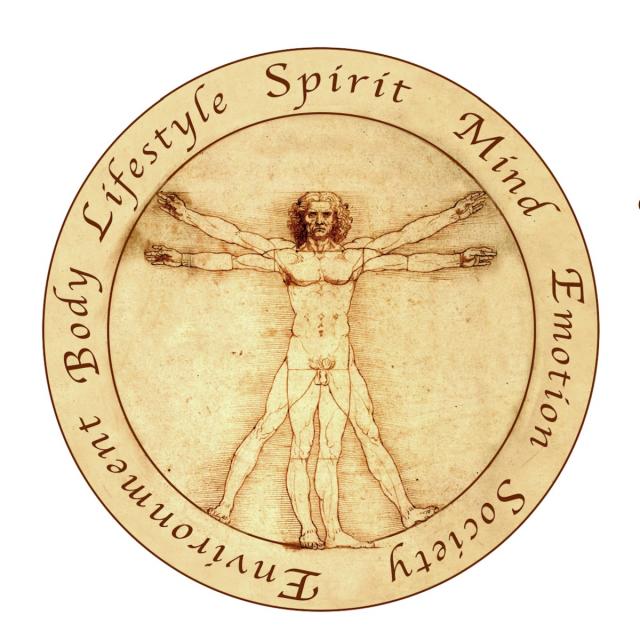
Chronic pain is at epidemic levels and has become the highest-cost condition in health care. This course uses both creative and experiential learning to better understand chronic pain conditions and how they can be prevented through self-management in our cognitive, behavioral, physical, emotional, spiritual, social, and environmental realms.

Class Deals by MOOC List - Click here and see Coursera's Active Discounts, Deals, and Promo Codes.

The goal of this course is to blend creative, experiential, and evidence-based teaching strategies to help participants understand chronic pain conditions and how a human systems approach can be applied to self-management strategies to reduce risk factors, enhance protective factors, and prevent chronic pain. There are four major objectives to the course;

  1. Describe the prevalence, personal impact, and health care dilemma associated with chronic pain.
  2. Recognize the clinical characteristics and underlying etiology of several common pain conditions and the peripheral, central, and genetic mechanisms of chronic pain
  3. Based on the literature associated with risk and protective factors in the seven realms of our lives, learn specific strategies in each realm that can be employed daily to prevent chronic pain and enhance wellness.
  4. Appreciate the value of a human systems approach to health care and how it can provide a basis for integrative, interdisciplinary, and individualized care to preventing pain and enhancing wellness.

Syllabus

WEEK 1
Introduction to the Course
In this first module, we will introduce you to the course and present an overview of the topics to be discussed and format of the course. We will also present information about receiving Continuing Education, joining the International Myopain Society, and supporting the Campaign for Preventing Chronic Pain

WEEK 2
The Problem of Chronic Pain

WEEK 3
Common Pain Conditions and their Mechanisms

WEEK 4
Common Pain Conditions and their Mechanisms

WEEK 5
Common Pain Conditions and their Mechanisms

WEEK 6
Risk and Protective Factors in the Seven Realms

WEEK 7
Risk and Protective Factors in the Seven Realms

WEEK 8
Risk and Protective Factors in the Seven Realms

WEEK 9
Risk and Protective Factors in the Seven Realms

WEEK 10
Implementing Transformative Care

Suggested Reading: The Last Scroll

Go to Class
MOOC List is learner-supported. When you buy through links on our site, we may earn an affiliate commission.

Related Courses

Case studies in business analytics with ACCENTURE (Coursera) Coursera
ESSEC Business School

Case studies in business analytics with ACCENTURE (Coursera)

This course is RESTRICTED TO LEARNERS ENROLLED IN Strategic Business Analytics SPECIALIZATION as a preparation to the capstone project. During the first two MOOCs, we focused on specific techniques for specific applications. Instead, with this third MOOC, we provide you with different examples to open your mind to different applications from different industries and sectors. The objective is to give you an helicopter overview on what's happening in this field. You will see how the tools presented in the two previous courses of the Specialization are used in real life projects.

Jun 1st 2026
3 Weeks
Intro to Strategic Management for Healthcare Organizations (Coursera) Coursera
Northeastern University

Intro to Strategic Management for Healthcare Organizations (Coursera)

This course is best suited for individuals currently in the healthcare sector, as a provider, payer, or administrator. Individuals pursuing a career change to the healthcare sector may also be interested in this course. In this course, you will have an opportunity to explore general business strategy concepts as they relate to the healthcare industry. You will also examine how strategic decisions are made within organizations.

Jun 3rd 2026
4 Weeks
Instructional Methods in Health Professions Education (Coursera) Coursera
University of Michigan

Instructional Methods in Health Professions Education (Coursera)

This course provides those involved in educating members of the health professions an asynchronous, interdisciplinary, and interactive way to obtain, expand, and improve their teaching skills. These skills can then be applied within their own professional context, with a variety of learners, extending across many stages.

Jun 1st 2026
5-12 Weeks
Understanding the Brain: The Neurobiology of Everyday Life (Coursera) Coursera
University of Chicago

Understanding the Brain: The Neurobiology of Everyday Life (Coursera)

Learn how the nervous system produces behavior, how we use our brain every day, and how neuroscience can explain the common problems afflicting people today. We will study functional human neuroanatomy and neuronal communication, and then use this information to understand how we perceive the outside world, move our bodies voluntarily, stay alive, and play well with others.

Jun 1st 2026
5-12 Weeks
Ebola: Essential knowledge for health professionals (Coursera) Coursera
University of Amsterdam,Universiteit Utrecht

Ebola: Essential knowledge for health professionals (Coursera)

March 2014 marked the starting point of the largest outbreak of Ebola virus disease in history. Although the disease seems to be on a decrease, we are not there yet and new outbreaks will surely emerge. New efforts to combat the outbreak are necessary. This is why we developed this online course about Ebola, targeted at health professionals across the world. In this course you will cover the fundamental knowledge any health professional should have with expected or confirmed cases or a general interest in the Ebola disease.

Jun 1st 2026
5-12 Weeks
Community Change in Public Health (Coursera) Coursera
Johns Hopkins University

Community Change in Public Health (Coursera)

In bringing about behavior change in public health, we often focus on the individual mother, student, or farmer. We should not forget the community structure and norms constrain for encouraging individual health behaviors. This course examines the community context of the changes needed to promote the public’s health. We begin by examining the various definitions of ‘community’ and the processes by which we ‘diagnose’ or seek to understand the structure and characteristics of different types of communities.

Jun 1st 2026
5-12 Weeks
Positive Psychology: Martin E. P. Seligman’s Visionary Science (Coursera) Coursera
University of Pennsylvania

Positive Psychology: Martin E. P. Seligman’s Visionary Science (Coursera)

Dr. Martin E.P. Seligman—renowned worldwide as the “father of Positive Psychology”—has led visionary leaps in the scientific research, empirical data and personal understandings of human flourishing. This course explores the past, present and future of positive psychology as a journey through the key scientific leaps led by Dr. Seligman and his colleagues at the University of Pennsylvania's Positive Psychology Center and Master of Applied Positive Psychology program.

Jun 1st 2026
4 Weeks
Nutrition and Lifestyle in Pregnancy (Coursera) Coursera
Ludwig-Maximilians-Universität München

Nutrition and Lifestyle in Pregnancy (Coursera)

Nutrition and Lifestyle in Pregnancy offers an overview of the latest research findings and international recommendations on a variety of nutrition-related aspects and outcomes of pregnancy. Ensuring a healthy nutritional status and lifestyle prior to and during pregnancy is one of the best ways to help support the healthy growth and development of the unborn child. We will look at how a healthy diet and lifestyle should ideally be achieved prior to conception and provide recommendations for pre-conception counselling of women.

Jun 1st 2026
4 Weeks
Antimicrobial resistance - theory and methods (Coursera) Coursera
Technical University of Denmark - DTU

Antimicrobial resistance - theory and methods (Coursera)

The course will cover the topics related to antimicrobial resistance with basic definitions and overview on antimicrobials their use and the emergence and spread of resistance. The course will guide you through the concepts and the importance of resistance spread and dissemination and how that happens. It will show you how bacteria become resistant and which mechanisms they might use for this. And as part of the course you will also receive some training in methods for antimicrobial susceptibility testing (AST) and detection of specific resistance in the microbiological laboratories with the basic methods available and with focus on the obtention of good quality results which can be interpreted and used for different purposes.

Jun 1st 2026
5-12 Weeks