Physics I ECE classical mechanics 8.01 (WMA)

Offered by MIT,
Physics I ECE classical mechanics 8.01 (WMA)

This course features lecture notes, problem sets with solutions, exams with solutions, links to related resources, and a complete set of videotaped lectures. The 35 video lectures by Professor Lewin, were recorded on the MIT campus during the Fall of 1999. Prof. Lewin is well-known at MIT and beyond for his dynamic and engaging lecture style.

Lesson content

Introduction & Syllabus
Lec 1 Powers of Ten
Lec 2 1D Kinematics - Speed - Velocity - Acceleration
Lec 3 Vectors - Dot Products - Cross Products - 3D Kinematics
Lec 4 3D Kinematics - Free Falling Reference Frames
Lec 5 Circular Motion - Centrifuges Moving - Reference Frames - Perceived Gravity
Lec 6 Newton's Laws
Lec 7 Weight - Perceived Gravity - Weightlessness Free Fall - Zero Gravity in Orbit (misnomer)
Lec 8 Friction
Lec 9 Exam Review
Lec 10 Hooke's Law - Springs - Simple Harmonic Motion - Pendulum - Small Angle Approximation
Lec 11 work,, etc.
Lec 12 Non-Conservative Forces - Resistive Forces - Air Drag - Terminal Velocity
Lec 13 Potential Energy - Energy Considerations to Derive Simple Harmonic Motion
Lec 14 Escape Velocities etc.
Lec 15 Momentum - Conservation of Momentum - Center of Mass
Lec 16 Collisions - Elastic and Inelastic - Center of Mass Frame of Reference
Lec 17 Impulse - Rockets
Lec 18 Exam Review
Lec 19 Rotating Rigid Bodies misc.
Lec 20 Rotating Rigid Bodies misc.
Lec 21 Torques - Oscillating Bodies - Hoops
Lec 22 Kepler's Laws - Elliptical Orbits - Satellites - Change of Orbits - Ham Sandwich
Lec 23 Doppler Effect - Binary Stars - Neutron Stars and Black Holes
Lec 24 Rolling Motion - Gyroscopes - VERY NON-INTUITIVE
Lec 25 Static Equilibrium - Stability - Rope Walker
Lec 26 Elasticity - Young's Modulus
Lec 27 Fluid Mechanics etc.
Lec 28 Hydrostatics misc.
Lec 29 Exam Review
Lec 30 Simple Harmonic Oscillations - Energy Considerations - Torsional Pendulum
Lec 31 Forced Oscillations - Normal Modes - Resonance - Natural Frequencies - Musical Instruments
Lec 32 Heat - Thermal Expansion
Lec 33 Kinetic Gas Theory misc.
Lec 34 The Wonderful Quantum World - Breakdown of Classical Mechanics
Lec 35 Farewell Special - High-energy Astrophysics
Note: This course is currently not available.

Related Courses

The Finite Element Method for Problems in Physics (Coursera) Coursera
University of Michigan

The Finite Element Method for Problems in Physics (Coursera)

This course is an introduction to the finite element method as applicable to a range of problems in physics and engineering sciences. The treatment is mathematical, but only for the purpose of clarifying the formulation. The emphasis is on coding up the formulations in a modern, open-source environment that can be expanded to other applications, subsequently.

Nov 30th 2026
13-24 Weeks
AstroTech: The Science and Technology behind Astronomical Discovery (Coursera) Coursera
University of Edinburgh

AstroTech: The Science and Technology behind Astronomical Discovery (Coursera)

Modern astronomy has made some astonishing discoveries - how stars burn and how black holes form; galaxies from the edge of the universe and killer rocks right next door; where the elements come from and how the expanding universe is accelerating. But how do we know all that? The truth is that astronomy would be impossible without technology, and every advance in astronomy is really an advance in technology. But the technology by itself is not enough. We have to apply it critically with a knowledge of physics to unlock the secrets of the Universe.

Nov 16th 2026
5-12 Weeks
Analyzing the Universe (Coursera) Coursera
Rutgers University

Analyzing the Universe (Coursera)

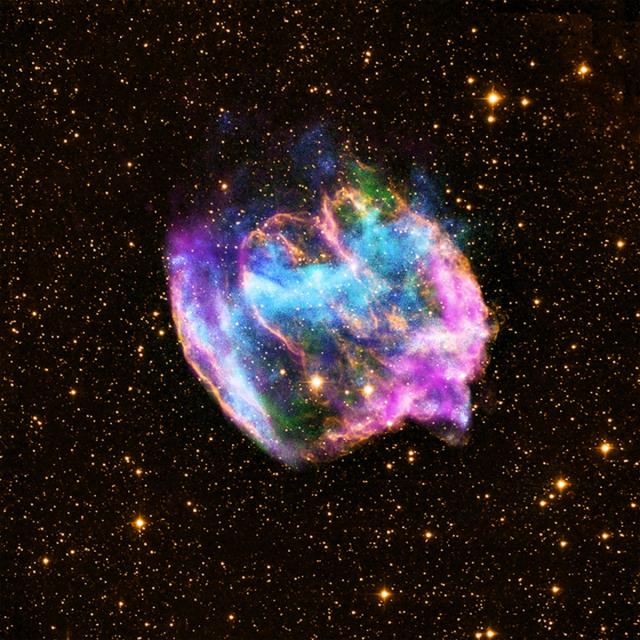
Using publicly available data from NASA of actual satellite observations of astronomical x-ray sources, we explore some of the mysteries of the cosmos, including neutron stars, black holes, quasars and supernovae. We will analyze energy spectra and time series data to understand how these incredible objects work. We utilize an imaging tool called DS9 to explore the amazing diversity of astronomical observations that have made x-ray astronomy one of the most active and exciting fields of scientific investigation in the past 50 years.

Nov 23rd 2026
5-12 Weeks
The Discovery of the Higgs Boson (Coursera) Coursera
University of Edinburgh

The Discovery of the Higgs Boson (Coursera)

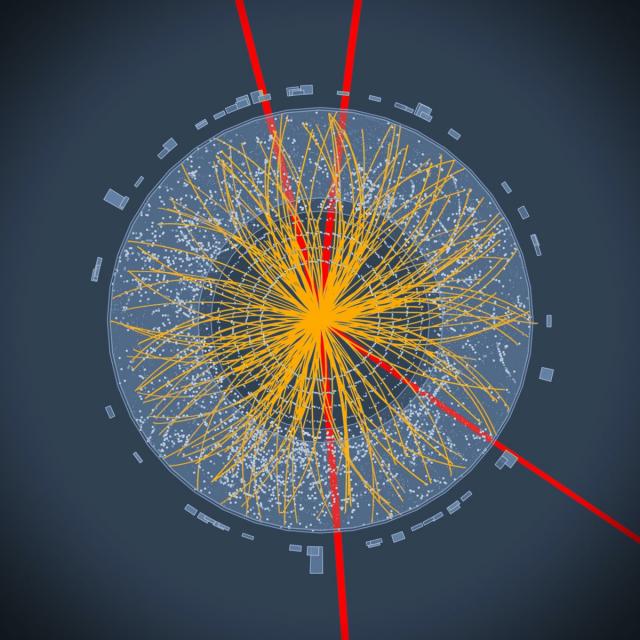
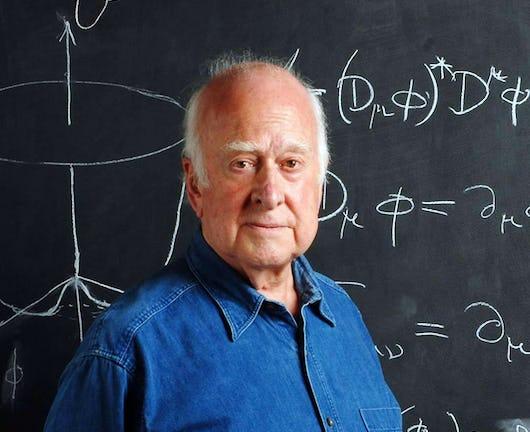
The discovery of a new fundamental particle at the Large Hadron Collider (LHC), CERN is the latest step in a long quest seeking to answer one of physics’ most enduring questions: why do particles have mass? The experiments’ much anticipated success confirms predictions made decades earlier by Peter Higgs and others, and offers a glimpse into a universe of physics beyond the Standard Model.

Nov 23rd 2026
5-12 Weeks
Physics 101 - Energy and Momentum (Coursera) Coursera
Rice University

Physics 101 - Energy and Momentum (Coursera)

This course serves as an introduction to the physics of energy and momentum. Upon completion, learners will have an understanding of how mathematical laws and conservation principles describe the motions and interactions of objects all around us. They will gain experience in solving physics problems with tools such as graphical analysis, algebra, vector analysis, and calculus.

Nov 16th 2026
4 Weeks
Tesoros de la Física y sus Descubridores I (Coursera) Coursera
Universidad de los Andes

Tesoros de la Física y sus Descubridores I (Coursera)

¿Sabes cómo vuelan los aviones, tan pesados y no se caen mientras vuelan? ¿Sabes que viajamos por el espacio sobre el planeta Tierra que se traslada y gira muy rápido y no lo percibimos? ¿O acaso, notas efectos de su movimiento? ¿Cuál es nuestro lugar en el universo? ¿Podemos viajar en el tiempo? ¡Preguntas, muchas preguntas! Con espíritu de descubridores nuestra curiosidad nos motiva a buscar respuestas, a explorar nuestro entorno, a entrar a lo desconocido y hallar nuevo conocimiento.

Nov 23rd 2026
5-12 Weeks
Understanding Modern Physics II: Quantum Mechanics and Atoms (Coursera) Coursera
The Hong Kong University of Science and Technology - HKUST

Understanding Modern Physics II: Quantum Mechanics and Atoms (Coursera)

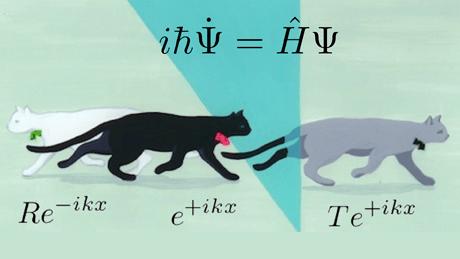
The 20th century was known as the century of physics. In the past 120 years, concepts such as space, time, energy, entropy and particles were understood to much deeper levels. New paradigms of thinking such as relativity and quantum mechanics emerged. This course is the second course in the Understanding Modern Physics series, which covers an introduction to quantum mechanics, atomic physics and quantum information.

Nov 23rd 2026
4 Weeks
Particle Physics: an Introduction (Coursera) Coursera
University of Geneva

Particle Physics: an Introduction (Coursera)

This course introduces you to subatomic physics, i.e. the physics of nuclei and particles. More specifically, the following questions are addressed: What are the concepts of particle physics and how are they implemented?; What are the properties of atomic nuclei and how can one use them?; How does one accelerate and detect particles and measure their properties?; What does one learn from particle reactions at high energies and particle decays?; How do electromagnetic interactions work and how can one use them?; How do strong interactions work and why are they difficult to understand?; How do weak interactions work and why are they so special?; What is the mass of objects at the subatomic level and how does the Higgs boson intervene?; How does one search for new phenomena beyond the known ones?; What can one learn from particle physics concerning astrophysics and the Universe as a whole?

Nov 30th 2026
5-12 Weeks
Statistical Thermodynamics: Molecules to Machines (Coursera) Coursera
Carnegie Mellon University

Statistical Thermodynamics: Molecules to Machines (Coursera)

Modern engineering research focuses on designing new materials and processes at the molecular level. Statistical thermodynamics provides the formalism for understanding how molecular interactions lead to the observed collective behavior at the macroscale. This course will develop a molecular-level understanding of key thermodynamic quantities like heat, work, free energy and entropy. These concepts will be applied in understanding several important engineering and biological applications.

Nov 29th 2026
5-12 Weeks