Our Place in the Cosmos (Coursera)

Our Place in the Cosmos (Coursera)

Come aboard! If you decide to take this course, you will expand your horizon of what is possible for you in the cosmos. In Course 1 (Our Place in the Cosmos) of this four course specialization, there are 39 learning objectives spread out over 4 weeks and 10 lessons.

Class Deals by MOOC List - Click here and see Coursera's Active Discounts, Deals, and Promo Codes.

Week 1 - You will learn about the course and the specialization as a whole as well as the method used to guide you through the material. You will also get to meet the crew of the USS Pathway to Space. As your instructor and captain, I will create a unique and hopefully fun learning environment full of surprises and moments of connection with the material. We will also discuss how wonder started it all with our first guest, Dr. Valerio Ferme with Space and Wonder.
Week 2 - We have two topics and two guests this week. In A Tour of the Cosmos, with Dr. Erica Ellingson, we will guide you through all the grandeur of the cosmos from the size and scale to the timeline of its existence. In Astrophysics, with Dr. Kevin France, we will explore concept and merger of two great fields of study: Astronomy and Physics. The tools used by an astrophysicists are key to unlocking the cosmos. At the end of this week, you will have a better understanding of the cosmos and your place in it.
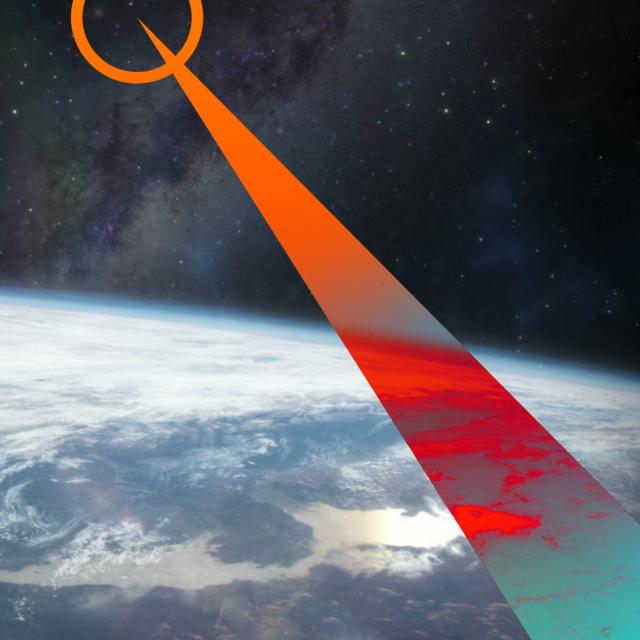
Week 3 - Space exploration can happen in two ways. By viewing there and going there. This week we will explore both methods. Our first lesson is with Dr. Paul Hayne and Dr. Carolyn Crow on Space Exploration-Going There. We will look at the stages of exploration and how the science changes at each point. Next, we will meet Dr. Kristy Tiampo as we discuss Space Exploration-Viewing There. We will dive deep into remote sensing work around Earth and how that technique of viewing can be applied throughout the cosmos.
Week 4 - This week, we will discuss some of the great science being conducted in the cosmos as well as our species search life elsewhere in the universe. We have three lessons this week. The first two are in two parts. Extending Science Beyond Earth. In Part 1, we meet Dr. Nick Schneider and discuss how the different wavelengths of light have allowed us to understand other planets like Mars but also Earth. In Part 2, we meet Dr. Dave Brain and discuss what we have learned about other planets in our solar system and compare those discoveries with our home planet. We will end with the Search for Life Elsewhere where our guest, Dr. Bruce Jakosky, and I discuss what is needed for life in the cosmos and where we might find it.
In these lessons, you will become a member of the crew of the USS Pathway to Space and together we will make the unknown, known. Your journey to discovering your pathway to space begins now.
Course 1 of 4 in the Pathway to Space Specialization.

What You Will Learn

  • You will learn about the cosmos and your place in it, the ways we explore space, and how people and politics play a role in what we learn.
  • Plus you will learn how space influences everything in our world all while finding your pathway to space.

Syllabus

WEEK 1
Specialization and Course Overview
Chris Koehler welcomes you aboard the USS Pathway to Space and introduces you to the format, the four courses, the five goals, 146 learning objectives, the crew, and the ship.

WEEK 2
Space and Wonder
Chris and Dr. Valerio Ferme explore the inextricable connection with space and wonder to our journey to make sense of our existence and place in the cosmos.

WEEK 3
A Tour of the Cosmos
Chris and Dr. Erica Ellingson (CUB) take a tour of the Solar System and universe from the perspectives of size, scale and time. [CUB = University of Colorado Boulder]

WEEK 4
Astrophysics
Chris and Dr. Kevin France (CUB/LASP) perform a basic overview of astrophysics and the tools used, such as the Hubble Space Telescope, to understand the cosmos and our place in it. [CUB = University of Colorado Boulder] [LASP = Laboratory for Atmospheric and Space Physics]

WEEK 5
Space Exploration: Going There
Chris, Dr. Paul Hayne (CUB/LASP), and Dr. Carolyn Crow (CUB) discuss discovering the cosmos through spacecraft missions that Go There, such as Apollo, New Horizons, and Juno. [CUB = University of Colorado Boulder] [LASP = Laboratory for Atmospheric and Space Physics]

WEEK 6
Space Exploration: Viewing There
Chris and Dr. Kristy Tiampo (CUB) discuss the study of Earth’s environment and other objects in the cosmos through remote sensing from space. [CUB = University of Colorado Boulder]

WEEK 7
Extending Science Beyond Earth - Part 1
Chris and Dr. Nick Schneider (CUB/LASP) discuss how remote sensing techniques used to study the Earth, along with spectroscopy, are applied to our solar system and beyond. [CUB = University of Colorado Boulder] [LASP = Laboratory for Atmospheric and Space Physics]

WEEK 8
Extending Science Beyond Earth - Part 2
Chris and Dr. Dave Brain (CUB/LASP) discuss understanding Earth’s climate and environment through the comparison and study of other planets in our solar system. [CUB = University of Colorado Boulder] [LASP = Laboratory for Atmospheric and Space Physics]

WEEK 9
The Search for Life Elsewhere
Chris and Dr. Bruce Jakosky (LASP) perform a geological discussion of whether there could be life on other planets or moons in our solar system, or on any of the planets recently discovered orbiting other stars. [LASP = Laboratory for Atmospheric and Space Physics]
Go to Class
MOOC List is learner-supported. When you buy through links on our site, we may earn an affiliate commission.

Related Courses

New Space: Access to space - Basics (Coursera) Coursera
ISAE-SUPAERO

New Space: Access to space - Basics (Coursera)

The spirit of NewSpace is revolutionizing our vision of access to space. Reading keys will enable you to understand the technological and strategic challenges in games with new rules, fixed by ambitious players. Combine the new technologies and management of space access with the classical paradigm of the existing space context.

Aug 17th 2026
3 Weeks
Rocket Science in Everyday Life (Coursera) Coursera
University of Michigan

Rocket Science in Everyday Life (Coursera)

We encounter the results of rocket science all the time; from weather prediction to GPS navigation, rocket science has helped navigate our world in new, innovative ways. Rocket Science in Everyday Life explores innovations in rocket science, including the formation of space agencies, like NASA and the European Space Agency, that work to advance rocket science. Learn how satellites are used to track climate changes across the globe and how rockets have taken us to worlds beyond our own.

Jul 27th 2026
4 Weeks
Astro 101: Black Holes (Coursera) Coursera
University of Alberta

Astro 101: Black Holes (Coursera)

What is a black hole? Do they really exist? How do they form? How are they related to stars? What would happen if you fell into one? How do you see a black hole if they emit no light? What’s the difference between a black hole and a really dark star? Could a particle accelerator create a black hole? Can a black hole also be a worm hole or a time machine? In Astro 101: Black Holes, you will explore the concepts behind black holes. Using the theme of black holes, you will learn the basic ideas of astronomy, relativity, and quantum physics.

Aug 17th 2026
5-12 Weeks
Getting There and Going Beyond (Coursera) Coursera
University of Colorado Boulder

Getting There and Going Beyond (Coursera)

Welcome to Course 2 - Getting There and Going Beyond. If you are here, you have successfully completed Course 1 (Our Place in the Cosmos) and are ready for more. There is so much more to learn in Course 2 with 40 learning objectives spread out over 5 weeks and 12 lessons. We will cover all the ways we explore space and near space from planes to rockets to satellites and humans.

Aug 3rd 2026
5-12 Weeks
Control of Nonlinear Spacecraft Attitude Motion (Coursera) Coursera
University of Colorado Boulder

Control of Nonlinear Spacecraft Attitude Motion (Coursera)

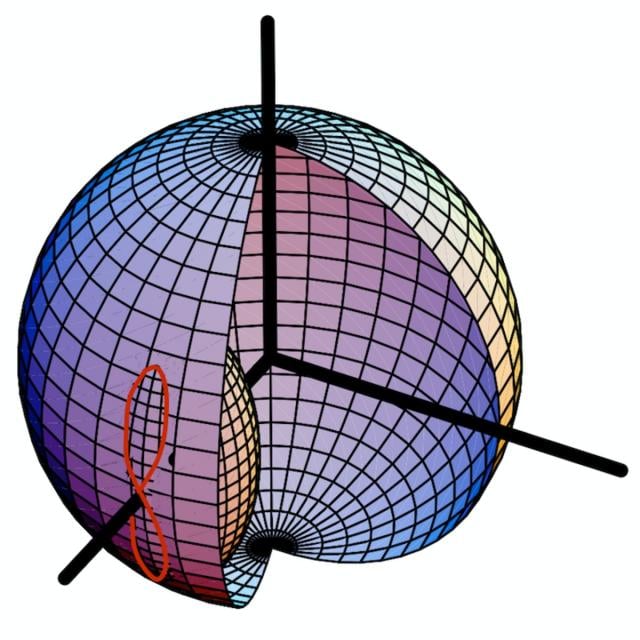
This course trains you in the skills needed to program specific orientation and achieve precise aiming goals for spacecraft moving through three dimensional space. First, we cover stability definitions of nonlinear dynamical systems, covering the difference between local and global stability. We then analyze and apply Lyapunov's Direct Method to prove these stability properties, and develop a nonlinear 3-axis attitude pointing control law using Lyapunov theory. Finally, we look at alternate feedback control laws and closed loop dynamics.

Aug 3rd 2026
4 Weeks
Kinematics: Describing the Motions of Spacecraft (Coursera) Coursera
University of Colorado Boulder

Kinematics: Describing the Motions of Spacecraft (Coursera)

The movement of bodies in space (like spacecraft, satellites, and space stations) must be predicted and controlled with precision in order to ensure safety and efficacy. Kinematics is a field that develops descriptions and predictions of the motion of these bodies in 3D space. This course in Kinematics covers four major topic areas: an introduction to particle kinematics, a deep dive into rigid body kinematics in two parts (starting with classic descriptions of motion using the directional cosine matrix and Euler angles, and concluding with a review of modern descriptors like quaternions and Classical and Modified Rodrigues parameters).

Aug 10th 2026
4 Weeks
Particle Physics: an Introduction (Coursera) Coursera
University of Geneva

Particle Physics: an Introduction (Coursera)

This course introduces you to subatomic physics, i.e. the physics of nuclei and particles. More specifically, the following questions are addressed: What are the concepts of particle physics and how are they implemented?; What are the properties of atomic nuclei and how can one use them?; How does one accelerate and detect particles and measure their properties?; What does one learn from particle reactions at high energies and particle decays?; How do electromagnetic interactions work and how can one use them?; How do strong interactions work and why are they difficult to understand?; How do weak interactions work and why are they so special?; What is the mass of objects at the subatomic level and how does the Higgs boson intervene?; How does one search for new phenomena beyond the known ones?; What can one learn from particle physics concerning astrophysics and the Universe as a whole?

Aug 10th 2026
5-12 Weeks
Remote Sensing Image Acquisition, Analysis and Applications (Coursera) Coursera
UNSW Sydney - University of New South Wales

Remote Sensing Image Acquisition, Analysis and Applications (Coursera)

Welcome to Remote Sensing Image Acquisition, Analysis and Applications, in which we explore the nature of imaging the earth's surface from space or from airborne vehicles. This course covers the fundamental nature of remote sensing and the platforms and sensor types used. It also provides an in-depth treatment of the computational algorithms employed in image understanding, ranging from the earliest historically important techniques to more recent approaches based on deep learning.

Aug 17th 2026
13-24 Weeks
Les deux infinis et nous (Coursera) Coursera
École Polytechnique

Les deux infinis et nous (Coursera)

Partez à la découverte de l'infiniment grand et de l'infiniment petit dans leurs aspects les plus proches de notre quotidien, en compagnie de physiciens et de physiciennes qui vont vous faire découvrir leur présence insoupçonnée dans notre vie de tous les jours. Vous vous initierez à la vie et aux métiers d'une grande collaboration en physique de l'infiniment petit et de l'infiniment grand, vous découvrirez comment les outils développés dans ces domaines ont trouvé des applications inattendues, comment la physique nucléaire a profondément modifié les domaines de l'énergie et de la santé, et comment les propriétés de certaines particules aident à présent d'autres disciplines à sonder la matière d'une manière totalement différente.

Jul 27th 2026
4 Weeks
Origens da Vida no Contexto Cósmico (Coursera) Coursera
Universidade de São Paulo, Brasil

Origens da Vida no Contexto Cósmico (Coursera)

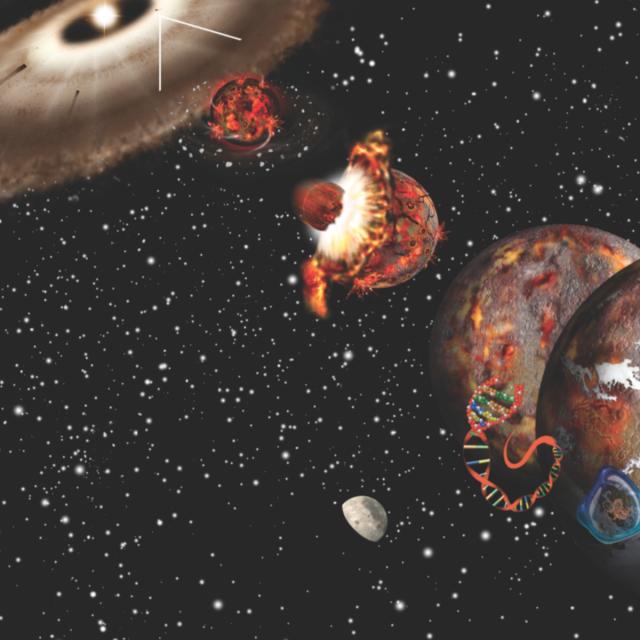
Origens da vida no contexto cósmico é um curso desenvolvido no Instituto de Astronomia, Geofísica e Ciências Atmosféricas da Universidade de São Paulo, com o objetivo de apresentar os mais recentes avanços científicos na compreensão deste intrigante assunto. É um curso com formato multidisciplinar que o levará a compreender melhor os aspectos envolvidos no surgimento de vida na Terra e no possível surgimento de vida em outros planetas.

Aug 3rd 2026
4 Weeks