Moral and Political Philosophy (saylor.org)

Offered by Saylor.org,
Moral and Political Philosophy (saylor.org)

This course will introduce you to the basic concepts and methods of moral and political philosophy. Its primary focus is on the development of moral reasoning skills and the application of those skills to contemporary social and political issues.

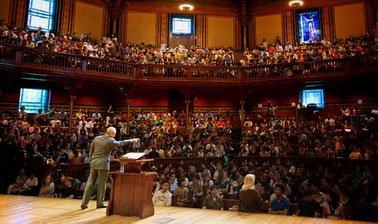
This course will introduce you to the basic concepts and methods of moral and political philosophy. Its primary focus is on the development of moral reasoning skills and the application of those skills to contemporary social and political issues. Although the course is organized around the central concept of justice, it uses this notion as a point of departure for discussing a wide range of philosophical topics and perspectives. Topics range from the value of human life, the moral standing of the free market, and the notion of fundamental human rights, to equality of opportunity, the legality of same-sex marriage, and the conditions for a moral community. In order to investigate these topics, this course makes extensive use of Professor Michael Sandel’s video lecture course on justice, delivered at Harvard University in 2009. In addition to these lectures, you will study a number of important moral and political philosophers, including Plato, Aristotle, John Locke, Thomas Hobbes, Jeremy Bentham, John Stuart Mill, Immanuel Kant, Jean-Paul Sartre, Friedrich Nietzsche, and John Rawls. Supplementary readings will include texts from contemporary philosophers, such as Robert Nozick, John Finnis, Alasdair MacIntyre, and others, as well as news articles and primary source texts regarding important legal decisions. By the end of the course, you will have gained a detailed understanding of the philosophical issues involved in many contemporary debates in the public sphere, as well as a refined sense of your own moral and political positions and intuitions.

Upon successful completion of this course, the student will be able to:

  • Identify and describe the major areas of moral and political theory, explain how those areas differ from and relate to one another, and place the views and arguments of major philosophical figures within those areas.
  • Use ethical, moral, and political terminology correctly and consistently.
  • Apply critical thinking and reasoning skills to ethical issues in a variety of professional contexts.
  • Identify and describe several major theories of justice and morality, including utilitarianism, libertarianism, social contract theory, deontology, and the ethics/politics of virtue.
  • Analyze how moral and political dilemmas are handled differently by each set of theoretical principles.
  • Analyze the consequences of various moral principles, and interpret how these principles relate to concepts of justice.
  • Discuss the relationship between morality and politics.
  • Identify and describe the origins of western democratic politics and constitutional government.
  • Analyze a range of difficult and controversial moral and political issues, including murder, the income tax, corporate cost-benefit analysis, lying, affirmative action, and same-sex marriage.

Go to Class
MOOC List is learner-supported. When you buy through links on our site, we may earn an affiliate commission.

Related Courses

Introduction to Philosophy (saylor.org) Saylor Academy
Saylor.org

Introduction to Philosophy (saylor.org)

This course will introduce you to the major topics, problems, and methods of philosophy and surveys the writings of a number of major historical figures in the field. Philosophy can be – and has been – defined in many different ways by many different thinkers.

Legacy Course
Self-Paced
Christianity & Ecology (Coursera) Coursera
Yale University

Christianity & Ecology (Coursera)

There is a need for broader literacy and deeper knowledge of the world’s religions and their ecological contributions. This course is designed as a gateway to the rich ecological dimensions of the Christian religious tradition. We delve into unique contributions from Orthodox, Catholic, and Protestant Christianity, exploring views on and relationship with the natural world.

Aug 17th 2026
5-12 Weeks
Relativism (Coursera) Coursera
University of California, Irvine

Relativism (Coursera)

Relativism is an ancient philosophical doctrine which has recurred time and again in the history of philosophy. It has also transcended the boundaries of that discipline, for it has shaped much of the methodology in anthropology and sociology, as well as in critical theory and literary studies. While often advocated for its supposed tolerance of differences, relativism has profound consequences for how we think of reality, for the possibility of knowledge, both in the factual and in the moral domain, and may engender the practice of double standard.

Aug 17th 2026
4 Weeks
Justice (edX) EdX
HarvardX,Harvard University

Justice (edX)

Justice, one of the most famous courses taught at Harvard College, is an introduction to moral and political philosophy, offering an opportunity to discuss contemporary dilemmas and controversies. Taught by lauded Harvard professor Michael Sandel, Justice explores critical analysis of classical and contemporary theories of justice, including discussion of present-day applications.

Self Paced
Self-Paced
Philosophy of Science (saylor.org) Saylor Academy
Saylor.org

Philosophy of Science (saylor.org)

This course is a survey of philosophical issues surrounding the concepts and practices of modern science. The course covers the major areas of contemporary philosophy of science, including scientific reasoning, scientific progress, interpretations of scientific knowledge, and the social organization of scientific practice.

Legacy Course
Self-Paced
Ethical Issues in Data Science (Coursera) Coursera
University of Colorado Boulder

Ethical Issues in Data Science (Coursera)

Computing applications involving large amounts of data – the domain of data science – impact the lives of most people in the U.S. and the world. These impacts include recommendations made to us by internet-based systems, information that is available about us online, techniques that are used for security and surveillance, data that is used in health care, and many more. In many cases, they are affected by techniques in artificial intelligence and machine learning.

Aug 3rd 2026
5-12 Weeks
Cosmopolitan Tang: Aristocratic Culture in China (edX) EdX
HarvardX,Harvard University

Cosmopolitan Tang: Aristocratic Culture in China (edX)

Explore the reunification of China under the Tang with a focus on aristocratic culture — from poetry to calligraphy to literature. By the Tang period, China was divided into northern and southern dynasties with different rulers and political systems. The north was conquered by relatively unsophisticated barbarians, but in the south, the aristocratic families established a refined appreciation of writing and literature.

Self Paced
Self-Paced
The History of Medicine: Philosophy, Science, and Psychology (Coursera) Coursera
University of California, Santa Cruz

The History of Medicine: Philosophy, Science, and Psychology (Coursera)

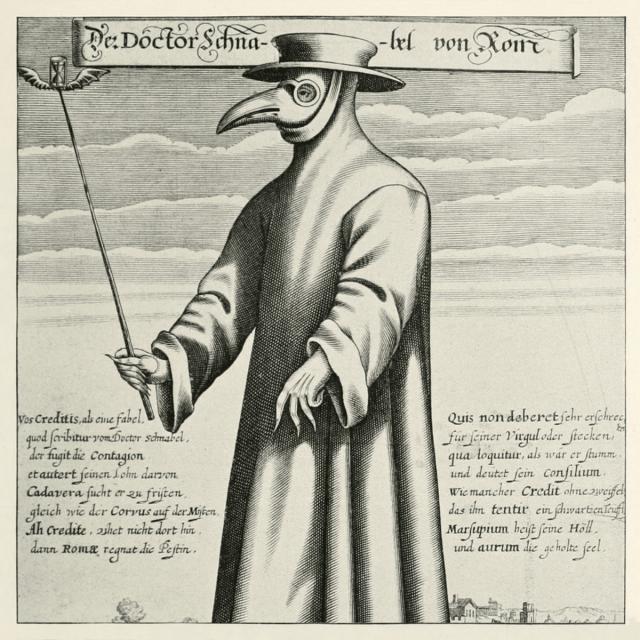
"History of Medicine" provides an accessible historical and interdisciplinary perspective on medicine, focused primarily upon therapy and practice, to achieve better understanding of the scope, practice, and limits of medicine. Medicine is defined as the treatment of disease. Human attempts to understand and treat disease will be seen as evolving from the spiritual and mystical practices of the distant past, to the rational approach of the Classical World, and finally to the scientific thinking of the Renaissance and beyond.

Aug 3rd 2026
5-12 Weeks
On Strategy : What Managers Can Learn from Philosophy - PART 1 (Coursera) Coursera
CentraleSupélec

On Strategy : What Managers Can Learn from Philosophy - PART 1 (Coursera)

In the expression “creative thinking”, the keyword is not creativity; the keyword is thinking. With the help of great philosophers, you will rediscover the art of thinking. To help leaders to be rigorous even without figures, great philosophers have lots of ideas. Managers are invited to rediscover the art of thinking. They should understand the role of mental models, realize the importance of cognitive bias, agree on clear definitions and efficient criteria etc. Creativity demands the ability to unshackle ourselves from conventional ways of thinking, to "think outside the box".

Jul 27th 2026
5-12 Weeks
Setting Expectations & Assessing Performance Issues (Coursera) Coursera
University of California, Davis

Setting Expectations & Assessing Performance Issues (Coursera)

If you don’t know where you are going, any road will take you there. One of the most important roles of a manager is to ensure everyone knows the destination. The most effective managers set expectations and assess their employees’ performance against those expectations, and take a coaching approach to helping them get to the destination. That’s exactly what you’ll learn to do in this course! You will explore how to collaboratively develop expectations with those you lead. When you encounter expectations that are not being met, you’ll learn how to use "Coaching Algebra" to determine the underlying issues that are impeding performance, and how to respond as a manger-coach.

Jul 27th 2026
4 Weeks
Ancient Philosophy: Plato & His Predecessors (Coursera) Coursera
University of Pennsylvania

Ancient Philosophy: Plato & His Predecessors (Coursera)

What is philosophy? How does it differ from science, religion, and other modes of human discourse? This course traces the origins of philosophy in the Western tradition in the thinkers of Ancient Greece. We begin with the Presocratic natural philosophers who were active in Ionia in the 6th century BCE and are also credited with being the first scientists.

Aug 17th 2026
4 Weeks