Philosophy of Science (saylor.org)

Offered by Saylor.org,
Philosophy of Science (saylor.org)

This course is a survey of philosophical issues surrounding the concepts and practices of modern science. The course covers the major areas of contemporary philosophy of science, including scientific reasoning, scientific progress, interpretations of scientific knowledge, and the social organization of scientific practice.

Please note: this legacy course does not offer a certificate and may contain broken links and outdated information. Although archived, it is open for learning without registration or enrollment.
This course is a survey of philosophical issues surrounding the concepts and practices of modern science. The course covers the major areas of contemporary philosophy of science, including scientific reasoning, scientific progress, interpretations of scientific knowledge, and the social organization of scientific practice. Its aim is not only to familiarize you with philosophical issues about science but also to equip you to critically interpret popular reports about contemporary scientific research. Unit 1 introduces philosophy of science as a discipline distinct from psychology of science, history of science, and sociology of science. Unit 2 examines the nature and objectivity of observational evidence, and Unit 3 examines methods of reasoning relevant to induction, confirmation, and explanation. Unit 4 examines accounts of theory change and scientific progress, and Unit 5 addresses the interpretation of scientific knowledge. Finally, Unit 6 explores various topics concerning science in a social context. Throughout this course, you will become acquainted with the views of a number of influential philosophers of science, including David Hume, Pierre Duhem, Carl Hempel, Karl Popper, Thomas Kuhn, Imre Lakatos, Bas van Fraassen, Philip Kitcher, and Helen Longino. You will read some selections from scientific research too, by way of news articles and case studies, in order to connect philosophical views about science to actual scientific practice. You should approach the content of this course with an attitude that is neither hostile toward nor naïve about science, but is instead critically engaged in trying to understand science as a human activity.
Upon successful completion of this course, you will be able to:

  • identify some questions and tasks that are appropriate to philosophy of science;
  • identify the ways in which observation is theory-laden;
  • explain and illustrate some key processes of scientific reasoning;
  • compare different accounts of theory change and scientific progress;
  • compare different interpretations of scientific knowledge;
  • summarize different accounts of the social dimensions of science, including theses about the social organization of scientific research, the presence and effects of gender biases, the authority and objectivity of scientific knowledge, and the relation between science and politics;
  • assess a variety of philosophical views about scientific practice and scientific knowledge, including views about theory-ladenness and the objectivity of observation, scientific reasoning, theory change and scientific progress, and interpretations of scientific knowledge; and
  • interpret contemporary scientific research (as published, for example, in Scientific American, Science, or Nature) using philosophical concepts and accounts of science.
Go to Class
MOOC List is learner-supported. When you buy through links on our site, we may earn an affiliate commission.

Related Courses

Introduction to Philosophy (saylor.org) Saylor Academy
Saylor.org

Introduction to Philosophy (saylor.org)

This course will introduce you to the major topics, problems, and methods of philosophy and surveys the writings of a number of major historical figures in the field. Philosophy can be – and has been – defined in many different ways by many different thinkers.

Legacy Course
Self-Paced
The Brain and Space (Coursera) Coursera
Duke University

The Brain and Space (Coursera)

This course is about how the brain creates our sense of spatial location from a variety of sensory and motor sources, and how this spatial sense in turn shapes our cognitive abilities. Knowing where things are is effortless. But “under the hood,” your brain must figure out even the simplest of details about the world around you and your position in it.

Oct 12th 2026
5-12 Weeks
Introduction to Systems Biology (Coursera) Coursera
Icahn School of Medicine at Mount Sinai

Introduction to Systems Biology (Coursera)

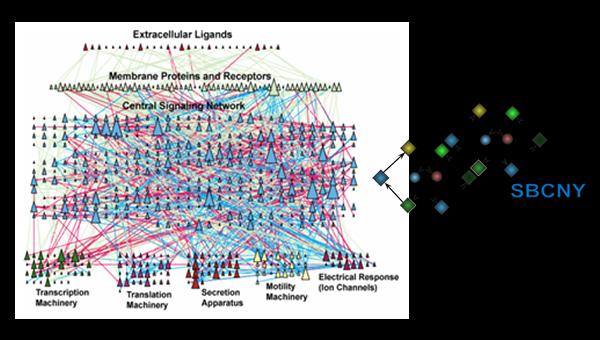
This course will introduce the student to contemporary Systems Biology focused on mammalian cells, their constituents and their functions. Biology is moving from molecular to modular. As our knowledge of our genome and gene expression deepens and we develop lists of molecules (proteins, lipids, ions) involved in cellular processes, we need to understand how these molecules interact with each other to form modules that act as discrete functional systems.

Oct 5th 2026
5-12 Weeks
Existentialism (saylor.org) Saylor Academy
Saylor.org

Existentialism (saylor.org)

Existentialism is a philosophical and literary movement that first was popularized in France soon after World War II by figures such as Jean-Paul Sartre and Albert Camus. The roots of this movement can be traced back to the religious writings of Blaise Pascal in the seventeenth century and those of Søren Kierkegaard in the nineteenth century.

Self Paced
Self-Paced
Philosophy, Science and Religion: Religion and Science (Coursera) Coursera
University of Edinburgh

Philosophy, Science and Religion: Religion and Science (Coursera)

Philosophy, Science and Religion mark three of the most fundamental modes of thinking about the world and our place in it. Are these modes incompatible? Put another way: is the intellectually responsible thing to do to ‘pick sides’ and identify with one of these approaches at the exclusion of others? Or, are they complementary or mutually supportive? As is typical of questions of such magnitude, the devil is in the details. For example, it is important to work out what is really distinctive about each of these ways of inquiring about the world. In order to gain some clarity here, we’ll be investigating what some of the current leading thinkers in philosophy, science and religion are actually doing.

Oct 6th 2026
5-12 Weeks
Re-imaging God in Korean Context (Coursera) Coursera
Yonsei University

Re-imaging God in Korean Context (Coursera)

This course will be an overview of a development of the theological methods in relation to Korea’s cultural context. Completing the course, the learners can understand cultural influences on the dynamic development of Korean churches and indigenous theology; they can also gain an insight into their own image of God and theological imagination in their own cultural context.

Oct 12th 2026
5-12 Weeks
Constructivism and Mathematics, Science, and Technology Education (Coursera) Coursera
University of Illinois at Urbana-Champaign

Constructivism and Mathematics, Science, and Technology Education (Coursera)

This course is designed to help participants examine the implications of constructivism for learning and teaching in science, mathematics, and technology focused areas. Course readings, discussions, and assignments will examine constructivist views of learning, research on students' ideas and idea-based interactions, research on instructional approaches taking student ideas into account, and challenges in implementing constructivist perspectives in instruction.

Oct 12th 2026
5-12 Weeks
Bioinformatics: Introduction and Methods 生物信息学: 导论与方法 (Coursera) Coursera
Peking University

Bioinformatics: Introduction and Methods 生物信息学: 导论与方法 (Coursera)

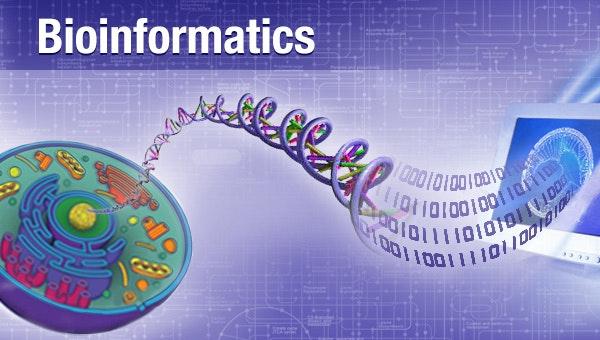
A big welcome to “Bioinformatics: Introduction and Methods” from Peking University! In this MOOC you will become familiar with the concepts and computational methods in the exciting interdisciplinary field of bioinformatics and their applications in biology, the knowledge and skills in bioinformatics you acquired will help you in your future study and research.

Oct 12th 2026
13-24 Weeks
Ancient Philosophy: Plato & His Predecessors (Coursera) Coursera
University of Pennsylvania

Ancient Philosophy: Plato & His Predecessors (Coursera)

What is philosophy? How does it differ from science, religion, and other modes of human discourse? This course traces the origins of philosophy in the Western tradition in the thinkers of Ancient Greece. We begin with the Presocratic natural philosophers who were active in Ionia in the 6th century BCE and are also credited with being the first scientists.

Oct 12th 2026
4 Weeks
Science & Religion 101 (Coursera) Coursera
University of Alberta

Science & Religion 101 (Coursera)

This course examines the nature of both science and religion and attempts to explore the possible relationships between them. The primary purpose is to dispel the popular myth that science and religion are entrenched in a never-ending conflict. As a result, this course argues that if the limits of both science and religion are respected, then their relationship can be complementary.

Sep 28th 2026
5-12 Weeks
Philosophy, Science and Religion: Science and Philosophy (Coursera) Coursera
University of Edinburgh

Philosophy, Science and Religion: Science and Philosophy (Coursera)

Philosophy, Science and Religion mark three of the most fundamental modes of thinking about the world and our place in it. Are these modes incompatible? Put another way: is the intellectually responsible thing to do to ‘pick sides’ and identify with one of these approaches at the exclusion of others? Or, are they complementary or mutually supportive? As is typical of questions of such magnitude, the devil is in the details. For example, it is important to work out what is really distinctive about each of these ways of inquiring about the world. In order to gain some clarity here, we’ll be investigating what some of the current leading thinkers in philosophy, science and religion are actually doing.

Oct 5th 2026
5-12 Weeks