The Modern and the Postmodern (Part 1) (Coursera)

Offered by Wesleyan University,
The Modern and the Postmodern (Part 1) (Coursera)

This course examines how the idea of "the modern" develops at the end of the 18th century in European philosophy and literature, and how being modern (or progressive, or hip) became one of the crucial criteria for understanding and evaluating cultural change. Are we still in modernity, or have we moved beyond the modern to the postmodern?

Class Deals by MOOC List - Click here and see Coursera's Active Discounts, Deals, and Promo Codes.

Syllabus

WEEK 1
Course Pages
“The Modern and the Postmodern Part I” covers the first half of a full semester course on European history, literature and philosophy. We begin with Immanuel Kant and Jean Jacques Rousseau and conclude with Friedrich Nietzsche and Charles Baudelaire and a very quick look at painting at the time they wrote. Although in the final week themes of postmodernism begin to emerge, a discussion of how modernism becomes postmodernism is at the heart of Part II of this course.
Philosophy, Modernity, and Intellectual History
Why is philosophy relevant to modernity?
Through reading Jean-Jacques Rousseau and Immanuel Kant, we examine philosophy as a reflection on modernity and progress.

WEEK 2
What is Enlightenment?
Using Rousseau’s Discourse on the Origins of Inequality, we study how the pursuit of knowledge is related to the politics of inequality.

WEEK 3
From Enlightenment to Revolution
Karl Marx is our focus here as we move from a consideration of ideas to a confrontation with alienation, class struggle and revolution.

WEEK 4
Modernism and Art for Art's Sake
We read Flaubert’s Madame Bovary as a reflection on convention, stupidity and art in the wake of the failures of mid-19th century revolution.

WEEK 5
Re-imagining the World
We situate Charles Darwin’s great achievement in the context of the English Enlightenment traditions and reimaging the world without a goal for change.

WEEK 6
From Struggle to Intensity
Through an examination of Charles Baudelaire and Friedrich Nietzsche, we focus on an aesthetic embrace of intensity instead of search for the “really real.”

WEEK 7
Paintings
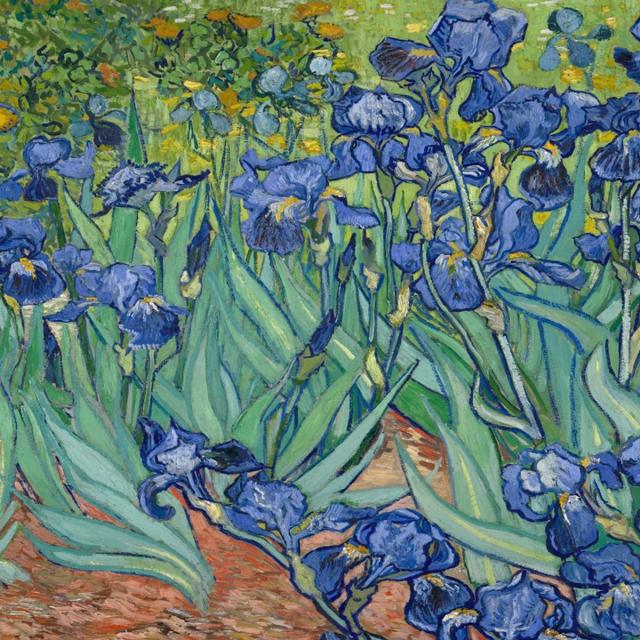
A Quick Survey of how advanced painting moved toward a consideration of the surface of the canvas and away from a quest for the most realistic representation of the world.

Go to Class
MOOC List is learner-supported. When you buy through links on our site, we may earn an affiliate commission.

Related Courses

The Modern and the Postmodern (Part 2) (Coursera) Coursera
Wesleyan University

The Modern and the Postmodern (Part 2) (Coursera)

This course examines how the idea of "the modern" develops at the end of the 18th century in European philosophy and literature, and how being modern (or progressive, or hip) became one of the crucial criteria for understanding and evaluating cultural change. Are we still in modernity, or have we moved beyond the modern to the postmodern?

Aug 10th 2026
5-12 Weeks
Re-imaging God in Korean Context (Coursera) Coursera
Yonsei University

Re-imaging God in Korean Context (Coursera)

This course will be an overview of a development of the theological methods in relation to Korea’s cultural context. Completing the course, the learners can understand cultural influences on the dynamic development of Korean churches and indigenous theology; they can also gain an insight into their own image of God and theological imagination in their own cultural context.

Aug 17th 2026
5-12 Weeks
Setting Expectations & Assessing Performance Issues (Coursera) Coursera
University of California, Davis

Setting Expectations & Assessing Performance Issues (Coursera)

If you don’t know where you are going, any road will take you there. One of the most important roles of a manager is to ensure everyone knows the destination. The most effective managers set expectations and assess their employees’ performance against those expectations, and take a coaching approach to helping them get to the destination. That’s exactly what you’ll learn to do in this course! You will explore how to collaboratively develop expectations with those you lead. When you encounter expectations that are not being met, you’ll learn how to use "Coaching Algebra" to determine the underlying issues that are impeding performance, and how to respond as a manger-coach.

Jul 27th 2026
4 Weeks
Philosophy of Science (Coursera) Coursera
University of Pennsylvania

Philosophy of Science (Coursera)

For the last four centuries, scientists have aimed to provide us with an understanding of the world around us. By all appearances, science has made substantial progress during this time. But is this progress real or illusory? And if it is real, how has this progress been made? This four-week course will consider these important questions.

Aug 10th 2026
4 Weeks
The History of Medicine: Philosophy, Science, and Psychology (Coursera) Coursera
University of California, Santa Cruz

The History of Medicine: Philosophy, Science, and Psychology (Coursera)

"History of Medicine" provides an accessible historical and interdisciplinary perspective on medicine, focused primarily upon therapy and practice, to achieve better understanding of the scope, practice, and limits of medicine. Medicine is defined as the treatment of disease. Human attempts to understand and treat disease will be seen as evolving from the spiritual and mystical practices of the distant past, to the rational approach of the Classical World, and finally to the scientific thinking of the Renaissance and beyond.

Aug 3rd 2026
5-12 Weeks
Alfabetização Midiática, Informacional e Diálogo Intercultural - UNESCO e UNICAMP (Coursera) Coursera
Universidade Estadual de Campinas - UNICAMP

Alfabetização Midiática, Informacional e Diálogo Intercultural - UNESCO e UNICAMP (Coursera)

Este curso quer pensar junto com você sobre um fenômeno recente no Brasil, que é a presença de uma grande quantidade de informação via mundo digital. Vamos mostrar diferentes caminhos do que podemos fazer com essa quantidade incrível de midias e como participar da construção de conteúdo digital de maneira sóbria e segura.

Aug 3rd 2026
5-12 Weeks
Introduction to Korean Philosophy and Culture (Coursera) Coursera
Sungkyunkwan University - SKKU

Introduction to Korean Philosophy and Culture (Coursera)

This course will give you the cultural and historical background to begin your journey into Korean philosophy, and there is no prerequisite knowledge on philosophy required. Anybody who either has an interest in Korean culture, maybe through K-Dramas or K-pop, or an interest in philosophy from a cross-cultural perspective, are all welcome.

Aug 3rd 2026
4 Weeks
Intellectual Humility: Science (Coursera) Coursera
University of Edinburgh

Intellectual Humility: Science (Coursera)

It’s clear that the world needs more intellectual humility. But how do we develop this virtue? And why do so many people still end up so arrogant? Do our own biases hold us back from becoming as intellectually humble as we could be—and are there some biases that actually make us more likely to be humble? Which cognitive dispositions and personality traits give people an edge at being more intellectually humble - and are they stable from birth, learned habits, or something in between? And what can contemporary research on the emotions tell us about encouraging intellectual humility in ourselves and others?

Aug 17th 2026
4 Weeks
Know Thyself - The Value and Limits of Self-Knowledge: The Examined Life (Coursera) Coursera
University of Edinburgh

Know Thyself - The Value and Limits of Self-Knowledge: The Examined Life (Coursera)

According to legend, inscribed on walls of the temple on the sacred site of Delphi in Ancient Greece were two premier injunctions: NOTHING IN EXCESS, and KNOW THYSELF. This course will be an examination of the latter injunction in an effort to discover what self-knowledge is, why it might be valuable, and what, if any, limitations it might face.

Jul 27th 2026
4 Weeks
活用希臘哲學 (Understanding the Greek Philosophy) (Coursera) Coursera
National Taiwan University

活用希臘哲學 (Understanding the Greek Philosophy) (Coursera)

本課程之教學內容以希臘哲學之發展為主,並輔以哲學對人生意義之說明。希臘哲學是西洋哲學的骨幹,呈現西方人思維的核心理念,不但足以解釋今日之西方世界,甚至可以說明全世界的發展趨勢。本課程以希臘哲學為教學之主幹,分為先蘇哲學、詭辯學派、蘇格拉底、柏拉圖、亞理斯多德五個階段。教學的方式以強調他們之間的不同與相同的部分。課程將以演講的方式進行,揉合日常經驗作說明,並不時地會以整體的角度回頭看希臘哲學在今日哲學與社會所扮演的角色。

Jul 27th 2026
5-12 Weeks
America Through Foreign Eyes (Coursera) Coursera
Rice University

America Through Foreign Eyes (Coursera)

The United States has always been a source of fascination — both attraction and repulsion — for the people of France, Mexico, China, and African countries such as Nigeria, Ghana, and Sudan. "America Through Foreign Eyes" is a rich, interdisciplinary, international course that features Rice University faculty from a variety of disciplines and area studies. Focused on perceptions of America abroad, the course is a cross between World Cultures and American Studies. The course features five core modules, each covering the perceptions and interactions of particular regions with America, Americans and Americanization.

Jul 27th 2026
5-12 Weeks
Science & Religion 101 (Coursera) Coursera
University of Alberta

Science & Religion 101 (Coursera)

This course examines the nature of both science and religion and attempts to explore the possible relationships between them. The primary purpose is to dispel the popular myth that science and religion are entrenched in a never-ending conflict. As a result, this course argues that if the limits of both science and religion are respected, then their relationship can be complementary.

Aug 3rd 2026
5-12 Weeks