EdX

Modern Biotechnologies for Wastewater Treatment (edX)

Offered by Purdue University, PurdueX,
Modern Biotechnologies for Wastewater Treatment (edX)

This course introduces modern biotechnologies for wastewater treatment. Modern biotechnologies have been widely used in clinical diagnosis, food production, and the pharmaceutical industry. Their applications in wastewater treatment have greatly improved the accuracy and efficiency of characterizing biological systems in biological wastewater treatment plants and the natural environment.

Class Deals by MOOC List - Click here and see EdX's Active Discounts, Deals, and Promo Codes.

This course is designed for graduate students and working professionals who would like to learn modern biotechnologies in wastewater treatment and how to apply these biotechnologies to understand, characterize, and optimize wastewater treatment systems and plants. At the end of the course, students are expected to understand modern biotechnologies and their applications in wastewater treatment, select appropriate biotechniques to understand, characterize, and optimize wastewater treatment systems, and assess public health risks associated with antibiotic resistant bacteria and viruses in wastewater.
This course is part of the Water and Wastewater Treatment MicroMasters program.

What you'll learn

  • fundamentals of microbiology
  • stoichiometry and microbial metabolism
  • membrane treatment systems and biofouling
  • molecular microbiology tools
  • antibiotic resistance
  • viruses

Syllabus

Week 1:

  • Introduction of Microbiology
  • Fields of Microbiology
  • Microbe Types and Metabolic Lifestyles

Week 2:

  • Electron Donor and Acceptor
  • Stoichiometry and Half-reactions
  • Free Energy
  • Cell Synthesis
  • Developing Overall Stoichiometric Equations

Week 3:

  • Membrane Filtration
  • Membrane Filtration Challenges
  • Microbial Aggregation and Biofilm
  • Biofouling and Control

Week 4:

  • Molecular Ecology Study
  • Microbial Community Analysis
  • Activity Assays and FAME
  • Fluorescence in situ Hybridization
  • Molecular Microbiology Tools

Week 5:

  • Antibiotics
  • Antibiotic Resistance
  • Horizontal Gene Transfer
  • Evolution and Selfish Gene
  • Viruses
Go to Class
MOOC List is learner-supported. When you buy through links on our site, we may earn an affiliate commission.

Related Courses

Principles of Synthetic Biology (edX) EdX
MIT,MITx

Principles of Synthetic Biology (edX)

Learn how to engineer biological systems and program organisms to perform novel tasks. Do you like biology, biotechnology, or genetic engineering? Are you interested in computer science, engineering, or design? Synthetic Biology is an innovative field bringing together these subject areas and many more to create useful tools to solve everyday problems.

This course is archived
13-24 Weeks
Water and Wastewater Treatment Engineering: Physicochemical Technology (edX) EdX
Tsinghua University,TsinghuaX

Water and Wastewater Treatment Engineering: Physicochemical Technology (edX)

Learn the basic principles and characteristics of physicochemical technology in water and wastewater treatment engineering. This course mainly talks about the basic principles, process composition, operation characteristics, process calculation methods and some engineering examples of the main physicochemical treatment methods in water and wastewater treatment.

Self Paced
Self-Paced
Antimicrobial Stewardship: Managing Antibiotic Resistance (FutureLearn) FutureLearn
University of Dundee,British Society for Antimicrobial Chemotherapy - BSAC

Antimicrobial Stewardship: Managing Antibiotic Resistance (FutureLearn)

Understand antibiotic resistance, and how antimicrobial stewardship can slow down or reduce it, with this free online course. Antimicrobial stewardship is a fast-growing field that aims to address this issue by managing our use of antibiotics to slow down or reduce the occurrence of antimicrobial resistance. Designed for healthcare professionals, this six-week course will inform you about - and empower you to provide - safe, high-quality antibiotic use.

Self Paced
5-12 Weeks
Drug Development (Coursera) Coursera
University of California, San Diego

Drug Development (Coursera)

The University of California San Diego, Skaggs School of Pharmacy and Pharmaceutical Sciences Drug Development course brings you lectures from both faculty and industry experts. With this course, recorded on campus at UCSD, we seek to share our access to top people in the field who bring an unprecedented range of expertise on drug development. In this course you will learn the different stages of clinical development as well as the regulatory including but not limited to, an Investigational New Drug Application (IND), New Drug Application (NDA), and product labeling.

Sep 28th 2026
3 Weeks
Challenges in Antibiotic Resistance: Point Prevalence Surveys (FutureLearn) FutureLearn
British Society for Antimicrobial Chemotherapy - BSAC

Challenges in Antibiotic Resistance: Point Prevalence Surveys (FutureLearn)

Learn how to use Point Prevalence Surveys (PPS) to measure antibiotic consumption and fight antimicrobial resistance. Point Prevalence Surveys (PPS) are an important tool for healthcare professionals to use to assess and improve antibiotic prescribing locally, nationally and globally. This online course - led by experts from the British Society for Antimicrobial Chemotherapy (BSAC) - looks at their use. You’ll discover the importance of measuring antibiotic consumption and how PPS can help.

Self Paced
2 Weeks
Introduction to Systems Biology (Coursera) Coursera
Icahn School of Medicine at Mount Sinai

Introduction to Systems Biology (Coursera)

This course will introduce the student to contemporary Systems Biology focused on mammalian cells, their constituents and their functions. Biology is moving from molecular to modular. As our knowledge of our genome and gene expression deepens and we develop lists of molecules (proteins, lipids, ions) involved in cellular processes, we need to understand how these molecules interact with each other to form modules that act as discrete functional systems.

Oct 5th 2026
5-12 Weeks
Water and Wastewater Treatment Engineering: Biochemical Technology (edX) EdX
Tsinghua University,TsinghuaX

Water and Wastewater Treatment Engineering: Biochemical Technology (edX)

Learn the basic principles and characteristics of biochemical technology in water and wastewater treatment engineering. Biochemical technology in water and wastewater treatment engineering is essential in the field of water treatment. In this environmental studies course you will learn the basic principles and characteristics of biochemical technology.

Self Paced
Self-Paced
Más que química (Coursera) Coursera
Universidad Nacional de Colombia

Más que química (Coursera)

El objeto de la química, como disciplina científica, se enfoca en el estudio de la materia y de los cambios que ésta experimenta. En tanto disciplina científica, a la que se le atribuye la reputación de ser una ciencia complicada y aburrida. Esta reputación, bastante inmerecida, obedece al poco conocimiento que se tiene sobre ella y sobre sus enormes posibilidades de aplicación en el mundo científico, en diferentes campos de la industria y la producción, así como en la vida cotidiana.

Oct 5th 2026
5-12 Weeks
Nutrition and Health: Food Risks (edX) EdX
Wageningen University,WageningenX

Nutrition and Health: Food Risks (edX)

Learn about bacteria, pesticides and health hazards present in food. Everyday reports of food scandals and recalls are published. One day it’s scary bacteria in meat, and another day it’s dangerous pesticides in fruits. According to some, meat needs to be cooked well to prevent food-borne illness while others warn not to heat food to prevent the formation of poisonous substances.

Self Paced
Self-Paced
Whole genome sequencing of bacterial genomes - tools and applications (Coursera) Coursera
Technical University of Denmark - DTU

Whole genome sequencing of bacterial genomes - tools and applications (Coursera)

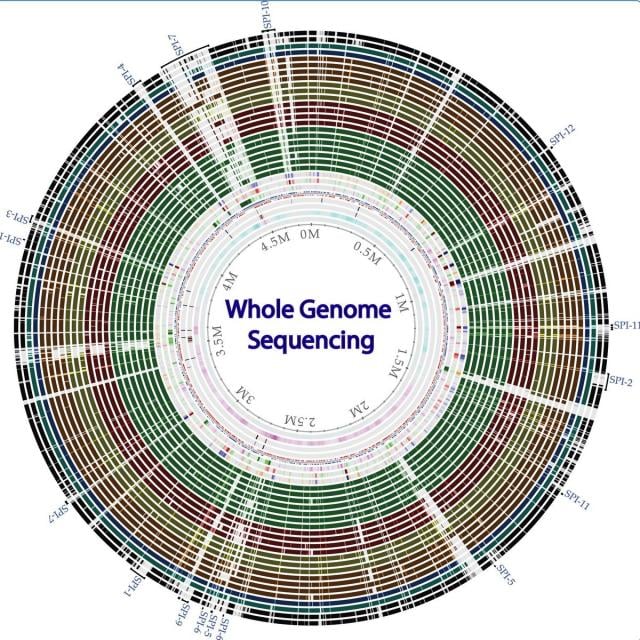
This course will cover the topic of Whole genome sequencing (WGS) of bacterial genomes which is becoming more and more relevant for the medical sector. WGS technology and applications are high on international political agenda, as the classical methods are being replaced by WGS technology and therefore bioinformatic tools are extremely important for allowing the people working in this sector to be able to analyze the data and obtain results that can be interpreted and used for different purposes.

Oct 5th 2026
5-12 Weeks