EdX

Macroeconomics of Climate Change: Mitigation Strategies (edX)

Macroeconomics of Climate Change: Mitigation Strategies (edX)

Learn about comprehensive strategies for designing mitigation policies, how to analyze the impact of such policies, and considerations for scaling up carbon pricing. This online course serves as the second module of a broader Macroeconomics of Climate Change (MCCx) course. In this modular offering, you will learn comprehensive strategies for designing mitigation policies, how to analyze the impact of such policies, and considerations for scaling up carbon pricing.

Class Deals by MOOC List - Click here and see EdX's Active Discounts, Deals, and Promo Codes.

What you'll learn
By the end of the course, you will:

  • Explain the rationale for mitigation as a policy approach.
  • Identify the appropriate components of mitigation policy instruments.
  • Compare the advantages and disadvantages of carbon pricing as a key mitigation instrument for countries.
  • Identify how to analyze and quantify the macroeconomic impacts of mitigation policies.
  • Determine key considerations for policymakers when strategizing to scale up carbon pricing at the domestic and international level.
Go to Class
MOOC List is learner-supported. When you buy through links on our site, we may earn an affiliate commission.

Related Courses

Climate Change: The Science and Global Impact (edX) EdX
SDGAcademyX,SDG Academy

Climate Change: The Science and Global Impact (edX)

We need to understand the science behind global warming to avoid the most damaging and irreversible climate change impacts on people and planet. Climate change is arguably the greatest challenge of our time. Human activity has already warmed the planet by one degree Celsius relative to pre-industrial times, and we are feeling the effects through record heat waves, droughts, wildfires and flooding.

Self Paced
Self-Paced
Programmation et Politiques Financières, Première Partie: Analyse des Comptes Macroéconomiques (edX) EdX
International Monetary Fund - IMF,IMFx

Programmation et Politiques Financières, Première Partie: Analyse des Comptes Macroéconomiques (edX)

Un cours sur les comptes macroéconomiques, leurs interrelations, et l’analyse des événements économiques. Quel est l’état de santé de l’économie ? Comment la politique économique peut-elle rétablir ou contribuer à la bonne santé d’un pays ? Ces questions sont au cœur de la programmation financière. Nos cours de PPF (Programmation et politiques financières) vous permettront d’acquérir les bases nécessaires pour y répondre.

Self Paced
Self-Paced
Macroeconomics: Theory and Policy (edX) EdX
Indian Institute of Management, Bangalore,IIMBx

Macroeconomics: Theory and Policy (edX)

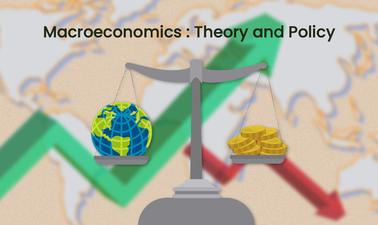
This course provides a basic understanding of the overall components of economies which tend to be the key factor for taking decisions in a large scale. The course deals with theoretical models of Consumption, Savings, Investment alongwith key economic concepts like Inflation and Unemployment. This course will discuss the unique economic terms which dictate the working of economies all over the world.

Self Paced
Self-Paced
Programación y políticas financieras, Parte 2: Diseño de programas (FPP.2x) (edX) EdX
International Monetary Fund - IMF,IMFx

Programación y políticas financieras, Parte 2: Diseño de programas (FPP.2x) (edX)

Aprenda a realizar pronósticos de cuentas macroeconómicas y a diseñar un programa económico para un estudio de caso de país. Con este curso de macroeconomía mejorará sus aptitudes para analizar políticas macroeconómicas y aprenderá a diseñar un programa económico y financiero utilizando datos económicos reales. El ejercicio de programación financiera simula tareas que los economistas del Fondo Monetario Internacional (FMI) encargados de los distintos países llevan a cabo cotidianamente en su labor de supervisión y elaboración de programas de países.

Self Paced
Self-Paced
Gestion macroéconomique dans les pays riches en ressources naturelles (edX) EdX
International Monetary Fund - IMF,IMFx

Gestion macroéconomique dans les pays riches en ressources naturelles (edX)

Quels sont les problèmes rencontrés par les pays riches en ressources naturelles sur le plan de la politique macroéconomique ? Dans ce cours, nous verrons comment les dirigeants font face au caractère épuisable des ressources naturelles et à la volatilité de leurs prix.

Self Paced
Self-Paced
Sustainable Aviation: The Route to Climate-Neutral Aviation (edX) EdX
Delft University of Technology,DelftX

Sustainable Aviation: The Route to Climate-Neutral Aviation (edX)

To reduce the environmental footprint of the aviation sector we need to start a clean sky revolution. Discover the latest developments in this field – from airplane design, energy carriers, operations – and learn how you can play a role. Sustainable aviation is a key area for climate action. In this course, we will introduce you to various aircraft technologies, and recent innovations and promising future developments in the field of aviation. All necessary mathematical and engineering concepts will explained.

Self Paced
Self-Paced
Climate Change: Financial Risks and Opportunities (edX) EdX
Imperial College Business School,Imperial College London

Climate Change: Financial Risks and Opportunities (edX)

Explore the risks and opportunities that climate change presents to financial markets, hearing from a range of investment industry leaders and scientific researchers. Do you want to know more about how a warming planet is changing the landscape for investing? Geared towards professionals working in financial markets, this course provides a solid introduction to the financial risks and opportunities arising from man-made climate change.

Self Paced
Self-Paced
Designing a Climate Neutral World: An Introduction (edX) EdX
Delft University of Technology,DelftX

Designing a Climate Neutral World: An Introduction (edX)

Learn about climate change strategies and the basic tools used for evaluating alternative options for mitigating greenhouse gas emissions.Mitigation of climate change is one of the most important challenges of our times. To prevent irreversible damage to human societies and the environment, it was agreed that world countries should limit the global average temperature rise. To avoid dangerous impacts of climate change, it is needed to limit global temperature rise to well below 2 °C or even to 1.5 °C above pre-industrial levels.

Self Paced
Self-Paced
Climate Change: Carbon Capture and Storage (edX) EdX
University of Edinburgh,EdinburghX

Climate Change: Carbon Capture and Storage (edX)

Explore the technology that can provide a long-term solution to protect our atmosphere from an excess of carbon dioxide, in the context of global energy, our use of fossil fuels, and climate change. The atmosphere is a shared resource and the amount of greenhouse gases it can absorb is a finite resource. This introductory course to the technology of Carbon Capture and Storage is designed for a wider audience with an interest in energy, sustainability and climate change.

Self Paced
Self-Paced
Financial Development and Financial Inclusion (edX) EdX
International Monetary Fund - IMF,IMFx

Financial Development and Financial Inclusion (edX)

Learn how to develop an efficient, inclusive and stable financial sector that is essential for a thriving economy. This course was developed by the IMF in collaboration with the European Investment Bank. Higher rates of financial inclusion and financial market development mean more prosperous societies. But how to make it all happen? This course outlines common ways countries develop robust financial sectors – from banks to equity markets.

Self Paced
Self-Paced