Linear Algebra: Problems and Methods (Stepik)

Linear Algebra: Problems and Methods (Stepik)

The goal of the course is to explain the fundamental ideas of linear algebra and how to use them to find easy solutions of hard problems.

The goal of this course is to help you to find and understand the building blocks of linear algebra. Moreover, it is important to develop personal vision and intuition about them. This cannot be achieved by solving 1000 similar typical exam problems.

In this course you will be provided with a sort of "minimal linear algebra kit", so that you can manage the saved time yourself. In particular, you are encouraged to discuss the lessons here at stepic, to participate in competitions and other events at your campus, and to surf web resources such as math.stackexchange.com, mathoverflow.net, arxiv.org and of course Wikipedia. If you are enrolled in a traditional course of linear algebra, you will benefit from this course too, since it is not designed to substitute the traditional courses.
Go to Class
MOOC List is learner-supported. When you buy through links on our site, we may earn an affiliate commission.

Related Courses

Calculus: Single Variable Part 3 - Integration (Coursera) Coursera
University of Pennsylvania

Calculus: Single Variable Part 3 - Integration (Coursera)

Calculus is one of the grandest achievements of human thought, explaining everything from planetary orbits to the optimal size of a city to the periodicity of a heartbeat. This brisk course covers the core ideas of single-variable Calculus with emphases on conceptual understanding and applications. The course is ideal for students beginning in the engineering, physical, and social sciences.

Aug 3rd 2026
4 Weeks
Advanced Linear Models for Data Science 1: Least Squares (Coursera) Coursera
Johns Hopkins University

Advanced Linear Models for Data Science 1: Least Squares (Coursera)

Welcome to the Advanced Linear Models for Data Science Class 1: Least Squares. This class is an introduction to least squares from a linear algebraic and mathematical perspective. Before beginning the class make sure that you have the following: a basic understanding of linear algebra and multivariate calculus; a basic understanding of statistics and regression models; at least a little familiarity with proof based mathematics; basic knowledge of the R programming language.

Jul 27th 2026
5-12 Weeks
Introduction to Logic (Coursera) Coursera
Stanford University

Introduction to Logic (Coursera)

This course is an introduction to Logic from a computational perspective. It shows how to encode information in the form of logical sentences; it shows how to reason with information in this form; and it provides an overview of logic technology and its applications - in mathematics, science, engineering, business, law, and so forth.

Jul 30th 2026
5-12 Weeks
Fibonacci Numbers and the Golden Ratio (Coursera) Coursera
The Hong Kong University of Science and Technology - HKUST

Fibonacci Numbers and the Golden Ratio (Coursera)

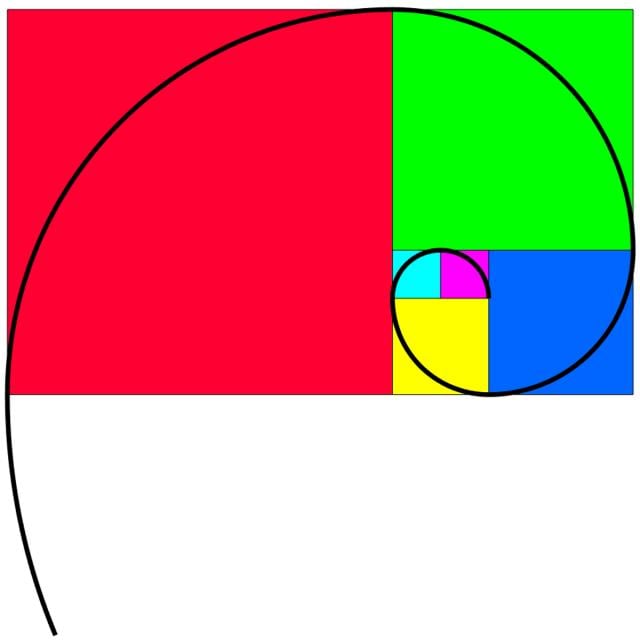
Learn the mathematics behind the Fibonacci numbers, the golden ratio, and how they are related. These topics are not usually taught in a typical math curriculum, yet contain many fascinating results that are still accessible to an advanced high school student. The course culminates in an explanation of why the Fibonacci numbers appear unexpectedly in nature, such as the number of spirals in the head of a sunflower.

Aug 3rd 2026
3 Weeks
Jugar y Aprender Matemática en aulas heterogéneas (Coursera) Coursera
Universidad Austral

Jugar y Aprender Matemática en aulas heterogéneas (Coursera)

Cuando se asume la enseñanza de la matemática con el compromiso de la participación de todos los alumnos en una comunidad de producción, en la que se resuelven problemas con distintos procedimientos, se comparan producciones, se analiza la validez de las afirmaciones que se hacen, la tarea resulta todo un desafío. En el caso del plurigrado, el desafío parece aún mayor. ¿Cómo presentar problemas que involucren en este trabajo reflexivo a niños y niñas de distintas edades y con distintos conocimientos?

Aug 3rd 2026
4 Weeks
Applied Calculus with Python (Coursera) Coursera
Johns Hopkins University

Applied Calculus with Python (Coursera)

This course is designed for the Python programmer who wants to develop the foundations of Calculus to help solve challenging problems as well as the student of mathematics looking to learn the theory and numerical techniques of applied calculus implemented in Python. By the end of this course, you will have learned how to apply essential calculus concepts to develop robust Python applications that solve a variety of real-world challenges.

Aug 3rd 2026
5-12 Weeks
Calculus: Single Variable Part 2 - Differentiation (Coursera) Coursera
University of Pennsylvania

Calculus: Single Variable Part 2 - Differentiation (Coursera)

Calculus is one of the grandest achievements of human thought, explaining everything from planetary orbits to the optimal size of a city to the periodicity of a heartbeat. This brisk course covers the core ideas of single-variable Calculus with emphases on conceptual understanding and applications. The course is ideal for students beginning in the engineering, physical, and social sciences.

Aug 3rd 2026
3 Weeks
Initiation à la théorie des distributions (Coursera) Coursera
École Polytechnique

Initiation à la théorie des distributions (Coursera)

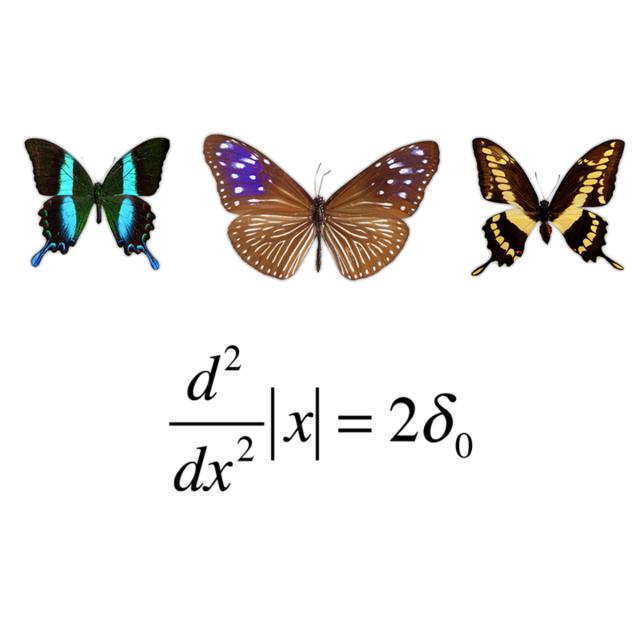
Une fonction discontinue peut-elle être solution d'une équation différentielle? Comment définir rigoureusement la masse de Dirac (une "fonction" d'intégrale un, nulle partout sauf en un point) et ses dérivées? Peut-on définir une notion de "dérivée d'ordre fractionnaire"? Cette initiation aux distributions répond à ces questions - et à bien d'autres.

Aug 10th 2026
5-12 Weeks
Analysis of Algorithms (Coursera) Coursera
Princeton University

Analysis of Algorithms (Coursera)

This course teaches a calculus that enables precise quantitative predictions of large combinatorial structures. In addition, this course covers generating functions and real asymptotics and then introduces the symbolic method in the context of applications in the analysis of algorithms and basic structures such as permutations, trees, strings, words, and mappings.

Aug 3rd 2026
5-12 Weeks