Java für Einsteiger (openHPI)

Java für Einsteiger (openHPI)

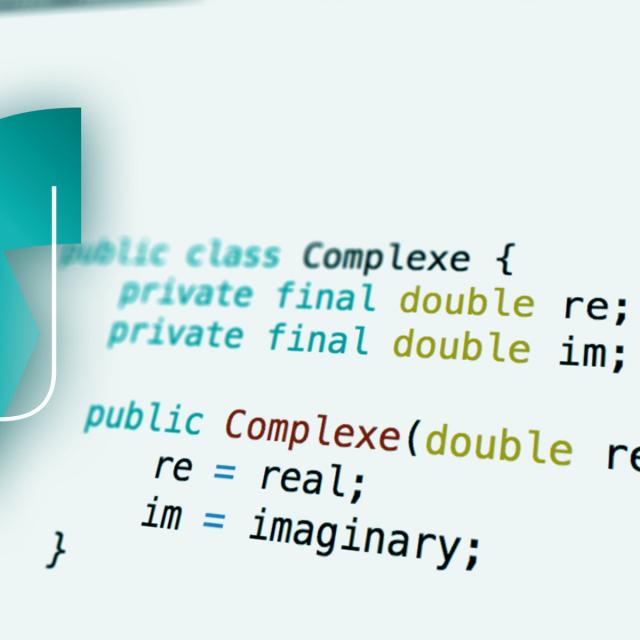
Mit diesem neuen openHPI Einsteigerkurs möchten wir unseren Teilnehmern die Grundlagen der Programmiersprache Java vermitteln. Java ist weit verbreitet und wird vielseitig eingesetzt. Unter anderem werden mit Java Programme für Googles Android Plattform entwickelt. Dieser Kurs vermittelt die grundlegenden Konzepte des Programmierens einfach und verständlich. Durch regelmäßige praktische Übungen wird das Gelernte angewendet und gefestigt. Wir sprechen mit diesem Kurs alle Einsteiger an, die sich für die Programmierung in Java interessieren. Voraussetzung ist ein starkes Interesse an der Funktionsweise von Programmen am Computer, Programmiererfahrung ist jedoch nicht notwendig. Unsere Teilnehmer benötigen lediglich einen Computer mit einem Internetzugang und einem Browser.

2 Wochen Workshop
Als Ergänzung zu diesem Kurs wird ein zweiwöchiger Workshop angeboten der eine Einführung in die Benutzung einer Java IDE (Integrated Development Environment = Programmierumgebung) geben wird. Dieser Kurs wird die Teilnehmer dazu befähigen, das erlernte Wissen aus dem Programmierkurs zu festigen und eigene Programme umzusetzen.

Course contents

Woche 1:
In der ersten Woche erklären wir Variablen und die grundlegenden Programmstrukturen.
Woche 2:
In Woche zwei lernen wir etwas über Eigenschaften von Objekten, Parameter, Bedingungen, Schleifen und Arrays.
Exkurs Modellierung:
In diesem Exkurs werden wir uns dem Thema objekt-orientierte Programmierung unter einem anderem Gesichtspunkt nähern. Welche Klasse übernimmt welche Aufgaben in einem Projekt. Wie sehen die Beziehungen von Klassen untereinander aus.
Woche 3:
In der dritten Woche beschäftigen wir uns mit Sichtbarkeiten, Überladung und Vererbung.
Woche 4:
In der letzten Woche gehen wir auf Objektdatentypen, For-Each-Schleifen und Typumwandlungen ein.
Exkurs IDE:
Vorabvideo zum Workshop Einführung in Eclipse

Go to Class
MOOC List is learner-supported. When you buy through links on our site, we may earn an affiliate commission.

Related Courses

Embedded Smart Home (openHPI) OpenHPI
Hasso-Plattner-Institut

Embedded Smart Home (openHPI)

Herzlich Willkommen zum interaktiven Kurs „Embedded Smart Home“. Wir freuen uns, Sie in die Welt des Smart Home zu entführen. Während des Kurses bekommen Sie Einblicke in die Umsetzung eines Smart Home Projekts auf Basis eines Raspberry Pi und unter Nutzung von Sensoren, Aktuatoren und Displays. Um für die Programmierung gewappnet zu sein, können Sie Ihr Wissen aus dem zurückliegenden Python Kurs ("Spielend Programmieren lernen") nutzen und vertiefen. Wer diesen Kurs noch nicht besucht hat, kann dies auch jetzt noch im Archivmodus machen.

Self Paced
Self-Paced
Introduction to Web Development (Coursera) Coursera
University of California, Davis

Introduction to Web Development (Coursera)

This course is designed to start you on a path toward future studies in web development and design, no matter how little experience or technical knowledge you currently have. The web is a very big place, and if you are the typical internet user, you probably visit several websites every day, whether for business, entertainment or education. But have you ever wondered how these websites actually work? How are they built? How do browsers, computers, and mobile devices interact with the web? What skills are necessary to build a website? With almost 1 billion websites now on the internet, the answers to these questions could be your first step toward a better understanding of the internet and developing a new set of internet skills.

Jun 8th 2026
5-12 Weeks
Advanced Data Structures in Java (Coursera) Coursera
University of California, San Diego

Advanced Data Structures in Java (Coursera)

How does Google Maps plan the best route for getting around town given current traffic conditions? How does an internet router forward packets of network traffic to minimize delay? How does an aid group allocate resources to its affiliated local partners? To solve such problems, we first represent the key pieces of data in a complex data structure. In this course, you’ll learn about data structures, like graphs, that are fundamental for working with structured real world data.

Jun 8th 2026
5-12 Weeks
Data Structures and Performance (Coursera) Coursera
University of California, San Diego

Data Structures and Performance (Coursera)

How do Java programs deal with vast quantities of data? Many of the data structures and algorithms that work with introductory toy examples break when applications process real, large data sets. Efficiency is critical, but how do we achieve it, and how do we even measure it? This is an intermediate Java course. We recommend this course to learners who have previous experience in software development or a background in computer science, and in particular, we recommend that you have taken the first course in this specialization (which also requires some previous experience with Java).

Jun 8th 2026
5-12 Weeks
Object Oriented Programming in Java (Coursera) Coursera
University of California, San Diego

Object Oriented Programming in Java (Coursera)

Welcome to our course on Object Oriented Programming in Java using data visualization. People come to this course with many different goals -- and we are really excited to work with all of you! Some of you want to be professional software developers, others want to improve your programming skills to implement that cool personal project that you’ve been thinking about, while others of you might not yet know why you’re here and are trying to figure out what this course is all about.

Jun 8th 2026
5-12 Weeks
Building Scalable Java Microservices with Spring Boot and Spring Cloud (Coursera) Coursera
Google Cloud

Building Scalable Java Microservices with Spring Boot and Spring Cloud (Coursera)

"Microservices" describes a software design pattern in which an application is a collection of loosely coupled services. These services are fine-grained, and can be individually maintained and scaled. The microservices architecture is ideal for the public cloud, with its focus on elastic scaling with on-demand resources. In this course, you will learn how to build Java applications using Spring Boot and Spring Cloud on Google Cloud Platform.

Jun 9th 2026
2 Weeks
Introduction to HTML5 (Coursera) Coursera
University of Michigan

Introduction to HTML5 (Coursera)

Thanks to a growing number of software programs, it seems as if anyone can make a webpage. But what if you actually want to understand how the page was created? There are great textbooks and online resources for learning web design, but most of those resources require some background knowledge. This course is designed to help the novice who wants to gain confidence and knowledge. We will explore the theory (what actually happens when you click on a link on a webpage?), the practical (what do I need to know to make my own page?), and the overlooked (I have a page, what do I do now?).

Jun 8th 2026
3 Weeks
Functional Programming Principles in Scala (Coursera) Coursera
École Polytechnique Fédérale de Lausanne

Functional Programming Principles in Scala (Coursera)

Functional programming is becoming increasingly widespread in industry. This trend is driven by the adoption of Scala as the main programming language for many applications. Scala fuses functional and object-oriented programming in a practical package. It interoperates seamlessly with both Java and Javascript. Scala is the implementation language of many important frameworks, including Apache Spark, Kafka, and Akka. It provides the core infrastructure for sites such as Twitter, Tumblr and also Coursera.

Jun 8th 2026
5-12 Weeks
Functional Program Design in Scala (Coursera) Coursera
École Polytechnique Fédérale de Lausanne

Functional Program Design in Scala (Coursera)

In this course you will learn how to apply the functional programming style in the design of larger applications. You'll get to know important new functional programming concepts, from lazy evaluation to structuring your libraries using monads. We'll work on larger and more involved examples, from state space exploration to random testing to discrete circuit simulators. You’ll also learn some best practices on how to write good Scala code in the real world.

Jun 8th 2026
5-12 Weeks