EdX

Islam Through Its Scriptures (edX)

Islam Through Its Scriptures (edX)

Learn about the Quran, the central sacred text of Islam, through an exploration of the rich diversity of roles and interpretations in Muslim societies. How can you improve your understanding of Islam and its most important holy text, the Quran? How can you make sense of a tradition and a text that have been interpreted in different ways across vast geographical spaces for nearly a millennium and a half?

Class Deals by MOOC List - Click here and see EdX's Active Discounts, Deals, and Promo Codes.

Using a multimedia and student-centered approach, this religion course provides tools and perspectives for understanding the role of the Quran in the Islamic tradition. Learners will develop the skills and context to read the text themselves, while also being introduced to some of the issues classical and contemporary interpreters have addressed. This approach enables learners to explore the influence of the Quran on diverse Muslim understandings of Islam.

This course is part of the World Religions Through Their Scriptures XSeries Program.

What you'll learn:

  • An introduction to the place of the Quran in Muslim cultures
  • Major themes of the Quran
  • The historical and cultural contexts of the Quran
  • Interpretive skills that enable a more nuanced reading of the Quran
  • Diverse approaches Muslims have adopted to engaging with Quranic texts, including issues in contemporary interpretation
Go to Class
MOOC List is learner-supported. When you buy through links on our site, we may earn an affiliate commission.

Related Courses

Christianity Through Its Scriptures (edX) EdX
HarvardX,Harvard University

Christianity Through Its Scriptures (edX)

Learn about Christianity through a study of its sacred scriptures. We will explore how diverse Christians have interpreted these writings and practiced their teachings over a 2000 year, global history. Christianity is a global religion. From modest beginnings 2,000 years ago, it has grown to encompass nearly a third of the human population. Diverse in languages, cultures, histories and creeds, Christians nonetheless share a common collection of sacred scripture called the Bible.

Self Paced
Self-Paced
Coexistence in Medieval Spain: Jews, Christians, and Muslims (Coursera) Coursera
University of Colorado System

Coexistence in Medieval Spain: Jews, Christians, and Muslims (Coursera)

This course explores Jewish, Christian, and Muslim intercultural relations in Iberia from the Visigothic era (6th century CE) until the creation of Queen Isabel I and King Ferdinand II Catholic Spain (late 15th century). We evaluate the many identities of the peninsula known as Christian Hispania, Jewish Sefarad, and Islamic al-Andalus. We trace the origins and trajectory of conflict between these communities (the Muslim conquest of Spain, Christian Reconquista, prohibitions blocking intermixing of peoples, and expulsions).

Nov 9th 2026
5-12 Weeks
Arab-Muslim Philosophy: Generating new meaning of the world (Coursera) Coursera
E-Learning Development Fund,RUDN University

Arab-Muslim Philosophy: Generating new meaning of the world (Coursera)

Dear listeners, our course “Arab-Muslim Philosophy: Generating new meaning of the world and the human Being” is the unique representation of the basic periods and schools of the Arab-Muslim Philosophy in the aspect of consideration, how this philosophical tradition is generating its own vision and meaning of the world and the Human being.

Aug 1st 2022
5-12 Weeks
Religions From The Inside: Improving Interreligious Dialogue (FutureLearn) FutureLearn
Università della Svizzera italiana

Religions From The Inside: Improving Interreligious Dialogue (FutureLearn)

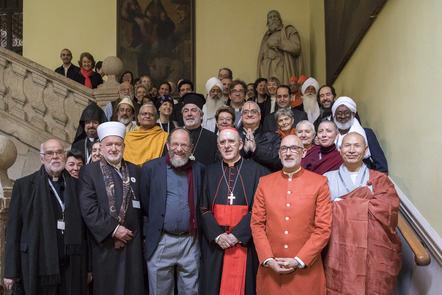
Explore the value of cooperation between faiths and learn how the five main world religions’ core beliefs relate to each other. Learn how to encourage and benefit from respectful interfaith dialogue. This short course, led by the Faculty of Theology of Lugano in collaboration with USI, will develop your knowledge of what interfaith dialogue means from a philosophical and epistemological point of view, and teach how to enjoy productive interfaith dialogue.

Oct 4th 2021
5-12 Weeks
Modern China’s Foundations: The Manchus and the Qing (edX) EdX
HarvardX,Harvard University

Modern China’s Foundations: The Manchus and the Qing (edX)

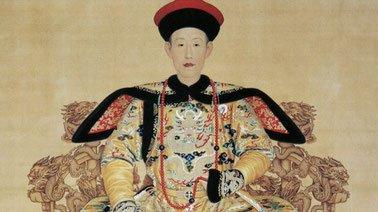
Learn how the Manchus conquered the Qing and established the last of the imperial dynasties. This course, part of a comprehensive series on China, looks at the Qing state in the early 1600s and the challenges that the Manchus faced as minority rulers. While living in Chinese cities and surrounded by Chinese culture — a culture that was far more sophisticated than their own — the Manchus struggled to hold onto their identity as a conquesting people.

Self Paced
Self-Paced
Muslims in Britain: Changes and Challenges (FutureLearn) FutureLearn
Cardiff University

Muslims in Britain: Changes and Challenges (FutureLearn)

Develop your understanding of Muslims and their faith through an exploration of communities in Britain. Islam is the second largest religion in the world today and dominates much of the current geopolitical discourse. People are increasingly bombarded by dramatic and at times disturbing headlines. Yet general knowledge of Muslims and their faith can be poor. There is consequently a need for a balanced and well-informed understanding of the current debates around this internationally significant topic.

No sessions available
4 Weeks
China’s First Empires and the Rise of Buddhism (edX) EdX
HarvardX,Harvard University

China’s First Empires and the Rise of Buddhism (edX)

Learn about the Qin and Han dynasties, and how Buddhism and ideas of self-realization influenced the medieval period. This course, the second in a collection on Chinese history and culture, addresses how the Qin dynasty conquered China and established a new system of government and how the Han dynasty built a stable, centralized empire that lasted for hundreds of years. We cover the early history of Buddhism in China and how the rising feudal aristocracy responded to the loss of empire by looking inward.

Self Paced
Self-Paced
Why Religion Matters: Religious Literacy, Culture and Diversity (FutureLearn) FutureLearn
The Open University

Why Religion Matters: Religious Literacy, Culture and Diversity (FutureLearn)

Discover why religion is important for understanding and engaging with global challenges. Consider the ways religion affects personal and political decision-making. Religion not only influences personal behaviours and ethics, but it’s also relevant to international conflicts and domestic policy decisions. On this course, you will gain a broader understanding of why religion matters in society and in different cultures.

Self Paced
4 Weeks
Burgos: Deciphering Secrets of Medieval Spain (Coursera) Coursera
University of Colorado System

Burgos: Deciphering Secrets of Medieval Spain (Coursera)

This advanced course focuses on two primary goals: (1) appraising how Jews, Christians, and Muslims shaped the history of medieval Spain and (2) mastering the craft of Spanish paleography, the skill of identifying Spanish handwriting in the 11th- through 15th-century manuscripts. Through the lens of the medieval history of Burgos, we dedicate 75% percent of our efforts to developing pragmatic expertise in the interpretation of Carolingian/French/Gothic handwriting.

Jun 24th 2024
5-12 Weeks
Violences et religions (Coursera) Coursera
University of Geneva

Violences et religions (Coursera)

La question « violences et religions » est d’actualité, et pas seulement depuis les attentats d’Al-Qaïda ou de Daech. Pour bien la comprendre, ce cours propose de prendre du recul et de l’envisager sous un angle historique et comparatiste. Le domaine concerné étant l’espace euro-méditerranéen, ce sont essentiellement le christianisme et l’islam qui seront traités (quelques séquences sont également consacrées au judaïsme).

Nov 2nd 2026
5-12 Weeks