IoT Devices (Coursera)

IoT Devices (Coursera)

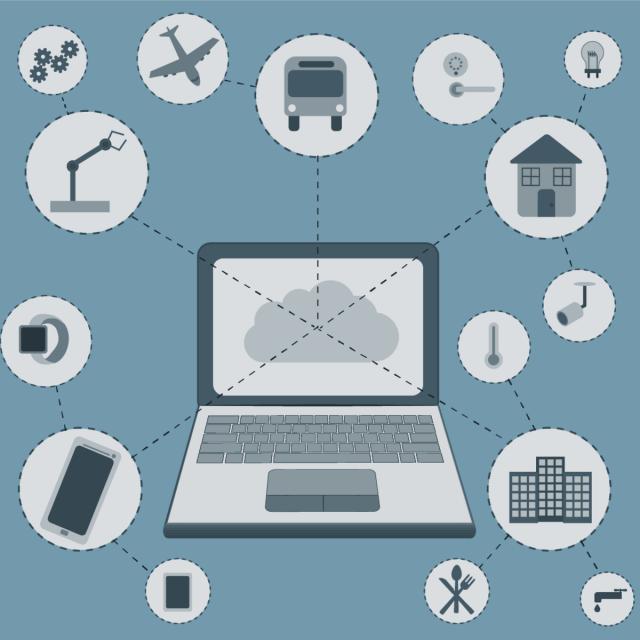
The Internet of Things (IoT) stands to be the next revolution in computing. Billions of data-spouting devices connected to the Internet are already fundamentally changing the way we live and work. This course teaches a deep understanding of IoT technologies from the ground up. Students will learn IoT device programming (Arduino and Raspberry Pi), sensing and actuating technologies, IoT protocol stacks (Zigbee, 5G, NFC, MQTT, etc), networking backhaul design and security enforcement, data science for IoT, and cloud-based IoT platforms such as AWS IoT.

Class Deals by MOOC List - Click here and see Coursera's Active Discounts, Deals, and Promo Codes.

Students will be guided through laboratory assignments designed to give them practical real-world experience, where they will deploy a distributed wifi monitoring service, a cloud-based IoT service platform serving tens of thousands of heartbeat sensors, and more. Students will emerge from the class with a cutting-edge education on this rapidly emerging technology segment, and with the confidence to carry out tasks they will commonly encounter in industrial settings. Important: This whole series of courses consists in part of practical experimentation using actual hardware, which you will need to acquire. (Cost may vary between 100 and 200 USD depending on your location). Most parts that are needed for the first course, will be re-used in the following courses.

What You Will Learn

  • Assembly of networked devices, programming of networked devices

Course 1 of 4 in the Hands-on Internet of Things Specialization

Syllabus

WEEK 1
Orientation, Basics and Lab instructions
Welcome to our first course on Internet of Things! You will become familiar with the course and our learning environment. The orientation will also help you obtain the technical skills required to navigate the course.In this week you'll see that The Internet of Things is amazing, but it's not like it's some completely new thing. The amazing devices and technologies being are made up of systems, protocols, and architectures that have been around for decades. So in order to understand IoT, it's important to understand some key pieces of the Internet. We'll also get you started on the lab project - the best way to get your hands on things. In this practical lab we will guide you to gain experience with Internet of Things devices. You will do this by implementing a 2019 Honda Civic. In particular, you will be implementing a vehicular network and computation infrastructure comparable to that in the 2019 Honda Civic. Your infrastructure will perform real-time communications within the automobile to perform life-saving features such as obstacle avoidance and lane departure mitigation. Doing this will give you strong experience in programming IoT components, as well as teach you about vehicular networks, an emerging powerful use case for IoT.

WEEK 2
Devices: IoT circuits
In this week we will describe the foundational notions of electricity and IoT circuits you will need to build real IoT devices. We will start off by describing what electricity is and how it flows through electronics. We will present what electronic components are out there, how to choose the set you need for your target system, and how to construct the circuitry between them to build the logic underlying your device.

WEEK 3
IoT Devices Architecture
In computing, we have the concept of architecture as well. You don't just design computing systems. In this module, you will learn about how IoT systems are architected. We will start off by describing the higher-level components used to build IoT systems such as ICs and breakout modules. We will present computational platforms used in constructing real IoT devices, typical components used therein, and alternative designs used to connect them together.

WEEK 4
Devices: Arduino Programming and Lab Submission
In this week, we will study the design of IoT platforms - how their components are assembled together, and how software running on top orchestrates their actions to perform their intended purpose. We'll also collect your submission of the lab project you started in week 1.
Go to Class
MOOC List is learner-supported. When you buy through links on our site, we may earn an affiliate commission.

Related Courses

Configuration Management and the Cloud (Coursera) Coursera
Google

Configuration Management and the Cloud (Coursera)

In this course, you’ll learn how to apply automation to manage fleets of computers. You’ll understand how to automate the process for deploying new computers, keeping those machines updated, managing large-scale changes, and a lot more. We'll discuss managing both physical machines running in our offices and virtual machines running in the Cloud.

Jun 2nd 2026
4 Weeks
Architecting Smart IoT Devices (Coursera) Coursera
EIT Digital

Architecting Smart IoT Devices (Coursera)

This course will teach you how to develop an embedded systems device. In order to reduce the time to market, many pre-made hardware and software components are available today. You'll discover all the available hardware and software components, such as processor families, operating systems, boards and networks. You'll also learn how to actually use and integrate these components.

Jun 1st 2026
5-12 Weeks
Google Cloud Platform Fundamentals for AWS Professionals (Coursera) Coursera
Google Cloud

Google Cloud Platform Fundamentals for AWS Professionals (Coursera)

This accelerated 6-hour course with labs introduces AWS professionals to the core capabilities of Google Cloud Platform (GCP) in the four technology pillars: networking, compute, storage, and database. It is designed for AWS Solution Architects and SysOps Administrators familiar with AWS features and setup and want to gain experience configuring GCP products immediately. With presentations, demos, and hands-on labs, participants get details of similarities, differences, and initial how-tos quickly. If you prefer to learn fast by doing, this course is for you.

Jun 1st 2026
5-12 Weeks
IoT Communications (Coursera) Coursera
University of Illinois at Urbana-Champaign

IoT Communications (Coursera)

This course builds on the previous course: IoT Devices. After we have built and programmed a small self-driving vehicle, now it's time get into more advanced territory and enhance the device's connectivity further. To do so you will study radio frequency (RF) communication, the MAC layer, Mesh Networking as well as distributed algorithms for use with geographic locations. These techniques will be applied to your device in the lab, which is composed of four steps, one in each week of the course.

Jun 1st 2026
4 Weeks
Internet of Things V2: Setting up and Using Cloud Services (Coursera) Coursera
University of California, San Diego

Internet of Things V2: Setting up and Using Cloud Services (Coursera)

Have you wondered what exactly AWS is and why is it important? Do you want to make informed design decisions about which services to use? Do you want to gain expertise to leverage the cloud for your own projects? In this course, you will learn to interface with the AWS cloud. You will then develop software to send data to and receive data from the cloud. Along the way, you’ll learn how to structure your project with a variety of these difference services.

Jun 1st 2026
3 Weeks
Creating Routing Policies to Handle Traffic with AWS Route53 (Coursera) Coursera
Coursera Project Network

Creating Routing Policies to Handle Traffic with AWS Route53 (Coursera)

In this 2-hour long project based course, we will look at how to handle and divert website traffic to multiple servers using Routing Policies in AWS Route 53. We will look at how you can configure different types of Routing Policies. We will start off with Simple Routing Policy which can be used to divert traffic to multiple servers / IP’s randomly. Then we will look at Weight Routing Policy which allows you to split your traffic based on different weights assigned.

Jun 1st 2026
Self-Paced
Architecting and Installing the Apigee Hybrid API Platform (Coursera) Coursera
Google Cloud

Architecting and Installing the Apigee Hybrid API Platform (Coursera)

This course introduces you to the fundamentals and practices used to install and manage Google Cloud's Apigee API Platform for hybrid cloud. Through a combination of lectures, hands-on labs, and supplemental materials, you will learn how to install and operate the Apigee API Platform. What you will learn: develop a good understanding of Apigee hybrid architecture; understand the Apigee hybrid terminology and organizational model; learn how to install and operate the hybrid platform.

Jun 1st 2026
2 Weeks
Foundations of Computer Science (Coursera) Coursera
LearnQuest

Foundations of Computer Science (Coursera)

Welcome to Introduction to Programming: Visual Basic. In the course sequence you will learn to write programs that utilize both procedural and object oriented techniques to solve business problems. In the first course in the sequence we will provide you with a solid foundation in the computer science topics that are important to understand when programming Visual Basic. In courses two through four, we will role up our sleeves and start coding in Visual Basic. In these courses you need to have access to a computer that is running Windows, macOS or Linux with the .NET 5 installed. We will show you how to install .NET 5.

Jun 1st 2026
4 Weeks
Network Function Virtualization (Coursera) Coursera
Georgia Institute of Technology

Network Function Virtualization (Coursera)

This course covers Network Function Virtualization from the perspective of a systems engineer. It first discusses the proliferation of middleboxes in enterprise networks and the necessity of virtualizing these components just like software applications. It then details several optimizations in operating systems to facilitate efficient networking on virtualized hardware followed by design decisions in user-plane libraries for bypassing the kernel for efficient packet processing.

Jun 1st 2026
5-12 Weeks
Cybersecurity Roles, Processes & Operating System Security (Coursera) Coursera
IBM

Cybersecurity Roles, Processes & Operating System Security (Coursera)

This course gives you the background needed to understand basic Cybersecurity around people. process and technology. You will learn: Understand the key cybersecurity roles within an Organization; List key cybersecurity processes and an example of each process; Describe the architecture, file systems, and basic commands for multiple operating systems including Windows, Mac/OS, Linux and Mobile; Understand the concept of Virtualization as it relates to cybersecurity

Jun 1st 2026
4 Weeks