RF and millimeter-Wave Circuit Design (Coursera)

RF and millimeter-Wave Circuit Design (Coursera)

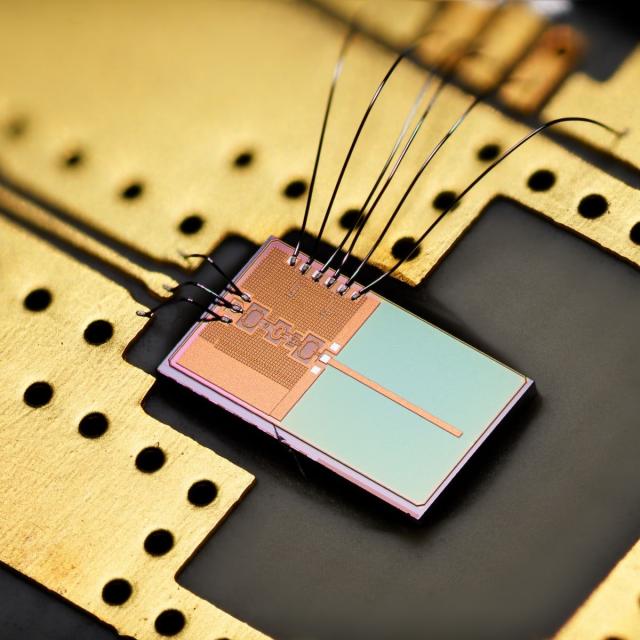
This unique Master-level course offered by the Center for Wireless Technology Eindhoven (CWT/e) of the Eindhoven University of Technology, The Netherlands, provides students with in-depth knowledge and hands-on experience on RF and mmWave circuit design. The course covers the topics on how to derive the RF wireless systems specifications, and how to design the main building blocks of a transceiver, i.e., low noise amplifier, power amplifier, RF mixers, oscillators, and PLL frequency synthesizers. It is divided into two parts: (1) theoretical lectures will cover the basis of RF and mmWave Circuit Design; and (2) design labs will include simulation and implementation of these circuits.

Class Deals by MOOC List - Click here and see Coursera's Active Discounts, Deals, and Promo Codes.

The design labs are completely optional for obtaining the certificate, but they are recommended because they allow students to put into practice all the acquired theoretical knowledge, and of course, implementing the circuits is where all the fun is! The students will be able to do 70% of the design labs using simulation tools, which already offers a great learning experience. The other 30% will require students to either get access to an electronics lab or to purchase a few off-the-shelf components. But ultimately, this would allow students to design and build their own transceiver at home!
The course contains theoretical video classes with examples, quizzes, and an entire set of simulation files, step-by-step procedures, recorded data of real-life circuits, and solution videos so that students can learn from and build even better circuits.

Syllabus

WEEK 1
Introduction to RF & mm-Wave Circuit Design Course
This module will introduce the student to the RF and mm-Wave Circuit Design course and to the topic of wireless systems. It will present the learning objectives, grading system, supporting material, introductory class, and design labs. Besides, it will show the student how to use the simulation tools and the equipment used in the design labs.

WEEK 2
Wireless Systems
The module on Wireless Systems will introduce the student to the history of wireless technologies, wireless system design, and RF system specifications. Concepts about transceivers will be detailed, such as path loss, interference signals, receiver sensitivity, and transmitter output power. It also includes the first design lab, the system design of a Wireless Tin Can Telephone.

WEEK 3
Amplifiers
The Amplifiers module will introduce the student to the basic concepts of amplifiers, types of power gain, and the most used amplifier topologies. The student will also learn about low noise amplifier matching and power amplifiers classes. The second design lab will focus on designing LNAs and PAs.

WEEK 4
Mixers
The Mixers module will introduce the student to the working principle of RF mixers and their basic concepts. The difference between active and passive mixers will be explained, the advantages and drawbacks of balanced and unbalanced mixers will be detailed, and the mixer's noise performance highlighted. The third design lab will cover the design of up and down-conversion mixers.

WEEK 5
Oscillators
The Oscillators module will introduce the student to the working principles of frequency oscillators and their basic concepts, like condition to sustain an oscillation. The student will learn about different topologies of oscillators, why and how to tune oscillators, and the impact of noise in the oscillator's signal. At last, the influence of output buffering and breakdown voltage on oscillators will also be explained. The fourth design lab will focus on designing a Voltage Controlled Oscillator (VCO).

WEEK 6
Synthesizers
The Synthesizers module will introduce the student to the working principles of frequency synthesizers and their basic concepts. The student will learn about the importance of using synthesizers in modern wireless communications, the Phase-Locked Loop types I and II, the advantages and drawbacks of using All-Digital PLL, and the impact of the PLL frequency synthesizer on the signal's noise performance. At last, the architecture and usage of fractional-N PLL frequency synthesizers will be detailed. The fifth and last design lab will contain the design of a frequency divider and a phase detector.

Go to Class
MOOC List is learner-supported. When you buy through links on our site, we may earn an affiliate commission.

Related Courses

Equivalent Circuit Cell Model Simulation (Coursera) Coursera
University of Colorado Boulder,University of Colorado System

Equivalent Circuit Cell Model Simulation (Coursera)

In this course, you will learn the purpose of each component in an equivalent-circuit model of a lithium-ion battery cell, how to determine their parameter values from lab-test data, and how to use them to simulate cell behaviors under different load profiles.

Jun 1st 2026
5-12 Weeks
Introdução ao Controle Moderno (Coursera) Coursera
Instituto Tecnológico de Aeronáutica

Introdução ao Controle Moderno (Coursera)

Este curso lhe dará a base necessária para entender técnicas mais avançadas de controle moderno. Você aprenderá como representar a dinâmica de um sistema no espaço de estados, como analisar um sistema no espaço de estados, como projetar uma realimentação de estado e como projetar um observador de estado.

Jun 1st 2026
5-12 Weeks
IoT Networking (Coursera) Coursera
University of Illinois at Urbana-Champaign

IoT Networking (Coursera)

This course builds on the first two courses in this series: IoT Devices and IoT Communications. Here you will begin to learn enterprise IoT. Enterprise networks, from first-hop access to backend IoT services are critical because they allow your IoT devices to reach the Internet and achieve their true intelligence. IoT places extreme demands on first-hop access - ultra-dense deployments challenge spectrum allocation, the need to provide strong segmentation yet let devices reach into IoT services such as gateways and databases.

Jun 1st 2026
4 Weeks
Sensors and Sensor Circuit Design (Coursera) Coursera
University of Colorado Boulder

Sensors and Sensor Circuit Design (Coursera)

After taking this course, you will be able to: understand how to specify the proper thermal, flow, or rotary sensor for taking real-time process data; implement thermal sensors into an embedded system in both hardware and software; add the sensor and sensor interface into a microprocessor based development kit; create hardware and firmware to process sensor signals and feed data to a microprocessor for further evaluation; study sensor signal noise and apply proper hardware techniques to reduce it to acceptable levels.

Jun 1st 2026
5-12 Weeks
IoT Communications (Coursera) Coursera
University of Illinois at Urbana-Champaign

IoT Communications (Coursera)

This course builds on the previous course: IoT Devices. After we have built and programmed a small self-driving vehicle, now it's time get into more advanced territory and enhance the device's connectivity further. To do so you will study radio frequency (RF) communication, the MAC layer, Mesh Networking as well as distributed algorithms for use with geographic locations. These techniques will be applied to your device in the lab, which is composed of four steps, one in each week of the course.

Jun 1st 2026
4 Weeks
IoT (Internet of Things) Wireless & Cloud Computing Emerging Technologies (Coursera) Coursera
Yonsei University

IoT (Internet of Things) Wireless & Cloud Computing Emerging Technologies (Coursera)

IoT (Internet of Things) devices are already abundant, but new products that include IoT modules are now a common trend. Also, almost everything is already connected to a Cloud, and much more will be in the future. Naturally, as this trend continues, in the near future almost all devices and appliances will include IoT modules which will use sensor data collection and control/management based on Clouds. Since we will live in an IoT world supported by Clouds, knowledge of the core technologies and platforms of IoT and Clouds will enable you with the tools to become a true leader in the future product and business world. In this course, the start-of-the-art IoT and wireless networks and Cloud technologies are introduced (for details on 1G to 5G mobile communications and smartphone and smart device technology, please take my course “Smart Device & Mobile Emerging Technologies”).

May 25th 2026
5-12 Weeks
The Art of Music Production (Coursera) Coursera
Berklee College of Music

The Art of Music Production (Coursera)

Explore the art of record production and how to make recordings that other people will love listening to. This course will teach you how to make emotionally moving recordings on almost any recording equipment, including your phone or laptop. The emphasis is on mastering tangible artistic concepts; the gear you use is up to you. You will learn to develop the most important tool in the recording studio: your ears. You will learn to enhance every aspect of your own productions, both sonically and musically, by employing deeper listening skills.

Jun 1st 2026
4 Weeks
Digital Systems: From Logic Gates to Processors (Coursera) Coursera
Universitat Autònoma de Barcelona

Digital Systems: From Logic Gates to Processors (Coursera)

This course gives you a complete insight into the modern design of digital systems fundamentals from an eminently practical point of view. Unlike other more "classic" digital circuits courses, our interest focuses more on the system than on the electronics that support it. This approach will allow us to lay the foundation for the design of complex digital systems.

May 11th 2026
5-12 Weeks
Internet of Things: Multimedia Technologies (Coursera) Coursera
University of California, San Diego

Internet of Things: Multimedia Technologies (Coursera)

Content is an eminent example of the features that contributed to the success of wireless Internet. Mobile platforms such as the Snapdragon™ processor have special hardware and software capabilities to make acquisition, processing and rendering of multimedia content efficient and cost-effective.

May 25th 2026
3 Weeks