Introduction to Game Development (Coursera)

Introduction to Game Development (Coursera)

If you love games and want to learn how to make them, then this course will start you down that path. Making games is a creative and technical art form. In this course you will familiarize yourself with the tools and practices of game development. You will get started developing your own videogames using the industry standard game development tools, including the Unity3D game engine and C#. At the end of the course you will have completed three hands-on projects and will be able to leverage an array of game development techniques to create your own basic games. This course is for individuals interested in becoming a game designer, game artist, or game programmer.

Class Deals by MOOC List - Click here and see Coursera's Active Discounts, Deals, and Promo Codes.

A newer version of this course is available here:
Game Design and Development 1: 2D Shooter

Syllabus

WEEK 1
From Game Player to Game Developer
The only thing more fun than playing games is making them. You can make games. All it takes is some time, a willingness to learn and a passion to create. You don't need to be a "coder" to make games. Part of the beauty of games is that they take a variety of skills to make. Art, creativity, and systems thinking are just as important as code. Join us in this journey into game making!

WEEK 2
Intro to Unity3D Development
One of the reasons we use Unity3D is its visual editor which makes creating interactive games accessible to both creative and technical individuals. In this module, you will create your first Unity3D project from start to finish. Using a variety of graphical and audio assets and a library of scripts, you will create a simple model of our solar system. By the end of the module, you should have a good understanding of the Unity3D editor and the workflow for creating games.

WEEK 3
Creating Games in Unity3D
Unity3D is a powerful tool for creating games. In this module, you will create your first actual game from start to finish, called Roller Madness. This ball rolling game will introduce you to the concepts of physics, health and damage, pickups, enemies, spawners, a user interface, and a variety of visual and audio effects. This is your right of passage into game development!

WEEK 4
Designing and Coding Gameplay Systems
Now, don't get scared, but games need code. Code is the canvas upon which game systems are painted. However, that doesn't mean you need to be a C# ninja. In this module, you will start to learn the ins-and-outs of programming C# in Unity. You will apply this knowledge to build a first person shooter game, called Box Shooter. By the end of the module, you will have the tools to begin to develop your own custom games!

Go to Class
MOOC List is learner-supported. When you buy through links on our site, we may earn an affiliate commission.

Related Courses

Gamification (Coursera) Coursera
University of Pennsylvania

Gamification (Coursera)

Gamification is the application of game elements and digital game design techniques to non-game problems, such as business and social impact challenges. This course will teach you the mechanisms of gamification, why it has such tremendous potential, and how to use it effectively.

Sep 28th 2026
5-12 Weeks
Pixel Art for Video Games (Coursera) Coursera
Michigan State University

Pixel Art for Video Games (Coursera)

This course is aimed to give you the tools and knowledge you need to start creating simple art for video games made in the Unity game engine. Through the aesthetic of pixel art we will explore artistic principals like shape language, color theory, and composition as well as show you a step by step workflow for creating assets that you can use to make your own games.

Oct 5th 2026
5-12 Weeks
Online Games: Literature, New Media, and Narrative (Coursera) Coursera
Vanderbilt University

Online Games: Literature, New Media, and Narrative (Coursera)

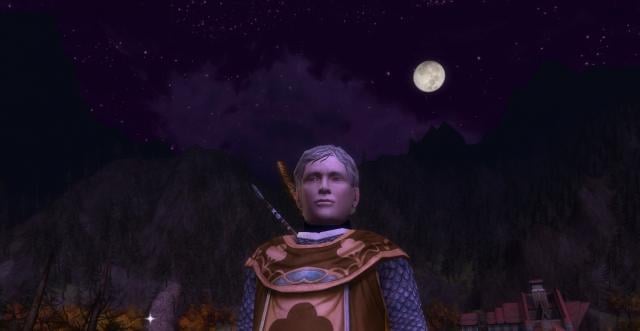
Intended for both newcomers who are curious about video games and experienced gamers who want to reflect on their passion, this course will explore what happens to stories, paintings, and films when they become the basis of massively multiplayer online games. The Lord of the Rings trilogy—the novels, films, and video game—are our central example of how “remediation” transforms familiar stories as they move across media.

Oct 12th 2026
5-12 Weeks
Continuous Delivery & DevOps (Coursera) Coursera
University of Virginia

Continuous Delivery & DevOps (Coursera)

Amazon famously delivers new code every 11.6 seconds. Just a few years ago, this was unthinkable: many ‘cutting edge’ firms would release software quarterly. When it comes to digital innovation, velocity is critical and many would say it’s the most reliable determinant of success. Bringing an organization to the state of the art (or even functional capability) in this area requires strong work in a combination of disciplines and a combination of both technical and managerial skills. There is no single cookie-cutter approach for achieving this capability.

Oct 5th 2026
4 Weeks
The Finite Element Method for Problems in Physics (Coursera) Coursera
University of Michigan

The Finite Element Method for Problems in Physics (Coursera)

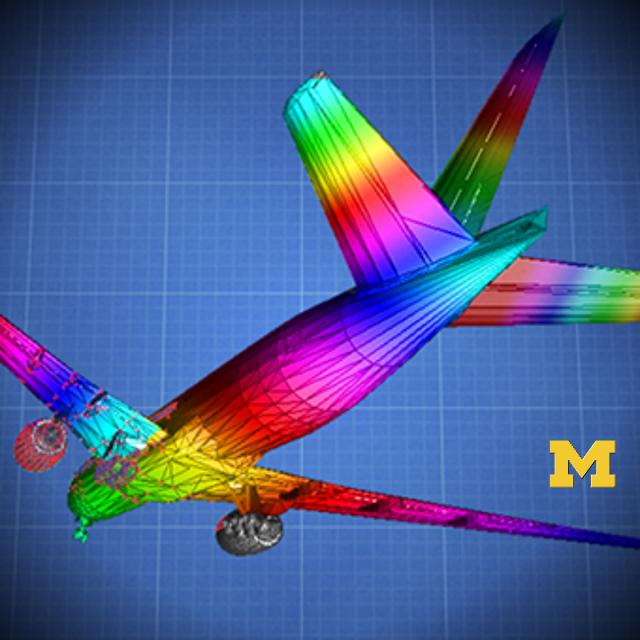
This course is an introduction to the finite element method as applicable to a range of problems in physics and engineering sciences. The treatment is mathematical, but only for the purpose of clarifying the formulation. The emphasis is on coding up the formulations in a modern, open-source environment that can be expanded to other applications, subsequently.

Oct 5th 2026
13-24 Weeks
An Introduction to Interactive Programming in Python (Part 2) (Coursera) Coursera
Rice University

An Introduction to Interactive Programming in Python (Part 2) (Coursera)

This two-part course is designed to help students with very little or no computing background learn the basics of building simple interactive applications. Our language of choice, Python, is an easy-to learn, high-level computer language that is used in many of the computational courses offered on Coursera. To make learning Python easy, we have developed a new browser-based programming environment that makes developing interactive applications in Python simple.

Oct 5th 2026
4 Weeks
Algorithmic Thinking (Part 1) (Coursera) Coursera
Rice University

Algorithmic Thinking (Part 1) (Coursera)

Experienced Computer Scientists analyze and solve computational problems at a level of abstraction that is beyond that of any particular programming language. This two-part class is designed to train students in the mathematical concepts and process of "Algorithmic Thinking", allowing them to build simpler, more efficient solutions to computational problems.

Oct 5th 2026
4 Weeks
Software Architecture for the Internet of Things (Coursera) Coursera
EIT Digital

Software Architecture for the Internet of Things (Coursera)

This course will teach you how to design futureproof systems that meet the requirements of IoT systems: systems that are secure, interoperable, modifiable and scalable. Moreover, you'll learn to apply best-in-class software architecture methods to help you design complex IoT and other applications. Lastly, you'll come to understand the business impact of the technical decisions that you make as an IoT system architect.

Sep 28th 2026
5-12 Weeks
Usable Security (Coursera) Coursera
University of Maryland, College Park

Usable Security (Coursera)

This course focuses on how to design and build secure systems with a human-centric focus. We will look at basic principles of human-computer interaction, and apply these insights to the design of secure systems with the goal of developing security measures that respect human performance and their goals within a system.

Oct 5th 2026
5-12 Weeks
Programming Fundamentals (Coursera) Coursera
Duke University

Programming Fundamentals (Coursera)

Programming is an increasingly important skill, whether you aspire to a career in software development, or in other fields. This course is the first in the specialization Introduction to Programming in C, but its lessons extend to any language you might want to learn. This is because programming is fundamentally about figuring out how to solve a class of problems and writing the algorithm, a clear set of steps to solve any problem in its class.

Oct 5th 2026
4 Weeks