Intro to Data Analysis (Udacity)

Offered by Udacity,
Intro to Data Analysis (Udacity)

Explore a variety of datasets, posing and answering your own questions about each. You'll be using the Python libraries NumPy, Pandas, and Matplotlib. This course will introduce you to the world of data analysis.

Class Deals by MOOC List - Click here and see Udacity's Active Discounts, Deals, and Promo Codes.

You'll learn how to go through the entire data analysis process, which includes:

  • Posing a question
  • Wrangling your data into a format you can use and fixing any problems with it
  • Exploring the data, finding patterns in it, and building your intuition about it
  • Drawing conclusions and/or making predictions
  • Communicating your findings

You'll also learn how to use the Python libraries NumPy, Pandas, and Matplotlib to write code that's cleaner, more concise, and runs faster.
Syllabus

Lesson 1
Data Analysis Process

  • Learn about the data analysis process.
  • Pose a question, wrangle your data, draw conclusions and/or make predictions.
  • Complete an analysis of Udacity student data using pure Python, with few additional libraries.

Lesson 2
NumPy and Pandas for 1D Data

  • Start learning to use NumPy and Pandas to make the data analysis process easier.
  • Features that apply to one-dimensional data.
  • Learn to use NumPy arrays, Pandas Series, and vectorized operations.

Lesson 3
NumPy and Pandas for 2D Data

  • Continue learning about NumPy and Pandas, this time focusing on two-dimensional data.
  • Learn to use two-dimensional NumPy arrays and Pandas DataFrames.
  • Group your data and to combine data from multiple files.

Lesson 4
Investigate a Dataset

  • Use NumPy and Pandas to go through the data analysis process on one of a list of recommended datasets.
Go to Class
MOOC List is learner-supported. When you buy through links on our site, we may earn an affiliate commission.


Related Courses

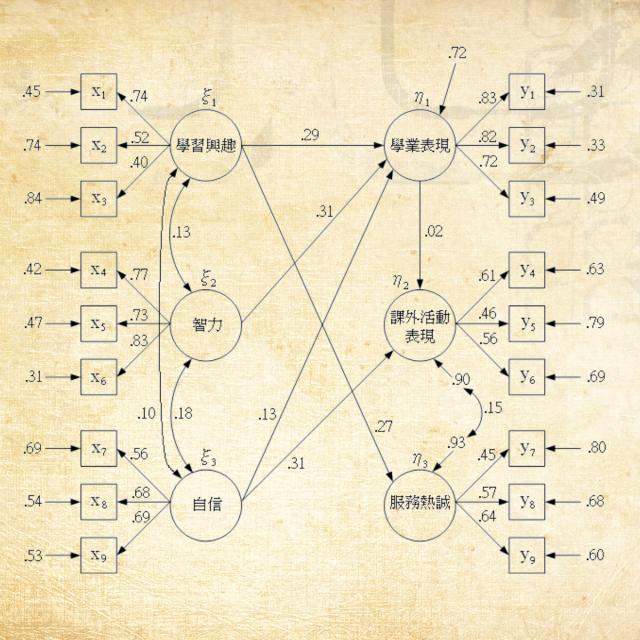
Structural Equation Model and its Applications | 结构方程模型及其应用 (普通话) (Coursera) Coursera
The Chinese University of Hong Kong

Structural Equation Model and its Applications | 结构方程模型及其应用 (普通话) (Coursera)

在社会学、心理学、教育学、经济学、管理学、市场学等研究领域的数据分析中,结构方程建模是当前最前沿的统计方法中应用最广、研究最多的一个。它包含了方差分析、回归分析、路径分析和因子分析,弥补了传统回归分析和因子分析的不足,可以分析多因多果的联系、潜变量的关系,

Oct 12th 2026
5-12 Weeks
Real-Time Analytics with Apache Storm (Udacity) Udacity
Udacity,Twitter

Real-Time Analytics with Apache Storm (Udacity)

The world is trending in real time! Learn from Twitter to scalably process tweets, or any big data stream, in real-time to drive d3 visualizations using Apache Storm, the "Hadoop of Real Time." Storm is free, open source, and fun to use! Learn from Karthik Ramasamy, about the distributed, fault-tolerant, and flexible technology used to power Twitter’s real-time data flow pipeline. Twitter open sourced Storm in 2011, and it graduated to a top-level Apache project in September, 2014.

Self Paced
Self-Paced
Data Analysis and Visualization (Udacity) Udacity
Georgia Institute of Technology,Udacity

Data Analysis and Visualization (Udacity)

Data and visual analytics is an emerging field concerned with analyzing, modeling, and visualizing complex high dimensional data. This course will introduce students to the field by covering state­-of-­the-art modeling, analysis and visualization techniques. It will emphasize practical challenges involving complex real world data and include several case studies and hands-on work with the R programming language.

Self Paced
Self-Paced
Data Wrangling with MongoDB (Udacity) Udacity
Udacity,MongoDB University

Data Wrangling with MongoDB (Udacity)

In this course, we will explore how to wrangle data from diverse sources and shape it to enable data-driven applications. Some data scientists spend the bulk of their time doing this! Students will learn how to gather and extract data from widely used data formats. They will learn how to assess the quality of data and explore best practices for data cleaning. We will also introduce students to MongoDB, covering the essentials of storing data and the MongoDB query language together with exploratory analysis using the MongoDB aggregation framework.

Self Paced
Self-Paced
Introduction to Genomic Technologies (Coursera) Coursera
Johns Hopkins University

Introduction to Genomic Technologies (Coursera)

This course introduces you to the basic biology of modern genomics and the experimental tools that we use to measure it. We'll introduce the Central Dogma of Molecular Biology and cover how next-generation sequencing can be used to measure DNA, RNA, and epigenetic patterns. You'll also get an introduction to the key concepts in computing and data science that you'll need to understand how data from next-generation sequencing experiments are generated and analyzed.

Oct 12th 2026
4 Weeks