EdX

Idealismo Filosófico: Cómo hacer Mundos con Ideas (edX)

Idealismo Filosófico: Cómo hacer Mundos con Ideas (edX)

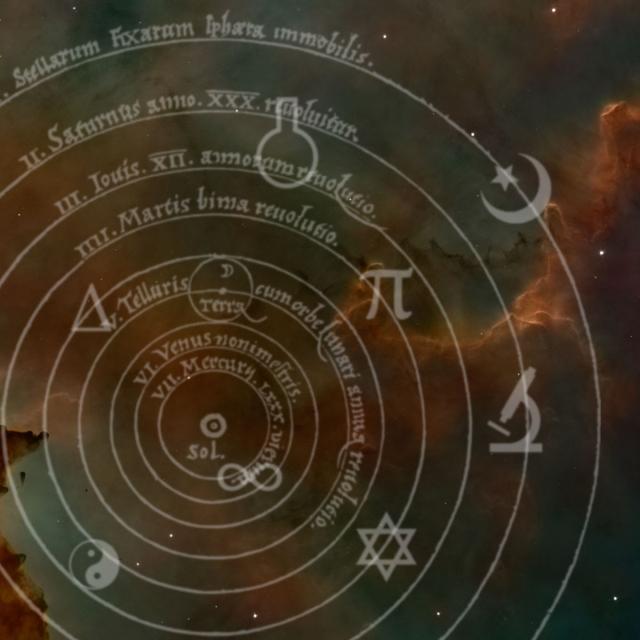
Aprende cómo el idealismo filosófico y la cosmovisión influyen en tu perspectiva del mundo actual para así mejorar tu vida. ¿Qué es el Idealismo? ¿Qué es una cosmovisión? ¿Cuántas hay? ¿Cómo es que las ideas hacen mundos? ¿Se puede seguir siendo hoy idealista? Todo empieza el día que uno descubre que las cosas no son lo que parecen; entonces empieza a creer en el poder de las ideas, de las propias ideas.

Class Deals by MOOC List - Click here and see EdX's Active Discounts, Deals, and Promo Codes.

En este curso podrás descubrir el carácter actual, y a veces dramático, de las concepciones que desde los filósofos griegos han venido siendo denominadas como “idealismo”. Desplegará las grandes cosmovisiones occidentales en base a sus ideas rectoras, operativas en los estadios científico, artístico y sociocultural, haciendo ver cómo la filosofía ha servido de sustrato o conexión de todas estas manifestaciones espirituales, estableciendo una sistemática efectiva, patente en la atmósfera cultural de las épocas-mundo. Cada uno de estos “mundos” (en el sentido de “ordenación global”) está configurado por un conjunto bien trabado de ideas-fuerza, en torno a una Idea fundamental.

Obtendrás una visión general de la cohesión interna y organización de cada una de estas cosmovisiones, respecto a las cuales se pondrá el acento en su presencia activa en los problemas del presente.
Aprenderás a ser mejor, a pensar mejor y a vivir mejor; o dicho de otra manera, puedes empezar a entender qué significa el Ser, la Verdad y el Bien.

What you'll learn

  • Conocer el impacto de la cosmovisión en la actualidad.
  • Dominar la terminología filosófica del idealismo.
  • Definir y explicar qué es cosmovisión.
  • Analizar las ideas-fuerza de cada cosmovisión.
  • Identificar las manifestaciones científicas, artísticas y culturales de cada cosmovisión.

Course Syllabus

La Idea y la Antigüedad
La ley del mundo nuevo
El Ideal: La Revolución
El ideal bajo sospecha: La ciencia y el capitalismo
Tecnología: La globalización

Go to Class
MOOC List is learner-supported. When you buy through links on our site, we may earn an affiliate commission.

Related Courses

Christianisme et philosophie dans l’Antiquité (edX) EdX
Sorbonne University

Christianisme et philosophie dans l’Antiquité (edX)

Présentation des relations entre le christianisme et la philosophie dans l’Antiquité grecque et romaine. Le christianisme s’oppose-t-il à la raison philosophique ? Ce questionnement d’ordre général peut trouver une première réponse dans l’étude historique de la confrontation entre christianisme et philosophie dans l’Antiquité. Cette confrontation a joué un rôle très important dans la constitution de la doctrine chrétienne.

No sessions available
5-12 Weeks
Philosophy and the Sciences: Introduction to the Philosophy of Cognitive Sciences (Coursera) Coursera
University of Edinburgh

Philosophy and the Sciences: Introduction to the Philosophy of Cognitive Sciences (Coursera)

What is our role in the universe as human agents capable of knowledge? What makes us intelligent cognitive agents seemingly endowed with consciousness? This is the second part of the course 'Philosophy and the Sciences', dedicated to Philosophy of the Cognitive Sciences. Scientific research across the cognitive sciences has raised pressing questions for philosophers. The goal of this course is to introduce you to some of the main areas and topics at the key juncture between philosophy and the cognitive sciences. Each week we will introduce you to some of these important questions at the forefront of scientific research. We will explain the science behind each topic in a simple, non-technical way, while also addressing the philosophical and conceptual questions arising from it.

Jun 1st 2026
4 Weeks
Know Thyself - The Value and Limits of Self-Knowledge: The Examined Life (Coursera) Coursera
University of Edinburgh

Know Thyself - The Value and Limits of Self-Knowledge: The Examined Life (Coursera)

According to legend, inscribed on walls of the temple on the sacred site of Delphi in Ancient Greece were two premier injunctions: NOTHING IN EXCESS, and KNOW THYSELF. This course will be an examination of the latter injunction in an effort to discover what self-knowledge is, why it might be valuable, and what, if any, limitations it might face.

Jun 1st 2026
4 Weeks
Digital Wellbeing and Productivity (edX) EdX
Jesus College, University of Cambridge

Digital Wellbeing and Productivity (edX)

Individuals and organisations now face the challenge of finding a healthy balance between productivity and downtime. How can we adapt to changes in our digital lives, while remaining healthy and happy? What habits can help us get the most out of our time and energy online? How can we best manage digital wellbeing while maintaining productive digital habits? And how can individuals, teams, businesses, and institutions learn from research-based knowledge to create digital habits and skills to help us flourish together?

Self Paced
Self-Paced
Ancient Philosophy: Aristotle and His Successors (Coursera) Coursera
University of Pennsylvania

Ancient Philosophy: Aristotle and His Successors (Coursera)

What is philosophy? How does it differ from science, religion, and other modes of human discourse? This course traces the origins of philosophy in the Western tradition in the thinkers of Ancient Greece. We begin with the Presocratic natural philosophers who were active in Ionia in the 6th century BCE and are also credited with being the first scientists. Thales, Anaximander, and Anaximines made bold proposals about the ultimate constituents of reality, while Heraclitus insisted that there is an underlying order to the changing world.

Jun 1st 2026
5-12 Weeks
Historia de la ética (edX) EdX
Universidad Carlos III de Madrid - UC3M,UC3Mx

Historia de la ética (edX)

Una mirada hacia el pasado de la ética para poder afrontar mejor los problemas del futuro. Una visión crítica de la ética y la moral sin olvidar el sentido del humor. Cada día debemos afrontar diferentes problemas éticos a los que no tenemos claro qué respuesta dar como sociedad. Es importante conocer la definición de la ética y la moral para poder afrontar estos problemas. Este curso de filosofía y ética nos permitirá hacer un repaso por el origen de la ética, este es un ejercicio muy útil para poder replantear nuestros problemas éticos actuales y comprender mejor las implicaciones de nuestras decisiones basados en la ética y la moral.

Self Paced
Self-Paced
The Einstein Revolution (edX) EdX
HarvardX,Harvard University

The Einstein Revolution (edX)

Traces Albert Einstein’s engagement with relativity, quantum mechanics, Nazism, nuclear weapons, philosophy, the arts, and technology. Albert Einstein has become the icon of modern science. Following his scientific, cultural, philosophical, and political trajectory, this course aims to track the changing role of physics in the 20th and 21st centuries.

Self Paced
Self-Paced
Philosophy, Science and Religion: Science and Philosophy (Coursera) Coursera
University of Edinburgh

Philosophy, Science and Religion: Science and Philosophy (Coursera)

Philosophy, Science and Religion mark three of the most fundamental modes of thinking about the world and our place in it. Are these modes incompatible? Put another way: is the intellectually responsible thing to do to ‘pick sides’ and identify with one of these approaches at the exclusion of others? Or, are they complementary or mutually supportive? As is typical of questions of such magnitude, the devil is in the details. For example, it is important to work out what is really distinctive about each of these ways of inquiring about the world. In order to gain some clarity here, we’ll be investigating what some of the current leading thinkers in philosophy, science and religion are actually doing.

Jun 1st 2026
5-12 Weeks
Justice (edX) EdX
HarvardX,Harvard University

Justice (edX)

Justice, one of the most famous courses taught at Harvard College, is an introduction to moral and political philosophy, offering an opportunity to discuss contemporary dilemmas and controversies. Taught by lauded Harvard professor Michael Sandel, Justice explores critical analysis of classical and contemporary theories of justice, including discussion of present-day applications.

Self Paced
Self-Paced
Søren Kierkegaard - Subjectivity, Irony and the Crisis of Modernity (Coursera) Coursera
University of Copenhagen

Søren Kierkegaard - Subjectivity, Irony and the Crisis of Modernity (Coursera)

In this course created by former associate professor at the Søren Kierkegaard Research Centre, Jon Stewart, we will explore how Kierkegaard deals with the problems associated with relativism, the lack of meaning and the undermining of religious faith that are typical of modern life. His penetrating analyses are still highly relevant today and have been seen as insightful for the leading figures of Existentialism, Post-Structuralism and Post-Modernism.

May 25th 2026
5-12 Weeks