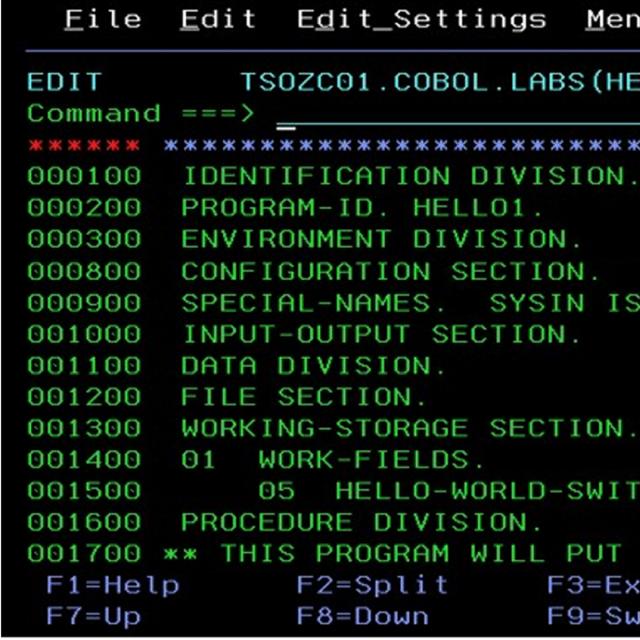
IBM COBOL Software Development Process (Coursera)

Offered by IBM, LearnQuest,
IBM COBOL Software Development Process (Coursera)

This course is geared towards anyone interested in learning about IBM, COBOL, mainframe computing, and the Software Development Lifecycle (SDLC) and increasing their knowledge and hands on experience with core concepts and technologies including life cycle and systems analysis concepts, design and structured coding, and a wide variety of topics designed to provide relevant, requisite working knowledge and practical experience.

Class Deals by MOOC List - Click here and see Coursera's Active Discounts, Deals, and Promo Codes.

Course 7 of 7 in the IBM Mainframe Developer.

Syllabus

WEEK 1
Welcome to IBM COBOL - Software Development Process
In this module, we will welcome everyone to the course, present the course objectives, and introduce ourselves to the class.
Lifecycle Concepts
In this module, we'll describe life cycle concepts associated with IBM COBOL and IBM z/OS environments, including the software development lifecycle (SDLC), the phases of a SDLC, and Agile/Scrum methodologies.

WEEK 2
Systems Analysis Concepts
In this module, we'll define systems analysis concepts associated with COBOL and IBM z/OS environments, including core areas of analysis, objectives of system analysis, and IBM systems architectures.

WEEK 3
Design And Structured Coding
In the fourth module of this course, we will identify design and structured coding concepts associated with COBOL and IBM z/OS environments, including: pseudocode, modern design, planning and unit testing, and top-bottom testing.
Congratulations on Completing IBM COBOL - Software Development Process
In this module, we will congratulate everyone for completing the course, present the completed course objectives, and define other pertinent course details and next steps.

Go to Class
MOOC List is learner-supported. When you buy through links on our site, we may earn an affiliate commission.

Related Courses

The R Programming Environment (Coursera) Coursera
Johns Hopkins University

The R Programming Environment (Coursera)

This course provides a rigorous introduction to the R programming language, with a particular focus on using R for software development in a data science setting. Whether you are part of a data science team or working individually within a community of developers, this course will give you the knowledge of R needed to make useful contributions in those settings.

Oct 19th 2026
4 Weeks
Python Data Representations (Coursera) Coursera
Rice University

Python Data Representations (Coursera)

This course will continue the introduction to Python programming that started with Python Programming Essentials. We'll learn about different data representations, including strings, lists, and tuples, that form the core of all Python programs. We will also teach you how to access files, which will allow you to store and retrieve data within your programs. These concepts and skills will help you to manipulate data and write more complex Python programs.

Oct 19th 2026
4 Weeks
Programming with Scratch (Coursera) Coursera
The Hong Kong University of Science and Technology - HKUST

Programming with Scratch (Coursera)

Learning coding is not only about understanding the programming language being used, but also developing important computational thinking skills, which are useful for problem solving across many disciplinary areas. In this course, students will learn basic programming skills by creating interactive storybooks, animations, and games with Scratch, which is a block-based visual programming language for anyone new to coding.

Oct 26th 2026
5-12 Weeks
Learn CSS Variables (Coursera) Coursera
Scrimba

Learn CSS Variables (Coursera)

CSS Custom Properties represent a significant advancement for front-end developers, introducing the concept of variables to CSS. This innovation substantially reduces redundancy, enhances code legibility, and augments overall flexibility. Notably, CSS Variables distinguish themselves from their CSS preprocessor counterparts by seamlessly integrating into the Document Object Model (DOM), offering a plethora of advantages.

Oct 26th 2026
1 Week
Development of Real-Time Systems (Coursera) Coursera
EIT Digital

Development of Real-Time Systems (Coursera)

This course is intended for the Master's student and computer engineer who likes practical programming and problem solving! After completing this course, you will have the knowledge to plan and set-up a real-time system both on paper and in practice. The course centers around the problem of achieving timing correctness in embedded systems, which means to guarantee that the system reacts within the real-time requirements.

Oct 19th 2026
5-12 Weeks
Android App Components - Intents, Activities, and Broadcast Receivers (Coursera) Coursera
Vanderbilt University

Android App Components - Intents, Activities, and Broadcast Receivers (Coursera)

This MOOC builds upon the overview of Java and Android covered in Course 1 by delving deeper into core Android components, such as Activities, Broadcast Receivers, Intents, and Intent Filters. You will learn by example how to program these core Android components together with basic Java file I/O classes (such as File, InputStream, OutputWriter, etc.) and Android storage mechanisms (such as Shared Preferences).

Oct 19th 2026
4 Weeks
Object-Oriented Design (Coursera) Coursera
University of Alberta

Object-Oriented Design (Coursera)

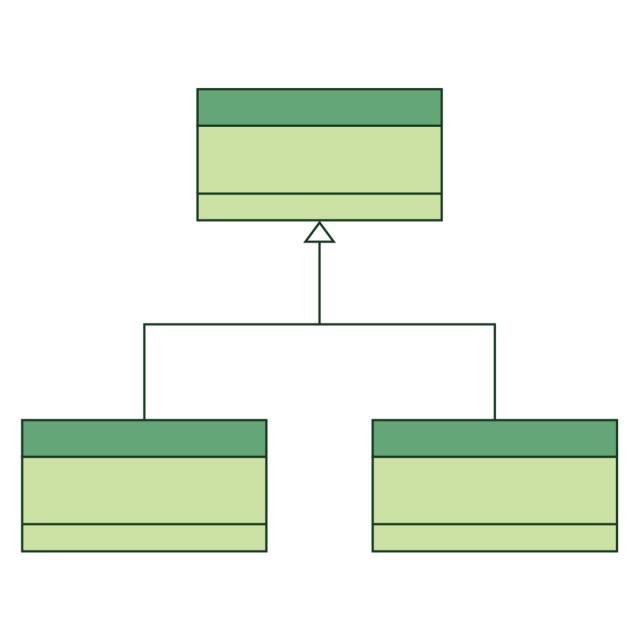
This course takes Java beginners to the next level by covering object-oriented analysis and design. You will discover how to create modular, flexible, and reusable software, by applying object-oriented design principles and guidelines. And, you will be able to communicate these designs in a visual notation known as Unified Modelling Language (UML). You will be challenged in the Capstone Project to apply your knowledge of object-oriented design by evolving and documenting the Java codebase for an Android application with corresponding UML documentation.

Oct 19th 2026
4 Weeks
Principles of Computing (Part 2) (Coursera) Coursera
Rice University

Principles of Computing (Part 2) (Coursera)

This two-part course introduces the basic mathematical and programming principles that underlie much of Computer Science. Understanding these principles is crucial to the process of creating efficient and well-structured solutions for computational problems. To get hands-on experience working with these concepts, we will use the Python programming language. The main focus of the class will be weekly mini-projects that build upon the mathematical and programming principles that are taught in the class.

Nov 2nd 2026
4 Weeks
Database Management Essentials (Coursera) Coursera
University of Colorado System

Database Management Essentials (Coursera)

Database Management Essentials provides the foundation you need for a career in database development, data warehousing, or business intelligence, as well as for the entire Data Warehousing for Business Intelligence specialization. In this course, you will create relational databases, write SQL statements to extract information to satisfy business reporting requests, create entity relationship diagrams (ERDs) to design databases, and analyze table designs for excessive redundancy.

Oct 19th 2026
5-12 Weeks
Software Architecture for the Internet of Things (Coursera) Coursera
EIT Digital

Software Architecture for the Internet of Things (Coursera)

This course will teach you how to design futureproof systems that meet the requirements of IoT systems: systems that are secure, interoperable, modifiable and scalable. Moreover, you'll learn to apply best-in-class software architecture methods to help you design complex IoT and other applications. Lastly, you'll come to understand the business impact of the technical decisions that you make as an IoT system architect.

Oct 26th 2026
5-12 Weeks
Solving Algorithms for Discrete Optimization (Coursera) Coursera
University of Melbourne,The Chinese University of Hong Kong

Solving Algorithms for Discrete Optimization (Coursera)

Discrete Optimization aims to make good decisions when we have many possibilities to choose from. Its applications are ubiquitous throughout our society. Its applications range from solving Sudoku puzzles to arranging seating in a wedding banquet. The same technology can schedule planes and their crews, coordinate the production of steel, and organize the transportation of iron ore from the mines to the ports.

Nov 2nd 2026
4 Weeks