Integrating Test-Driven Development into Your Workflow (Coursera)

Offered by LearnQuest,
Integrating Test-Driven Development into Your Workflow (Coursera)

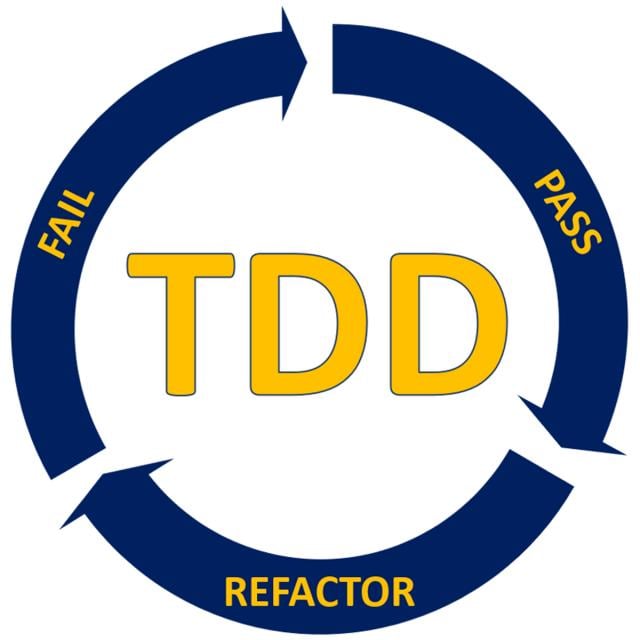
In this course we will discuss how to integrate best practices of test-driven development into your programming workflow. We will start out by discussing how to refactor legacy codebases with the help of agile methodologies. Then, we will explore continuous integration and how to write automated tests in Python. Finally, we will work everything we've learned together to write code that contains error handlers, automated tests, and refactored functions.

Class Deals by MOOC List - Click here and see Coursera's Active Discounts, Deals, and Promo Codes.

Course 3 of 4 in the Test-Driven Development Specialization

Syllabus

WEEK 1
Refactoring Legacy Code
Legacy code is code written by others that’s inherited by a team or programmer. The issue working with legacy code is that it can often be difficult and time consuming to update and maintain. Learn some proven techniques on how to refactor your legacy code with the help of agile methodologies such as unit tests and test driven development.

WEEK 2
Continuous Integration in Action
Continuous integration (CI) is a pillar in modern software development. It’s the process in which a code base is rapidly developed during the course of the business day.

WEEK 3
The Art of Continuous Delivery and Deployment
Continuous delivery is taking the steps to be able to have your software delivered at any time. It’s similar to continuous deployment with the distinction that it is manual as opposed to automated. In this section we’ll take a closer look at continuous delivery and how it intertwines with a related concept of continual deployment.

WEEK 4
Exception Handling in Python
Exception handling is a way for coders to help make their code less vulnerable to errors. A proactive developer will consider invalid input that a user may enter into a program and process this error gracefully.

Go to Class
MOOC List is learner-supported. When you buy through links on our site, we may earn an affiliate commission.

Related Courses

Foundations of Data Science: K-Means Clustering in Python (Coursera) Coursera
University of London,Goldsmiths, University of London

Foundations of Data Science: K-Means Clustering in Python (Coursera)

This MOOC, designed by an academic team from Goldsmiths, University of London, will quickly introduce you to the core concepts of Data Science to prepare you for intermediate and advanced Data Science courses. It focuses on the basic mathematics, statistics and programming skills that are necessary for typical data analysis tasks.

Oct 5th 2026
5-12 Weeks
Python Data Visualization (Coursera) Coursera
Rice University

Python Data Visualization (Coursera)

This if the final course in the specialization which builds upon the knowledge learned in Python Programming Essentials, Python Data Representations, and Python Data Analysis. We will learn how to install external packages for use within Python, acquire data from sources on the Web, and then we will clean, process, analyze, and visualize that data. This course will combine the skills learned throughout the specialization to enable you to write interesting, practical, and useful programs.

Oct 2nd 2026
4 Weeks
Introduction to .NET Core (Coursera) Coursera
Board Infinity

Introduction to .NET Core (Coursera)

This course is an introductory-level course for software developers who want to learn the basics of developing applications with .NET Core. .NET Core is a cross-platform, open-source development platform that allows developers to create applications for Windows, Linux, and macOS. Throughout this course, students will learn the fundamental concepts of .NET Core, including its architecture, programming model, and tools. They will also learn how to create, build, and deploy applications using .NET Core.

Oct 5th 2026
3 Weeks
Python and Statistics for Financial Analysis (Coursera) Coursera
The Hong Kong University of Science and Technology - HKUST

Python and Statistics for Financial Analysis (Coursera)

Python is now becoming the number 1 programming language for data science. Due to python’s simplicity and high readability, it is gaining its importance in the financial industry. The course combines both python coding and statistical concepts and applies into analyzing financial data, such as stock data.

Oct 5th 2026
4 Weeks
Programming Reactive Systems (Coursera) Coursera
École Polytechnique Fédérale de Lausanne

Programming Reactive Systems (Coursera)

Reactive programming is a set of techniques for implementing scalable, resilient and responsive systems. The basic building-block of such systems is event handlers. This course teaches how to implement reactive systems in Scala by using high-level abstractions based on event-handlers. You will learn how to: use, transform and sequence asynchronous computations using Future values; write concurrent systems based on Actors, using untyped Akka and Akka Typed; design systems resilient to failures; implement systems that can scale out according to a varying workload; transform and consume infinite and intermittent streams of data with Akka Stream; understand how back-pressure controls flows of data

Oct 5th 2026
5-12 Weeks
Algorithmic Thinking (Part 1) (Coursera) Coursera
Rice University

Algorithmic Thinking (Part 1) (Coursera)

Experienced Computer Scientists analyze and solve computational problems at a level of abstraction that is beyond that of any particular programming language. This two-part class is designed to train students in the mathematical concepts and process of "Algorithmic Thinking", allowing them to build simpler, more efficient solutions to computational problems.

Oct 5th 2026
4 Weeks
Algorithmic Thinking (Part 2) (Coursera) Coursera
Rice University

Algorithmic Thinking (Part 2) (Coursera)

Experienced Computer Scientists analyze and solve computational problems at a level of abstraction that is beyond that of any particular programming language. This two-part class is designed to train students in the mathematical concepts and process of "Algorithmic Thinking", allowing them to build simpler, more efficient solutions to computational problems.

Oct 5th 2026
4 Weeks
Introdução ao Teste de Software (Coursera) Coursera
Universidade de São Paulo, Brasil

Introdução ao Teste de Software (Coursera)

A necessidade das empresas em produzir software com qualidade tem aumentado a demanda por profissionais com conhecimentos e habilidades em Teste de Software. Entretanto, existe uma escassez de mão-de-obra especializada nesta área. Considerando essa lacuna, o curso de Introdução ao Teste de Software foi planejado para servir como um guia para pessoas que necessitam de uma fonte de consulta e/ou aprendizado na área.

Oct 5th 2026
5-12 Weeks
An Introduction to Interactive Programming in Python (Part 2) (Coursera) Coursera
Rice University

An Introduction to Interactive Programming in Python (Part 2) (Coursera)

This two-part course is designed to help students with very little or no computing background learn the basics of building simple interactive applications. Our language of choice, Python, is an easy-to learn, high-level computer language that is used in many of the computational courses offered on Coursera. To make learning Python easy, we have developed a new browser-based programming environment that makes developing interactive applications in Python simple.

Oct 5th 2026
4 Weeks