EdX

Health Informatics: The Cutting Edge (edX)

Health Informatics: The Cutting Edge (edX)

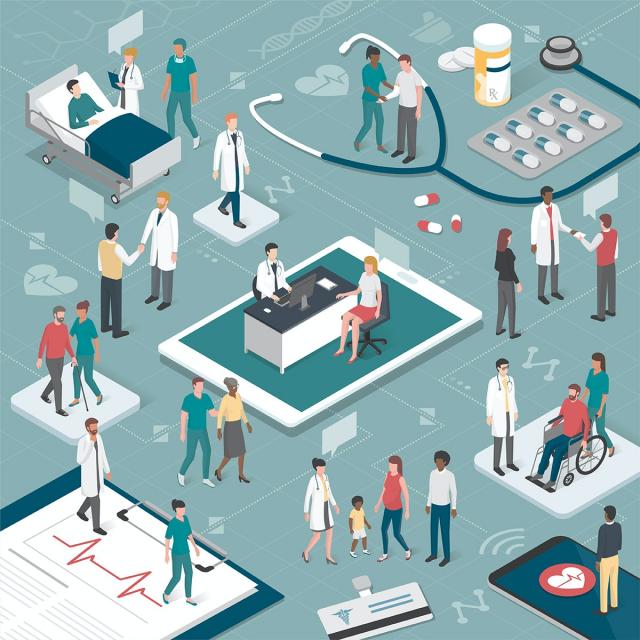
Some of the key focus areas for health informatics research and development. Adopting digital health records and sharing the data they contain is a critical step forward. However, since successful management of chronic disease must involve patients, using informatics tools and systems to engage them is now a major area of focus for academic and industry research and development.

Class Deals by MOOC List - Click here and see EdX's Active Discounts, Deals, and Promo Codes.

Much of our focus so far has been on the care of patients one at a time. Another major area of research and development involves the aggregation of data from large groups of patients to understand population (or public) health issues such as the factors external to traditional medicine that cause disease and that impact on our ability to treat it. Finally, digital health data is increasingly being used for research on methods to deploy predictive analytics to improve the diagnosis and treatment of disease as well as to run hospitals and health systems more cost effectively.
This course is part of the Health Informatics on FHIR Professional Certificate program.

What you'll learn

  • Working familiarity with the major health care data standards
  • Awareness of the web-based tools for accessing the data standards
  • HL7 as the global health care interoperability standards organization
  • HL7 interoperability standards history
  • The HL7 interoperability standards that preceded FHIR
  • The FHIR interoperability standard
  • The SMART on FHIR EHR connected app platform
  • Familiarity with web based tools for learning and utilizing FHIR and SMART on FHIR

Course Syllabus

Lesson 1- mHealth
1.1 -The Role of Patients
1.2 - Does it Work?
1.3 - The Food and Drug Administration
1.4 - AliveCor
1.5 - AliveCor Video
1.6 - Device and App Interoperability
1.7 - Personal Connected Health Alliance
1.8 - Open mHealth
1.9 - Open mHealth Tools
1.10 - HealthKit
1.11 - mHealth in the Third World Dr. Gary Clifford Interview
1.12 - mHealth Apps Dr. Felipe Lobelo Interview
1.13 - Behavioral Imaging Dr. Jim Rehg Interview
mHealth Activity

Lesson 2- Public and Population Health
2.1 - What is Public Health?
2.2 - The CDC's Role in Public Health Dr. Chelsea Richards Interview
2.3 - National Syndromic Surveillance System (Paula Yoon, Michael Coletta)
2.4 - Death on FHIR (Paula Braun, Ryan Hoffman)
2.5 - Pediatric Obesity (Dr. Aly Goodman, Paula Braun)
2.6 - Medication Adherence Carmen Clelland Interview
2.7 - Chronic Disease Management: Food Purchasing Data
2.8 - Population Health
2.9 - Wellcentive Interview
2.10 FHIR Bulk Data Protocol

Lesson 3– Health Data Analytics
3.1 - Healthcare Data at Scale
3.2 - Big Data Defined
3.3 - Real World Data
3.4 - Data Aggregation
3.5 - Different Questions and Methods
3.6 - EHR Analytics Dr. Jimeng Sun Interview
3.7 - Children with Complex Chronic Conditions
3.8 - i2b2 Introduction
3.9 - i2b2 Based Federation Research
3.10 - Genomics Federated Research Networks
3.11 - Data Driven Post Appendectomy Care Dr. Jason Zutty Interview
3.12 - OHDSI Tools Dr. Jon Duke Interview 2
3.13 - Sepsis Prediction Dr. Shamim Nemati Interview
i2b2 Activity


Go to Class
MOOC List is learner-supported. When you buy through links on our site, we may earn an affiliate commission.

Related Courses

Evaluation of Digital Health Interventions (Coursera) Coursera
Imperial College London

Evaluation of Digital Health Interventions (Coursera)

This course focuses on data, evaluation methods and the economic evaluation of digital health interventions. This module focuses on key data considerations for digital health including data management, data visualisation and methods for evaluating digital health interventions. The key focus is on experimental and quasi-experimental design approaches that can be applied to evaluating digital health interventions and key considerations for the economic evaluation of digital health interventions.

Jun 8th 2026
4 Weeks
The Outcomes and Interventions of Health Informatics (Coursera) Coursera
Johns Hopkins University

The Outcomes and Interventions of Health Informatics (Coursera)

For clinical data science to be effective in healthcare—to achieve the outcomes desired—it must translate into decision support of some sort, either at the patient, clinician, or manager level. By the end of this course, students will be able to articulate the need for an intervention, to right size it, to choose the appropriate technology, to describe how knowledge should be obtained, and to design a monitoring plan.

Jun 15th 2026
4 Weeks
Health Informatics: Data and Interoperability Standards (edX) EdX
Georgia Institute of Technology,GTx

Health Informatics: Data and Interoperability Standards (edX)

The key standards for representing and sharing healthcare data. Once electronic health records and other clinical systems used in patient care are digital, the focus turns to how this health information can be represented and shared using standards.

No sessions available
5-12 Weeks
Data Analytics and Visualization in Health Care (edX) EdX
Rochester Institute of Technology,RITx

Data Analytics and Visualization in Health Care (edX)

Learn best practices in data analytics, informatics, and visualization to gain literacy in data-driven, strategic imperatives that affect all facets of health care. Big data is transforming the health care industry relative to improving quality of care and reducing costs—key objectives for most organizations. Employers are desperately searching for professionals who have the ability to extract, analyze, and interpret data from patient health records, insurance claims, financial records, and more to tell a compelling and actionable story using health care data analytics.

Self Paced
Self-Paced
Introduction to Healthcare (Coursera) Coursera
Stanford University

Introduction to Healthcare (Coursera)

Solving the problems and challenges within the U.S. healthcare system requires a deep understanding of how the system works. Successful solutions and strategies must take into account the realities of the current system. This course explores the fundamentals of the U.S. healthcare system. It will introduce the principal institutions and participants in healthcare systems, explain what they do, and discuss the interactions between them. The course will cover physician practices, hospitals, pharmaceuticals, and insurance and financing arrangements.

Jun 8th 2026
5-12 Weeks
The Critical Role of IT Support Staff in Healthcare (Coursera) Coursera
Johns Hopkins University

The Critical Role of IT Support Staff in Healthcare (Coursera)

This is a very exciting time to be exploring a career in Health IT Support! In this introductory course, you’ll learn about various roles in IT support that are common in healthcare. IT support staff play critical roles in many different healthcare venues. In addition to helping clinics, hospitals, and emergency rooms, you may end up providing support in a skilled nursing facility, ambulatory surgical centers, virtual care settings, or even a patient’s home!

Jun 8th 2026
2 Weeks
Health Data Science Foundation (Coursera) Coursera
University of Illinois at Urbana-Champaign

Health Data Science Foundation (Coursera)

This course is intended for persons involved in machine learning who are interested in medical applications, or vice versa, medical professionals who are interested in the methods modern computer science has to offer to their field. We will cover health data analysis, different types of neural networks, as well as training and application of neural networks applied on real-world medical scenarios.

Jun 15th 2026
4 Weeks
Analytical Solutions to Common Healthcare Problems (Coursera) Coursera
University of California, Davis

Analytical Solutions to Common Healthcare Problems (Coursera)

In this course, we’re going to go over analytical solutions to common healthcare problems. I will review these business problems and you’ll build out various data structures to organize your data. We’ll then explore ways to group data and categorize medical codes into analytical categories. You will then be able to extract, transform, and load data into data structures required for solving medical problems and be able to also harmonize data from multiple sources.

Jun 8th 2026
4 Weeks