EdX

Global History Lab (edX)

Offered by Princeton University,
Global History Lab (edX)

Learn the span of world history from 1300 to the present. In this global history course, you will learn not just by reading and watching lectures, but also by analyzing historical documents and applying your knowledge. The core of this course is a series of weekly lab assignments in which you and your fellow students will work in teams to use historical knowledge from the course to solve problems and develop new connections and interpretations of primary historical materials.

Class Deals by MOOC List - Click here and see EdX's Active Discounts, Deals, and Promo Codes.

The course begins in 1300 AD at the height of the Silk Road, the triumphs of the Mongol Empire, and the spread of one of the most devastating contagions of all time, the Black Death. It examines the emergence of an international system of competitive empires and its effect on trade and exchange. We look at the Age of Revolution, and discuss industrialization during the 1800s. The course concludes with a close look at the 20th century and current-day globalization.
Course themes include migration and statelessness, economic integration, warfare and conflict, the transformation of the ecological balance, and cultural responses and innovations. To grapple with these themes, we explore first-hand perspectives of historical actors through a collection of texts and images.
Course material
For you to engage in this experience, Global History Lab will provide you with historical content and a series of collaborative lab activities. Although the lectures are designed to be self-contained, we recommend (but do not require) that you refer to the book Worlds Together, Worlds Apart: A History of the World: From 1000 CE to the Present (Fourth Edition) (vol. 2), which was written specifically for this course.
What you'll learn:

  • How to explore first-hand perspectives of historical actors through a collection of texts and images
  • How historians interpret historical documents and artifacts in order to tell the history of the globe
  • How historical narratives and connections become valid and convincing
  • How classmates from around the world interpret historical events and narratives

Go to Class
MOOC List is learner-supported. When you buy through links on our site, we may earn an affiliate commission.

Related Courses

Irish Lives in War and Revolution: Exploring Ireland's History 1912-1923 (FutureLearn) FutureLearn
Trinity College Dublin

Irish Lives in War and Revolution: Exploring Ireland's History 1912-1923 (FutureLearn)

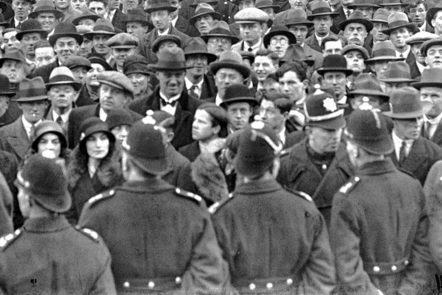
Explore the lives of men, women and children living through war and revolution and social changes that made modern Ireland. How do people experience war and revolution? How does political change, violence, total war, affect life in its most basic ways? Looking at Ireland through war and revolution, this course considers these and other questions about Irish life between 1912 and 1923.

No sessions available
5-12 Weeks
Was Alexander Great? The Life, Leadership, and Legacies of History’s Greatest Warrior (edX) EdX
Wellesley College,WellesleyX

Was Alexander Great? The Life, Leadership, and Legacies of History’s Greatest Warrior (edX)

Was Alexander Great? If so, how? If not, why not? This course explores the life, leadership, and legacies of history’s greatest warrior. Alexander the Great conquered most of the world known to the ancient Greeks, fused the eastern and western peoples of his empire, and became a god – before his 33rd birthday.

No sessions available
4 Weeks
Patrick Henry: Forgotten Founder (Coursera) Coursera
University of Virginia,UVA Lifetime Learning, Patrick Henry Memorial Foundation

Patrick Henry: Forgotten Founder (Coursera)

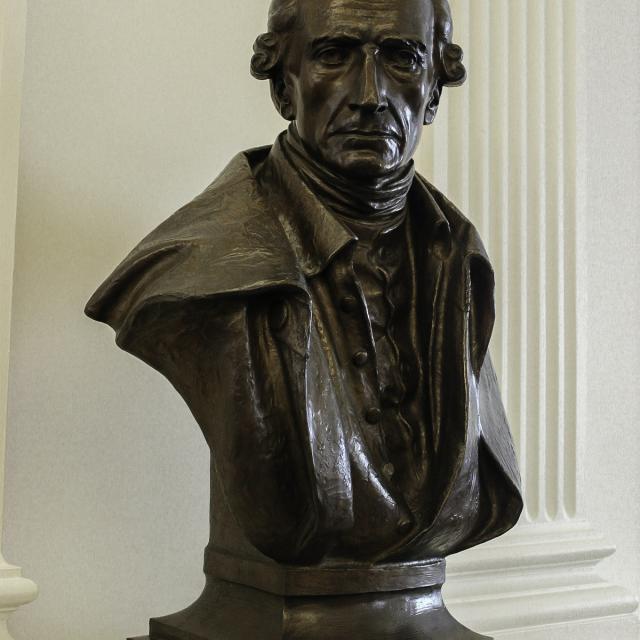
“Give me liberty, or give me death:” Remembering Patrick Henry, the Forgotten Founder. Patrick Henry was enormously popular during the American Revolution. Even Thomas Jefferson, who over time developed a deep loathing of Henry (some would say jealousy), had to admit that “it is not now easy to say what we should have done without Patrick Henry.” Edmund Randolph, a patriot leader in his own right, explained that “It was Patrick Henry … awakening the genius of his country, and binding a band of patriots together to hurl defiance at the tyranny of so formidable a nation as Great Britain.”

Jun 1st 2026
5-12 Weeks
The Modern World, Part One: Global History from 1760 to 1910 (Coursera) Coursera
University of Virginia

The Modern World, Part One: Global History from 1760 to 1910 (Coursera)

This is a survey of modern history from a global perspective. Part One begins with the political and economic revolutions of the late 1700s and tracks the transformation of the world during the 1800s. Part One concludes as these bewildering changes seem to be running beyond the capacity of older institutions to handle them. Throughout the course we try to grasp what is happening and ask: Why? And the answers often turn on very human choices.

Jun 22nd 2026
5-12 Weeks
Justice (edX) EdX
HarvardX,Harvard University

Justice (edX)

Justice, one of the most famous courses taught at Harvard College, is an introduction to moral and political philosophy, offering an opportunity to discuss contemporary dilemmas and controversies. Taught by lauded Harvard professor Michael Sandel, Justice explores critical analysis of classical and contemporary theories of justice, including discussion of present-day applications.

Self Paced
Self-Paced
A Global History of Sex and Gender: Bodies and Power in the Modern World (FutureLearn) FutureLearn
University of Glasgow

A Global History of Sex and Gender: Bodies and Power in the Modern World (FutureLearn)

Discover how a focus on gender and sexuality transforms our understanding of modern, global history. Study historical perspectives on contemporary issues of sex and gender. This course offers you the chance to explore vital historical perspectives on key contemporary issues surrounding sexuality and gender, including the #MeToo movement, campaigns for gay and trans rights, equal pay, and reproductive justice.

Available Now
4 Weeks
18e siècle : le combat des Lumières (FUN) FUN
Université Paris Lumières

18e siècle : le combat des Lumières (FUN)

Ce cours porte sur l’histoire de la littérature et des idées du 18e siècle français. Il vise à présenter l’ensemble du siècle, les œuvres et les auteurs aussi bien que les combats d’idées qui traversent les Lumières. L’accent sera mis sur les « grands auteurs » (Montesquieu, Prévost, Marivaux, Voltaire, Rousseau, Diderot, Sade…) qui constituent le bagage culturel requis pour avoir une idée générale du siècle, mais sans négliger tout ce que la recherche récente à mis en valeur en terme de mouvements de fond, représentés par des auteurs qui ont une place moins individualisée au panthéon littéraire mais qui n’en sont pas moins importants (textes clandestins, romans libertins, développement des femmes de Lettres, etc.).

No sessions available
5-12 Weeks
Early Christianity: The Letters of Paul (edX) EdX
HarvardX,Harvard University

Early Christianity: The Letters of Paul (edX)

The course “Early Christianity: The Letters of Paul” explores the context of these letters in the Roman Empire and the impact of these powerful texts today. The letters of Paul are the earliest texts in the Christian scriptures, written by a Jew at a time when the word “Christian” hadn’t yet been coined. What is the religious and political context into which they emerged? How were they first interpreted? How and why do they make such an enormous impact in Christian communities and in politics today?

No sessions available
5-12 Weeks