Gender-Based Violence: Responding to Intimate Partner Violence and Abuse (FutureLearn)

Offered by University of Glasgow,
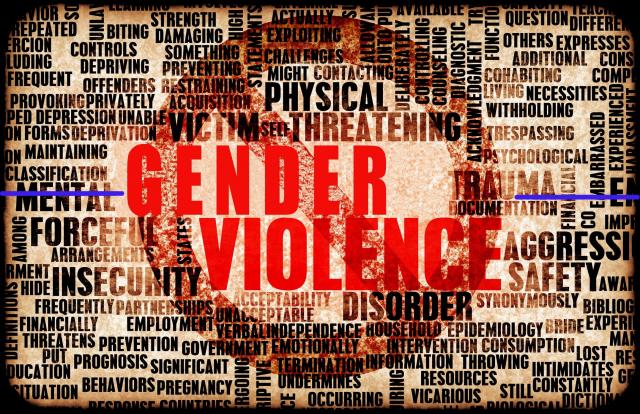
Gender-Based Violence: Responding to Intimate Partner Violence and Abuse (FutureLearn)

Expand your understanding of intimate partner violence and abuse (IPVA) and learn how to recognise and support victims of abuse. Understand the prevalence of IPVA and gender-based violence. This four-week course will introduce you to the types of IPVA and how it can present itself in different relationships. You’ll understand the pervasiveness of IPVA, what drives it, and learn how to support people experiencing IPVA.

Class Deals by MOOC List - Click here and see FutureLearn's Active Discounts, Deals, and Promo Codes.

Intimate partner violence and abuse (IPVA) and gender-based violence (GBV) are global issues. They are so prevalent that they will touch everyone in some way, whether that is through patients, acquaintances, or personal experience. For this reason, it is an area everyone should be knowledgeable about.

Explore the misconceptions surrounding abusive relationships
Intimate partner violence and abuse has a long history and there are many myths and misconceptions that surround abusive behaviours.
You’ll analyse IPVA through historical and legal lenses, exploring past cases of perpetrators and victims to understand the patterns of abuse and help dispel misconceptions.

Discover the signs and symptoms of IPVA and recognise red flags
Understanding the signs of abuse is imperative to helping victims and preventing escalation where possible.
You’ll learn to recognise the common physical and behavioural signs that indicate that someone is experiencing abuse, and understand the role of intersectionality in the presentation of these signs.

Learn how to respond to and support abuse victims with the University of Glasgow
Approaching the conversation of abuse with a victim can be a delicate matter, but the facilitators of this course have extensive expertise on IPVA and are equipped to prepare you for these tender situations.
You’ll learn to identify high-risk victims, ask the right questions, and create a basic safety plan. Once you complete this course, you’ll be empowered to support victims of IPVA.

What topics will you cover?

Week One - An introduction to gender-based violence, intimate partner violence and abuse (IPVA)
Gender Based Violence
Intimate partner violence and abuse (IPVA)
Myths and misconceptions about IPVA
The typology of IPVA
Coercive control
Gaslighting
The role of technology in IPVA
Week 2 - The origins of Intimate Partner Violence and Abuse
Historical timeline of IPVA
Perpetrators in historical context
Victims in historical context
Intervention in historical context
Week 3 - Recognising IPVA-Hiding in plain sight
Physical signs of IPVA
Behavioural signs of IPVA
Intersectionality and IPVA
Consequences of IPVA
Men as victims of IPVA
Week 4-Responding to IPVA
Taking action-how to support someone experiencing IPVA
Trauma informed care
IPVA in the workplace
IPVA and younger people
Safety planning
Becoming an active bystander
Advocacy and awareness raising
Course reflections

Learning on this course
You can take this self-guided course and learn at your own pace. On every step of the course you can meet other learners, share your ideas and join in with active discussions in the comments.

What will you achieve?
By the end of the course, you‘ll be able to...

  • Describe the spectrum of gender-based violence and understand IPVA through the lens of gender
  • Explore and discuss myths surrounding IPVA
  • Explore the historical and legal context of IPVA
  • Identify the signs of IPVA and respond appropriately
  • Identify the basics of safety planning for IPVA

Who is the course for?
This course is designed for anyone who wishes to know more about IPAV, or who is impacted by this area of work, such as police officials or support workers.
It will also be useful to those studying in the fields of health, social care, law, and HR.

Go to Class
MOOC List is learner-supported. When you buy through links on our site, we may earn an affiliate commission.

Related Courses

Terrorism and Counterterrorism: Comparing Theory and Practice (FutureLearn) FutureLearn
Leiden University

Terrorism and Counterterrorism: Comparing Theory and Practice (FutureLearn)

Delve into the research behind terrorism as you unpack the assumptions and impacts of both terrorism and counterterrorism. Explore terrorism and counterterrorism studies. Terrorism has arguably been one of the defining factors of our age. It frequently makes headlines, threatening or attacking governments, private businesses, and ordinary citizens. In many parts of the world, it has been one of the most important threats to peace, security, and stability – but what does this mean exactly? On this six-week course from Leiden University, you’ll explore the essence of terrorism and discover why it is so difficult to define.

Apr 25th 2022
5-12 Weeks
Terrorism and Counterterrorism: Comparing Theory and Practice (Coursera) Coursera
Leiden University

Terrorism and Counterterrorism: Comparing Theory and Practice (Coursera)

Terrorism has arguably been one of the defining factors of our age. It frequently makes headlines, threatening or attacking governments, private business and ordinary citizens. And in many parts of the world, it has been one of the most important threats to peace, security and stability. But what does this exactly mean? What is the nature of this threat? Who or what is threatened, how, by whom and why? What can be done about it or how can we at least limit the impact of terrorism and make sure that terrorists do not make headlines and manage to scare us? These are just a handful of questions that will be addressed in this course that consists of three parts.

May 18th 2026
5-12 Weeks
Understanding Violence (Coursera) Coursera
Emory University

Understanding Violence (Coursera)

We are so pleased to have you join us as we investigate this crucial topic. Violence is a leading cause of death, disability and health care use worldwide. Violence is a complex problem and can only be understood and reduced though a multidisciplinary approach. This course introduces you to experts who study different forms of violence and we will discuss the various causes of violence. You will also learn about efforts to reduce violence and engage in a day of compassion.

Jun 1st 2026
5-12 Weeks
Preventing and Responding to Sexual Harassment and Violence (edX) EdX
Jesus College, University of Cambridge

Preventing and Responding to Sexual Harassment and Violence (edX)

Learn how to become an active bystander and address sexual harassment and violence - in the workplace, at home, and in wider social relations. In 2017, an international movement gained momentum highlighting the pervasiveness of sexual harassment and violence. Millions worldwide used #MeToo, #TimesUp, #BalanceTonPorc, #NotYourHabibti, #Teknisktfel, #QuellaVoltaChe, #YoTambien and similar hashtags not just to bring collective attention to these issues, but to push for changes that would bring an end to sexual violence and discrimination in all their forms by breaking the silence and promoting social change.

Self Paced
Self-Paced
Bioinformatics for Biologists: Analysing and Interpreting Genomics Datasets (FutureLearn) FutureLearn
Wellcome Connecting Science

Bioinformatics for Biologists: Analysing and Interpreting Genomics Datasets (FutureLearn)

Boost your career by gaining the skills to install and modify the elements of a bioinformatics workflow to suit your needs. Gain practical data science skills. Bioinformatics is crucial in helping to understand large and complex sets of biological data. On this three-week course, you’ll develop your knowledge of bioinformatics and gain practical experience in scaling up analysis and working with large and complex datasets effectively.

Apr 6th 2026
3 Weeks
Gender, Violence and Post-Conflict States (edX) EdX
University of Iceland,UIcelandX

Gender, Violence and Post-Conflict States (edX)

Learn the core theories, case studies and policy frameworks necessary for understanding the interplay between gender and violence in post-conflict contexts. Understanding the gendered dynamics of violence in conflict and post-conflict situations is crucial to anyone considering a career in international development. In this course you will learn about the gendered dynamics of different types of violence, restorative justice, Apartheid, peacekeeping, and international policy frameworks on sexual and gender-based violence.

Self Paced
Self-Paced
Terrorismes (FUN) FUN
le cnam

Terrorismes (FUN)

Ce cours propose une analyse historique précise et détaillée des mutations du terrorisme, de ses évolutions et ruptures, de son passage d’un outil criminel singulier à une dimension plurielle. Y sont abordées : les définitions, les acteurs, les cibles, les méthodes et les outils de lutte contre le terrorisme. Ce cours a pour objectif de fournir une meilleure connaissance et une plus grande capacité d’analyse de l’information sur les problématiques terroristes.

No sessions available
5-12 Weeks
Radicalización violenta: análisis, detección y prevención (URJC) URJCx
Universidad Rey Juan Carlos

Radicalización violenta: análisis, detección y prevención (URJC)

Este MOOC estudia y analiza qué hay detrás de muchas de las acciones violentas y terroristas que, en principio, resultan incomprensibles para la mayoría de los ciudadanos. En muchas ocasiones, estos actos se desatan de procesos previos de radicalización de diferente índole. Procesos que no solo son significativos porque puedan acabar en violencia, sino porque también revelan que la radicalización ideológica o ideológico-religiosa es, en sí misma, un asunto público de gran relevancia que atañe a la cohesión social y a la polarización de nuestras sociedades democráticas.

No sessions available
5-12 Weeks
Children Deprived of Liberty: Learning from the UN Global Study (GCHumanRights) Global Campus of Human Rights
Global Campus of Human Rights

Children Deprived of Liberty: Learning from the UN Global Study (GCHumanRights)

Despite the fact that the Convention on the Rights of the Child affirms that, in principle, children should not be detained and deprivation of liberty should be a measure of last resort, millions of children in the world are locked away. To address this problem, the United Nations appointed Manfred Nowak as Independent Expert to lead the Global Study on children deprived of liberty. This unique MOOC stems from this study and provides insights, learning and recommendations in this important area at the crossroad of children, violence, and human rights studies.

Self Paced
Self-Paced
Firearm Purchaser Licensing Teach-Out: The Background Check Policy Not Enough People Are Talking About (Coursera) Coursera
Johns Hopkins University

Firearm Purchaser Licensing Teach-Out: The Background Check Policy Not Enough People Are Talking About (Coursera)

The best available evidence shows that comprehensive background checks by themselves are insufficient at reducing gun violence, but strong bodies of research demonstrate that states with comprehensive background checks coupled with firearm purchaser licensing, or permit-to-purchase laws, have significantly fewer firearm-involved homicides, fatal mass shootings, and suicides. Additionally, public opinion polling research consistently finds that 75% or more of U.S. adults support firearm purchaser licensing laws and 60% or more of gun owners support these policies.

Jun 8th 2026
4 Weeks
New Approaches to Countering Terror: Countering Violent Extremism (Coursera) Coursera
University of Maryland, College Park

New Approaches to Countering Terror: Countering Violent Extremism (Coursera)

The “New Approaches to Countering Terror: Countering Violent Extremism” course offered by the National Consortium for the Study of Terrorism and Responses to Terrorism (START), is a multi-week interactive course designed to help students explore both pragmatic and philosophical challenges that continue to shape the evolution of Countering Violent Extremism (CVE), a global security paradigm.

Jun 10th 2024
4 Weeks
Medical Peace Work (FutureLearn) FutureLearn
University of Bergen

Medical Peace Work (FutureLearn)

Learn about the vital role healthcare plays in violence prevention and peace-building both globally and locally. Violence affects health in multiple ways. Medical peace work is an important and emerging field of expertise in health, violence prevention, and peace-building. This course will introduce you to some of the key concepts, opportunities and dilemmas in the field through six case studies on causes, responses, roles, and duties of healthcare practitioners in dealing with violence and building peaceful societies.

No sessions available
5-12 Weeks