Federalism & Decentralization: Evaluating Africa's Track Record (Coursera)

Offered by Leiden University,
Federalism & Decentralization: Evaluating Africa's Track Record (Coursera)

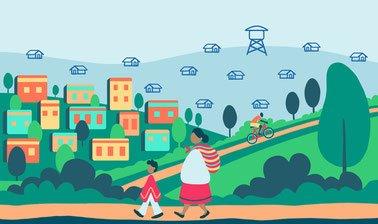
In this political science course you will learn about the twin concepts of federalism and decentralization. You will develop an understanding of the core ideas that federalism and decentralization rest on, and study the building blocks that make them both work.

Class Deals by MOOC List - Click here and see Coursera's Active Discounts, Deals, and Promo Codes.

Following a general overview of both federalism and decentralization, we will examine a number of case-studies from Africa where federalism and decentralization have been changing the continent’s political landscape in the last twenty years, coinciding with unprecedented levels of economic growth.
What is federalism and how is it different from decentralization? What are the core ideas behind these concepts? Do federalism and decentralization enhance democracy, governance and diversity? Is that why virtually all countries south of the Sahara are now either federal or decentralized? We will be looking at Africa's track-record in order to answer these questions.
By the end of the course, you will have acquired a general knowledge of federalism/decentralization and additional empirical knowledge of a number of African cases. Upon completion you will also acquire the ability to unpack and understand a variety of potential consequences of federalism/decentralization reforms in the developing world.

Syllabus

WEEK 1
Welcome to this course. The Three Promises of Federalism and Decentralization
Great that you are joining us. In this course you will learn about Federalism & Decentralization in Africa. Before you start, we invite you to first go through our intro module and introduce yourself in the forum to meet your fellow learners. If you encounter any difficulties while studying, please let us know in the forum. For technical difficulties or questions regarding the course certificate, you can always contact the Coursera Learner Helpdesk. Good luck & we hope you enjoy studying in this course. In this first module you can also find the introduction video and an exploration of the three promises of Federalism and Decentralization.

WEEK 2
Core Ideas in Federalism and Decentralization
This module will cover important concepts such as shared-rule and self-rule, autonomy, multiple identities and distributed authority. Don't forget to keep up with the readings for optimal understanding and application of this week's material. Do you have any questions, statements, remarks or other points you would like to discuss? Do not hesitate to post them in the Discussion Forums and a staff member or other course participants will be able to help you out.

WEEK 3
The Building Blocks of Federalism and Decentralization
In this module we will discuss the various legal, political, and social foundations of federalism and decentralization. As you can see, this topic requires a true interdisciplinary perspective.

WEEK 4
Federalism in Post-Conflict Societies
In previous modules, you've learned the theory behind federalism and decentralization, as well as the most important concepts and building blocks, This module, we will look at three case studies to acquire insight into how federalism and decentralization work in practice: Nigeria, South Africa and Ethiopia.

WEEK 5
Decentralization, Democracy and Economic Development
While previous modules focused on federalism, Module 5 is all about decentralization. We will analyze the related but different dynamics decentralization presents. In particular, we will focus on the economic implications of decentralization on Africa. We will cover various perspectives that highlight state capacity, international factors, design of decentralized institutions, unintended long-term consequences, and uncodified home-grown practices of local governance.

WEEK 6
Critical Issues in Federalism and Decentralization
This module will cover critical issues in Federalism and Decentralization, and will bring the knowledge and insights from previous modules together. The notion of state capacity will be unpacked into political, administrative, infrastructural, and economic components. We will also evaluate the relative importance of international know-how and local traditions.

Go to Class
MOOC List is learner-supported. When you buy through links on our site, we may earn an affiliate commission.

Related Courses

Riesgos y oportunidades empresariales en una economía globalizada (Coursera) Coursera
IE Business School

Riesgos y oportunidades empresariales en una economía globalizada (Coursera)

Oportunidades y riesgos empresariales en un mundo globalizado» es el tercer y último curso de la especialización «Globalización, crecimiento económico y estabilidad» impartido por la profesora de IE Business School Gayle Allard. En este curso, los alumnos aprovecharán los conocimientos y la teoría de sus dos cursos anteriores y los aplicarán a los eventos que actualmente suceden en el mundo. Además, puede funcionar como curso independiente para quienes quieran saber cómo afectan los factores macroeconómicos a las economías, los gobiernos y los ciudadanos en diversos países.

Sep 21st 2026
5-12 Weeks
Ecologie Politique: défi de la durabilité pour les démocraties (Coursera) Coursera
University of Lausanne

Ecologie Politique: défi de la durabilité pour les démocraties (Coursera)

De quoi parle-t-on lorsque l’on parle d’environnement ? Existe-t-il une crise écologique ? L’environnement se résume-t-il à la pollution ? Est-on vraiment fondé à parler de risques environnementaux ? L’environnement a-t-il affaire à la politique et si oui pourquoi ? Pourquoi et à partir de quand a-t-on pu parler d’écologie politique ? Quelles en sont les différentes expressions ? Les démocraties et leurs expressions courantes ne suffisent-elles pas à répondre aux problèmes écologiques ? Et si ce n’est pas le cas, quels sont les apports éventuels et potentiels de l’écologie politique ? Ce cours se propose à répondre à ces questions, l’objectif global étant de comprendre les tenants et aboutissants de l’interface écologie et politique.

Sep 28th 2026
4 Weeks
Gestión de Proyectos de Desarrollo (edX) EdX
Inter-American Development Bank - IDB,IDBx

Gestión de Proyectos de Desarrollo (edX)

“Un MOOC desarrollado en colaboración con el Project Management Institute Educational Foundation (PMI-EF)”. Aprende mejores prácticas para gestionar proyectos que promuevan el desarrollo económico y social en América Latina y el Caribe. Si buscas obtener una titulación sobre Gestión de Proyectos reconocida internacionalmente ¡Este es tu curso! Además de aprender las mejores prácticas para gestionar proyectos de desarrollo, podrás lograr hasta 35 PDUs en el área técnica, avalados por el Project Management Institute Educational Foundation (PMI- EF).

Self Paced
Self-Paced
Découvrir la science politique (edX) EdX
LouvainX,Université Catholique de Louvain - UCL

Découvrir la science politique (edX)

Décrypter des enjeux politiques actuels à partir d’une boîte à outils: des notions importantes, une démarche analytique et une perspective critique. Le politique nous concerne tous : chaque jour, des décisions publiques sont adoptées qui impactent notre quotidien. Dans quel contexte ces décisions sont-elles adoptées ? Au 21ème siècle, de nombreux paradoxes brouillent la vision que nous pouvons en avoir.

Self Paced
Self-Paced
Business Opportunities and Risks in a Globalized Economy (Coursera) Coursera
IE Business School

Business Opportunities and Risks in a Globalized Economy (Coursera)

This is the last of the three courses part of the Globalization, Economic Growth and Stability Specialization.¨Business Opportunities and Risks in a Globalized World¨ is the the 3rd and final course of the ¨Globalization, Economic Growth and Stability¨ Specialization taught by IE Business School's Professor Gayle Allard. This course is designed to help an investor, businessperson or economist approach macroeconomic, institutional and international data and derive information from the indicators that point to the types of opportunities and risks that they present.

Sep 14th 2026
5-12 Weeks
Inequality and Democracy (Coursera) Coursera
Universiteit Utrecht

Inequality and Democracy (Coursera)

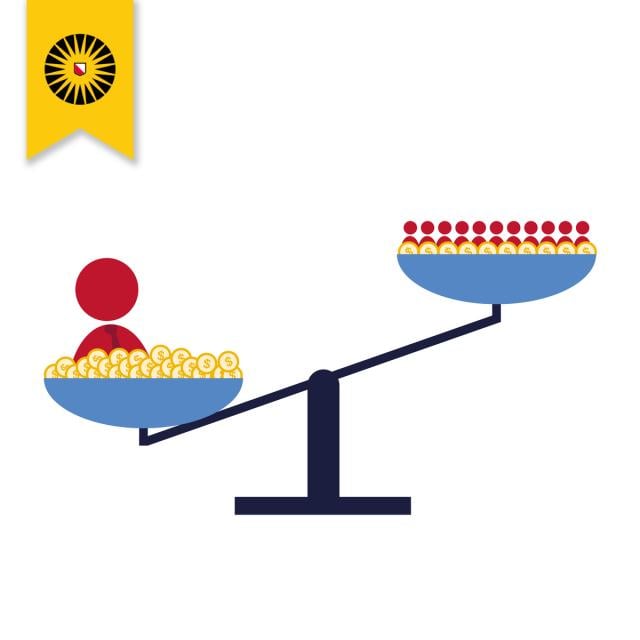
Most countries are getting more and more unequal. But the core of democracy is political equality: that everyone should have an equal say in how their country is run. Can we really expect these things to go together? Can people have equal political power while economic inequality grows and grows? Take this course and decide for yourself.

Sep 14th 2026
5-12 Weeks
Civic Engagement in American Democracy (Coursera) Coursera
Duke University

Civic Engagement in American Democracy (Coursera)

So how does the American political system work? Who are some of the key actors? What are key concepts for a student trying to understand what’s going on? How can I as a citizen influence politics? Civic Engagement in American Democracy takes on these and other key questions. We’re Dr. Nicholas Carnes and Dr. Bruce Jentleson, the principal course instructors. Along with our Duke faculty colleagues who also contributed modules, we’ve designed the course to provide a strong foundational introduction to US politics.

Oct 5th 2026
4 Weeks
Bitcoin and Cryptocurrency Technologies (Coursera) Coursera
Princeton University

Bitcoin and Cryptocurrency Technologies (Coursera)

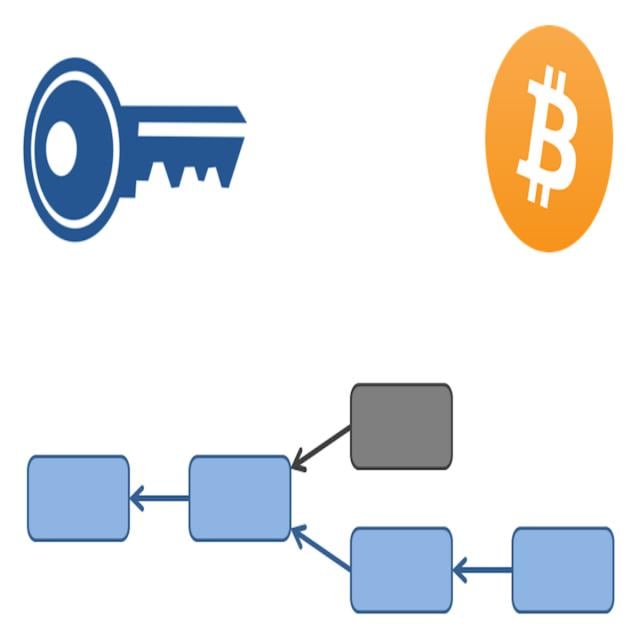
To really understand what is special about Bitcoin, we need to understand how it works at a technical level. We’ll address the important questions about Bitcoin, such as: How does Bitcoin work? What makes Bitcoin different? How secure are your Bitcoins? How anonymous are Bitcoin users? What determines the price of Bitcoins? Can cryptocurrencies be regulated? What might the future hold?

Sep 21st 2026
5-12 Weeks
Contexto de Negocios en LATAM: Factores Políticos, Sociales y Económicos (Coursera) Coursera
Pontificia Universidad Católica de Chile

Contexto de Negocios en LATAM: Factores Políticos, Sociales y Económicos (Coursera)

Latinoamérica resulta ser muy atractiva al momento de decidir realizar nuevos negocios, pero en algunos casos este proceso se considera algo distinto a cómo opera el mercado mundial, por lo que es importante conocer algunos elementos que permitan entender de mejor manera este contexto y así definir estrategias más efectivas cuando se piensa comenzar un negocio en esta región.

Sep 14th 2026
4 Weeks
How Technology is Shaping Democracy and the 2020 Election (Coursera) Coursera
Stanford University

How Technology is Shaping Democracy and the 2020 Election (Coursera)

Democracy can only thrive with the participation of well-informed citizens. The 2020 U.S. presidential election will be historic for many reasons and all parties are leveraging the power of technology to both influence and mobilize voters. More than ever, digital tools and platforms are shaping the opinions and behaviors of voters who will determine the future of the governance of the United States. This new course examines the unprecedented influence of technology and technology policy on America’s elections and democratic process and takes a close look at how a public sphere plagued by polarization, online filter bubbles, a lack of transparency in content moderation policies, and foreign and domestic misinformation and disinformation campaigns, impacts our ability to be well-informed citizens.

Oct 21st 2024
1 Week
Géopolitique de l'Europe (Coursera) Coursera
Sciences Po

Géopolitique de l'Europe (Coursera)

Le Mooc géopolitique de l’Europe offre un parcours dynamique sur les enjeux et les tensions internes de l’Union européenne comme sur ses interactions avec le reste du monde. Par les cartes, l’iconographie, les vidéos, l’infographie et les jeux de rôle, le Mooc restitue les principaux enjeux géopolitiques propres à l’Europe, tout en insistant sur les représentations dont elle est l’objet dans le monde.

Mar 4th 2024
5-12 Weeks
Transição energética e ecológica em países do sul (Coursera) Coursera
École normale supérieure

Transição energética e ecológica em países do sul (Coursera)

Este MOOC encontra-se na confluência do desenvolvimento dos países do Sul e do desenvolvimento sustentável. Tem uma dimensão macroeconómica e financeira, trazida em particular por Gael Giraud e Alain Grandjean como intervenientes, uma dimensão ecológica e climática trazida em particular por David Claessen e pelos intervenientes da ENS, e uma dimensão de foco nos países do Sul, particularmente pelos intervenientes da AFD.

Sep 21st 2026
5-12 Weeks