Explorations in Confucian Philosophy (Coursera)

Explorations in Confucian Philosophy (Coursera)

Is Confucianism synonymous with Chinese culture? While it may be an overstatement to equate the two, there is little doubt that Confucianism pervades every level of Chinese culture and society. To be sure, other traditions such as Daoism and Buddhism have also left an indelible mark; nevertheless, Confucianism remains central to the shaping of the Chinese imagination.

Class Deals by MOOC List - Click here and see Coursera's Active Discounts, Deals, and Promo Codes.

The influence of Confucianism extends beyond China to East Asia and through migration and cultural diffusion, other parts of the world. Confucianism traces its origins to the teachings of Confucius. What makes Confucius so special and what did he teach? This course will explore some of the key concepts in Confucian philosophy. Much of the discussion will centre on the Analects of Confucius, the foundational text of Confucian wisdom, although attention will also be given to the subsequent unfolding of the Confucian tradition. We will attempt to situate Confucian philosophy in its own context and to bring out its contemporary significance. Confucianism is a living tradition. Its vitality hinges on not only its continuing relevance in Chinese society but also its contribution to meeting the global challenges confronting the world today. There are no prerequisites for this course, other than a keen interest in Chinese tradition and culture, and the willingness to engage the Analects of Confucius.

Course Syllabus

Week 1 - Introduction: The World of Confucius
Part 1 - The World of Confucius
Meaningful engagement with Confucian philosophy requires a disciplined and informed imagination. Confucius (or Kongzi, in Chinese) flourished in a time of considerable change and political instability. Some understanding of the world of early China would be critical, as Confucian ideas did not grow out of a historical vacuum. In this context, we will examine the Analects—known in Chinese as Lunyu—a compilation of sayings and conversations attributed to Confucius that is essential to our understanding of Confucian philosophy.

Week 2 - Part 2A - The Vision of Confucius
The teachings of Confucius are perhaps best understood as a major philosophical renovation of the early Chinese intellectual scene. We will start with the cardinal concept of the junzi, the moral and cultural exemplar that stands at the heart of the Confucian vision. What are the characteristics of the ideal junzi? Can one become a junzi and if so, how can that be accomplished? In this context, some of the key Confucian ethical concepts such as ren (humaneness or humanity), li (propriety), and yi (rightness) will be introduced.

Week 3 - Part 2B - The Vision of Confucius (cont'd)
In this same context (refer to week 2), as we continue our guided tour, as it were, of the rich intellectual landscape that is Confucianism, we examine briefly the concept of “filial piety” (xiao), the key concern with learning and education (xue), which extends far beyond academic interests, and other related concepts. In addition, I would like to raise the question as to whether there is a religious or spiritual dimension to Confucian philosophy, and if so, how does it relate to ethics and political philosophy. There is much to discuss here, and we will return to the question of the impact of the Confucian vision on Chinese culture towards the end of this course.

Week 4 - Part 3A - The Unfolding of Confucianism
“Confucianism” is an abstract generalization. While it may serve as a convenient label, it must be used with care. What needs to be made clear is that the Confucian tradition is dynamic, interacting with different currents of thought as well as harbouring rich internal differences. In this part of the course, some of the main rivals to Confucian philosophy in early China will be introduced. These concern what have come to be called “Mohism,” “Daoism,” and “Legalism” in classical Chinese philosophy.

Week 5 - Part 3B - The Unfolding of Confucianism (cont'd)
The major landmarks in the development of Confucian philosophy itself will be considered next. These include Mengzi (or more commonly, in English, Mencius) and Xunzi, and particularly the debate between them on human nature, which is philosophically significant and also sets the stage for the subsequent unfolding of Confucian philosophy. As Confucianism developed, interaction with the ideas of Daoism and Buddhism became increasingly important. Consequently, a new interpretation of Confucian philosophy came to dominate the Chinese scene from roughly the 12th century C.E. This has come to be known as “Neo-Confucianism.” We will discuss briefly some of its principal tenets.

Week 6 - Part 4 - Confucianism in the World Today
The influence of Confucianism on Chinese culture is one important issue, but equally important would be the potential contribution of Confucian philosophy to global dialogue. Is Confucianism still relevant today? What does Confucianism have to offer to contemporary society, which must confront a host of complex challenges? What can we learn from it? Rather than presenting a single point of view, this part of the course will be based on a series of interviews, with scholars of Confucianism, as well as students and alumni of NTU Singapore.
Note: This course is currently not available.

Related Courses

Intellectual Humility: Science (Coursera) Coursera
University of Edinburgh

Intellectual Humility: Science (Coursera)

It’s clear that the world needs more intellectual humility. But how do we develop this virtue? And why do so many people still end up so arrogant? Do our own biases hold us back from becoming as intellectually humble as we could be—and are there some biases that actually make us more likely to be humble? Which cognitive dispositions and personality traits give people an edge at being more intellectually humble - and are they stable from birth, learned habits, or something in between? And what can contemporary research on the emotions tell us about encouraging intellectual humility in ourselves and others?

Jun 22nd 2026
4 Weeks
Foundations of Teaching for Learning: Being a Professional (Coursera) Coursera
Commonwealth Education Trust

Foundations of Teaching for Learning: Being a Professional (Coursera)

The Foundations of Teaching for Learning programme is for anyone who is teaching, or who would like to teach, in any subject and any context - be it at school, at home or in the workplace. With dynamic lessons taught by established and respected professionals from across the Commonwealth, this eight course programme will see you develop and strengthen your skills in teaching, professionalism, assessment, and more. As you carry on through the programme, you will find yourself strengthening not only your skills, but your connection with colleagues across the globe. A professional development opportunity not to be missed.

Jun 1st 2026
5-12 Weeks
Humanidades digitales (Coursera) Coursera
Universitat Autònoma de Barcelona

Humanidades digitales (Coursera)

¿Te has planteado para qué sirven las humanidades en el siglo XXI? ¿Cómo el advenimiento de lo Digital ha cambiado nuestra forma de acercarnos a las Humanidades? ¿Y al revés? ¿De qué forma las Humanidades influencian sobre los diferentes aspectos de la Tecnología? Te ofrecemos el primer curso online que da respuesta a estas preguntas. Una visión de las Humanidades Digitales desde la filosofía, la historia, la arqueología, el arte,… y desde las ciencias computacionales y la visión por ordenador.

Jun 8th 2026
4 Weeks
Intellectual Change in Early China: Warring States and Han (Coursera) Coursera
The Chinese University of Hong Kong

Intellectual Change in Early China: Warring States and Han (Coursera)

This sequence of four courses will propose a multi-disciplinary approach to the study of Chinese cultural history conceived of as a succession of modes of rationality (philosophical, bureaucratic, and economic). The focus will be on the moments of paradigm shift from one mode of rationality to another. For each of these moments, cultural facts and artifacts—thought, literature, ritual—will be examined in relationship to changing social, political, and economic systems.

Jun 15th 2026
5-12 Weeks
Philosophy, Science and Religion: Science and Philosophy (Coursera) Coursera
University of Edinburgh

Philosophy, Science and Religion: Science and Philosophy (Coursera)

Philosophy, Science and Religion mark three of the most fundamental modes of thinking about the world and our place in it. Are these modes incompatible? Put another way: is the intellectually responsible thing to do to ‘pick sides’ and identify with one of these approaches at the exclusion of others? Or, are they complementary or mutually supportive? As is typical of questions of such magnitude, the devil is in the details. For example, it is important to work out what is really distinctive about each of these ways of inquiring about the world. In order to gain some clarity here, we’ll be investigating what some of the current leading thinkers in philosophy, science and religion are actually doing.

Jun 22nd 2026
5-12 Weeks
Philosophy, Science and Religion: Philosophy and Religion (Coursera) Coursera
University of Edinburgh

Philosophy, Science and Religion: Philosophy and Religion (Coursera)

Philosophy, Science and Religion mark three of the most fundamental modes of thinking about the world and our place in it. Are these modes incompatible? Put another way: is the intellectually responsible thing to do to ‘pick sides’ and identify with one of these approaches at the exclusion of others? Or, are they complementary or mutually supportive? As is typical of questions of such magnitude, the devil is in the details. For example, it is important to work out what is really distinctive about each of these ways of inquiring about the world. In order to gain some clarity here, we’ll be investigating what some of the current leading thinkers in philosophy, science and religion are actually doing.

Jun 22nd 2026
5-12 Weeks
The Beauty of Kunqu Opera (Coursera) Coursera
The Chinese University of Hong Kong

The Beauty of Kunqu Opera (Coursera)

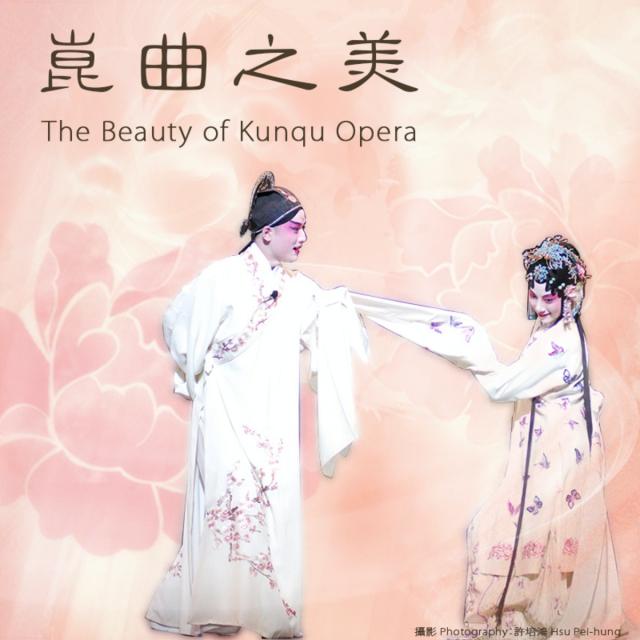
This course will focus on the historical and cultural background, literary aesthetics, music, and performance of Kunqu, China’s classical opera. After viewing the lecture videos presented by scholars and renowned maestros in the field of Kunqu, students’ understanding and appreciation of Chinese performing arts, classical literature and traditional culture will be enhanced.

Jun 8th 2026
5-12 Weeks
Ancient Philosophy: Plato & His Predecessors (Coursera) Coursera
University of Pennsylvania

Ancient Philosophy: Plato & His Predecessors (Coursera)

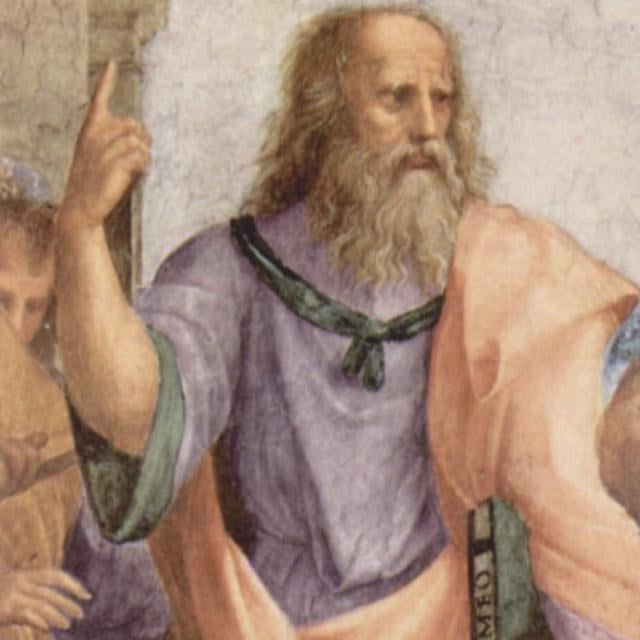
What is philosophy? How does it differ from science, religion, and other modes of human discourse? This course traces the origins of philosophy in the Western tradition in the thinkers of Ancient Greece. We begin with the Presocratic natural philosophers who were active in Ionia in the 6th century BCE and are also credited with being the first scientists.

Jun 22nd 2026
4 Weeks
The History of Medicine: Philosophy, Science, and Psychology (Coursera) Coursera
University of California, Santa Cruz

The History of Medicine: Philosophy, Science, and Psychology (Coursera)

"History of Medicine" provides an accessible historical and interdisciplinary perspective on medicine, focused primarily upon therapy and practice, to achieve better understanding of the scope, practice, and limits of medicine. Medicine is defined as the treatment of disease. Human attempts to understand and treat disease will be seen as evolving from the spiritual and mystical practices of the distant past, to the rational approach of the Classical World, and finally to the scientific thinking of the Renaissance and beyond.

Jun 8th 2026
5-12 Weeks
On Strategy : What Managers Can Learn from Philosophy - PART 1 (Coursera) Coursera
CentraleSupélec

On Strategy : What Managers Can Learn from Philosophy - PART 1 (Coursera)

In the expression “creative thinking”, the keyword is not creativity; the keyword is thinking. With the help of great philosophers, you will rediscover the art of thinking. To help leaders to be rigorous even without figures, great philosophers have lots of ideas. Managers are invited to rediscover the art of thinking. They should understand the role of mental models, realize the importance of cognitive bias, agree on clear definitions and efficient criteria etc. Creativity demands the ability to unshackle ourselves from conventional ways of thinking, to "think outside the box".

Jun 1st 2026
5-12 Weeks
Philosophy and the Sciences: Introduction to the Philosophy of Cognitive Sciences (Coursera) Coursera
University of Edinburgh

Philosophy and the Sciences: Introduction to the Philosophy of Cognitive Sciences (Coursera)

What is our role in the universe as human agents capable of knowledge? What makes us intelligent cognitive agents seemingly endowed with consciousness? This is the second part of the course 'Philosophy and the Sciences', dedicated to Philosophy of the Cognitive Sciences. Scientific research across the cognitive sciences has raised pressing questions for philosophers. The goal of this course is to introduce you to some of the main areas and topics at the key juncture between philosophy and the cognitive sciences. Each week we will introduce you to some of these important questions at the forefront of scientific research. We will explain the science behind each topic in a simple, non-technical way, while also addressing the philosophical and conceptual questions arising from it.

Jun 1st 2026
4 Weeks