Electric Power Systems (Coursera)

Electric Power Systems (Coursera)

This course familiarizes you with standards and policies of the electric utility industry, and provides you with basic vocabulary used in the business. It introduces the electric power system, from generation of the electricity all the way to the wall plug. You will learn about the segments of the system, and common components like power cables and transformers.

Class Deals by MOOC List - Click here and see Coursera's Active Discounts, Deals, and Promo Codes.

This course is for individuals considering a career in the energy field (who have a high school diploma, at minimum, and basic knowledge of mathematics), and existing energy sector employees with less than three years of experience who have not completed similar training and would benefit from a course of foundational industry concepts.

The course is a combination of online lectures, videos, readings and discussions.
This is the first course in the Energy Production, Distribution & Safety specialization that explores various facets of the power sector, and features a culminating project involving creation of a roadmap to achieve a self-established, energy-related professional goal.
Course 1 of 4 in the Energy Production, Distribution & Safety Specialization.

Syllabus

WEEK 1
Basic Electricity
Electricity is a term that covers all the phenomena caused either by static electric charge or by the movement of charge (current) and the electrical and magnetic fields associated with that.
This module looks at: Nature and Effects of Electricity; Basic Electrical Properties and Simple Circuits.

WEEK 2
Generation, Transmission, & Distribution
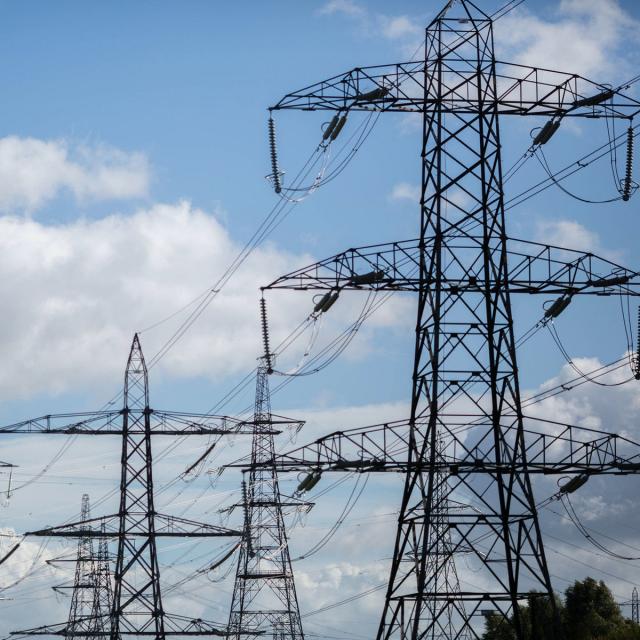
Electrical energy is transmitted and distributed via overhead lines and underground cables operating at different voltage levels. It is necessary to mesh networks to ensure dependable supply for consumers even if individual transmission paths fail.
This module focuses on: Substations & Transformers; Generation; Transmission & Subtransmission and Distribution.

WEEK 3
System Design & Switching
Circuit breakers are complicated electromechanical devices and must be serviced regularly. So that work on them can be perform safely, switches are installed before and after them.

WEEK 4
Renewable Energy & Smart Grid Technologies
Our nation’s electric power infrastructure that has served us so well for so long – also known as “the grid” – is rapidly running up against its limitations.
This module looks at Smart Grid Risks; Smart Grid, Utilities & Customers; Smart Grid & the Environment and Renewable Energy.
Go to Class
MOOC List is learner-supported. When you buy through links on our site, we may earn an affiliate commission.

Related Courses

Net-Zero Building Fundamentals (Coursera) Coursera
Indian Institute for Human Settlements

Net-Zero Building Fundamentals (Coursera)

Interested in decarbonisation, high performance, and climate resilient buildings? Then this course is for you. Our future is low-carbon, net-zero buildings that are super-efficient and self-sufficient in terms of their energy and water use. Decarbonisation, digitisation, and deglobalisation are driving the infrastructure revolution over the next 20 years. This course, offered jointly by the Alliance for an Energy Efficient Economy (AEEE) and the Indian Institute for Human Settlements (IIHS), will enable you to reap the benefits of this revolution and work on climate change.

Aug 3rd 2026
5-12 Weeks
Electric Utilities Fundamentals and Future (Coursera) Coursera
University of Colorado System

Electric Utilities Fundamentals and Future (Coursera)

The approach of this course is truly unique in how it approaches and engages learners. It looks at the electric utility industry, which has remained critical to our quality of life, health and comfort from the eyes of numerous industry experts through on-location interviews, compelling visuals, and animation. You will benefit from having the inside track because you see some behind-the-scenes information not covered in news stories, social media or even if we are in the business ourselves.

Jul 20th 2026
5-12 Weeks
Pre-University Physics (edX) EdX
Delft University of Technology,DelftX

Pre-University Physics (edX)

Prepare for your technical studies by reviewing the fundamentals of physics. Become familiar with the way physics and physics-related topics are taught at university level. Physics is the foundation of many important science and engineering disciplines. Understanding its basics is fundamental for advanced studies. In this course, you will have the chance to review the fundamentals either for your own interest, or to ensure you have a smooth start in the first year of your Bachelor’s degree.

Self Paced
Self-Paced
Creating a Pro-Renewables Environment (edX) EdX
Imperial College London,ImperialX

Creating a Pro-Renewables Environment (edX)

Understand the policy, regulatory and fiscal measures that can incentivise renewable power and drive cleaner investment along the entire electricity supply chain. This course provides the tools needed to build a low-carbon power sector around the world. By diving into the perspective of different players in the power sector - from investors through to utilities, regulators and project developers - you will be able to choose the right strategies, policies and other levers needed to incentivise a cleaner power mix in your own context.

Self Paced
Self-Paced
Electrical Industry: Production and Economics (FutureLearn) FutureLearn
University of Padova

Electrical Industry: Production and Economics (FutureLearn)

Understand how the electricity system has developed over time, see what the future holds and the need to move to decarbonisation. Discover how electricity is produced and exchanged and the reasons behind it. This innovative, three-week course from the University of Padova is designed to illustrate how electricity is produced, and exchanged, and why.

Self Paced
4 Weeks
Photovoltaic Systems (Coursera) Coursera
Technical University of Denmark - DTU

Photovoltaic Systems (Coursera)

This course offers you advanced knowledge within the field of photovoltaic system technology. We'll learn about the solar resource and how photovoltaic energy conversion is used to produce electric power. From this fundamental starting point we'll cover the design and fabrication of different solar cell and module technologies, the various photovoltaic system components, how to design a photovoltaic plant and carry out energy yield simulations, essentials in energy economics, O&M and reliability assessment, as well as the role of photovoltaic energy in sustainable energy systems.

Jul 21st 2026
5-12 Weeks
Wind resources for renewable energies (Coursera) Coursera
École Polytechnique

Wind resources for renewable energies (Coursera)

The main goal of this course is to get the necessary knowledge on atmospheric and fluid dynamics in order to quantify the wind resource of a local or regional area. We’ll learn about basic meteorology, the specific dynamics of turbulent boundary layers and some standard techniques to estimate wind resources regardless of the type of turbine used or the level of efficiency achieved.

Aug 10th 2026
4 Weeks
Cybersecurity Policy for Water and Electricity Infrastructures (Coursera) Coursera
University of Colorado System

Cybersecurity Policy for Water and Electricity Infrastructures (Coursera)

This course will examine the drinking water and electricity infrastructures, and various policies that have been developed to help guide and strengthen their cybersecurity programs. The drinking water and electricity infrastructures are two of fourteen subsectors comprising what are known as "lifeline infrastructure". The 2013 National Infrastructure Protection Plan identifies four lifeline infrastructure sectors: 1) water, 2) energy, 3) transportation, and 4) communications. These sectors are designated "lifeline" because many other infrastructures depend upon them.

Jul 27th 2026
4 Weeks
Renewable Energy: Resources and Technologies (Coursera) Coursera
Peter the Great St. Petersburg Polytechnic University

Renewable Energy: Resources and Technologies (Coursera)

In our course, you will become familiar with the basic concepts of renewable energy. Get an idea about the basics of determining the potential of renewable energy resources, including its territorial, temporal and climatic variability. We paid great attention to the study of modern technologies for converting solar, wind and hydropower, as well as to operating modes of power plants based on renewables in power supply systems for autonomous and grid consumers.

Aug 1st 2022
5-12 Weeks
Outsmarting intermittency (Coursera) Coursera
École Polytechnique

Outsmarting intermittency (Coursera)

Solar and wind offer clean and renewable ways to produce large amounts of electricity. They have boomed over the last few years, evolving from an eco-daydream to a major market and showing unprecedented growth rates. Yet, installing solar panels and wind turbines is by no means the end of the story. The electrical grid, which connects production means to the end-users’ sockets, is not a simple electron pipe. It is the beating heart of our electricity system and ensures its stability. Solar and wind raise specific challenges for the grid, and these challenges will have to be tackled if we want to deploy larger amounts of renewable sources.

Aug 3rd 2026
4 Weeks
Renewable Energy Projects (Coursera) Coursera
University of Colorado Boulder

Renewable Energy Projects (Coursera)

Understanding renewable energy technologies is important, but equally important is knowing how to effectively deploy these technologies to provide renewable energy to end-users – the topic of this course. Upon completion of the course, you will understand the development and management of renewable energy projects, large and small, from conception to launch and subsequent operation.

Jul 27th 2026
5-12 Weeks
Energy, Environment, and Everyday Life (Coursera) Coursera
University of Illinois at Urbana-Champaign

Energy, Environment, and Everyday Life (Coursera)

This course teaches you everything you need to know about energy, the environment, and at least a number of things in everyday life. It starts by talking about energy itself and where it comes from. This includes how much we have, who has it, who uses it, and what that all means. The video clips are produced in a fast-paced multimedia format during which Professor Ruzic throws in fun and demonstrations. There are multiple-choice questions to check your understanding and some more in-depth exercises to guide you deeper into the subject.

Aug 3rd 2026
5-12 Weeks