Desertification: Problems and Solutions (FutureLearn)

Desertification: Problems and Solutions (FutureLearn)

What happens when fertile earth degrades? Discover the complex problem of desertification and consider potential solutions. Get an introduction to desertification and other related environmental issues. Desertification is when previously healthy or fertile land degrades and becomes desert. But how does this happen? And why is it a major issue for our world?

Class Deals by MOOC List - Click here and see FutureLearn's Active Discounts, Deals, and Promo Codes.

Get answers with this course introducing desertification and related issues including soil depletion, dust bowls, dust storms and global warming.
Not only will you understand the process of desertification, you will also use critical thinking and creative problem-solving to address the causes and consequences of desertification, applying the 6-step ‘FPS model’.

What topics will you cover?

  • Research global issues surrounding desertification, including global warming, soil depletion, dust bowls, and environmental degradation
  • Use the 6-step Future Problem Solving model to identify challenges, generate and evaluate solutions, and develop an action plan for reversing desertification
  • Use the 4 Cs of learning and innovation to brainstorm potential solutions related to desertification: creativity, critical thinking/problem-solving, communication, collaboration

What will you achieve?
By the end of the course, you‘ll be able to...

  • Identify causes and consequences of desertification around the globe
  • Apply the 6-step Future Problem Solving (FPS) model to identify challenges, generate and evaluate solutions, and develop an action plan
  • Demonstrate the 4 Cs of learning and innovation--creativity, critical thinking/problem solving, communication, and collaboration--to generate potential solutions to desertification
Go to Class
MOOC List is learner-supported. When you buy through links on our site, we may earn an affiliate commission.

Related Courses

Tackling Environmental Challenges for a Sustainable Future (FutureLearn) FutureLearn
University of York

Tackling Environmental Challenges for a Sustainable Future (FutureLearn)

Discover how environmental research can inform how we respond to and solve the major global environmental issues of today. Explore sustainable solutions to environmental issues like changing glaciers. Our energy use is unsustainable, we’re producing waste plastic that’s endangering oceans, and large parts of the natural world are disappearing. We know our planet is facing huge environmental challenges, but what are we doing to solve them?

Self Paced
4 Weeks
Championing Change: Human Rights and the Climate Crisis (FutureLearn) FutureLearn
Amnesty International

Championing Change: Human Rights and the Climate Crisis (FutureLearn)

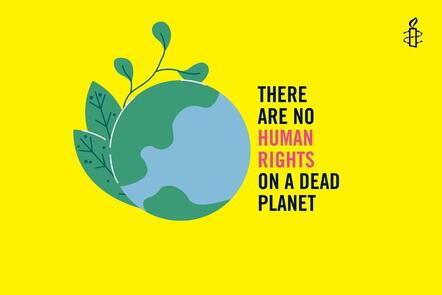
Learn why climate change is a human rights issue, and how human rights can be used as a tool to combat the climate crisis.Find solutions that address both global warming and human rights violations. Rising sea levels. Floods. Droughts. Extreme weather. We know the effects of climate change but their associated human rights violations are not as well understood.

Nov 22nd 2021
3 Weeks
Environmental Humanities: Remaking Nature (FutureLearn) FutureLearn
UNSW Sydney - University of New South Wales

Environmental Humanities: Remaking Nature (FutureLearn)

Learn how the new Environmental Humanities field is shaping how we understand environmental issues, with this free online course. In Environmental Humanities: Remaking Nature, you’ll get a broad overview of an emerging area of interdisciplinary research that reframes contemporary environmental challenges using approaches from philosophy, literature, language, history, anthropology, cultural studies and the arts.

No sessions available
5-12 Weeks
Data Tells a Story: Reading Data in the Social Sciences and Humanities (FutureLearn) FutureLearn
Loughborough University

Data Tells a Story: Reading Data in the Social Sciences and Humanities (FutureLearn)

Learn about the role of data in a range of disciplines and about some fundamental tools for extracting knowledge from data. How can we answer questions about the world around us? How can we make decisions about what to do? Over the past years, more and more people have turned to data for help. Huge amounts of data are collected every day from millions of sources. This data has a lot to tell us! But data by itself is mute—it can only help us if we learn to make it speak and tell its story.

No sessions available
2 Weeks
Chemometrics in Air Pollution (FutureLearn) FutureLearn
University of Malaya

Chemometrics in Air Pollution (FutureLearn)

This course briefly introduces the causes and effects of air pollution in Asian, chemometric models and chemometric application. This course briefly introduces the causes and effects of air pollution. Air pollution is a growing concern the we experience in our daily life. But not everyone has a clear understanding of what the sources of air pollution are. Here, you will not only learn how to identify them, but also understand the potential impact air pollution has in our present and future.

Self Paced
3 Weeks
Migration, Mobilities and Citizenship (FutureLearn) FutureLearn
University of Bristol

Migration, Mobilities and Citizenship (FutureLearn)

Explore who counts as a ‘migrant’ to better understand the processes and experiences of migration. Develop critical thinking skills around the concepts of migration and mobilities. This two-week multidisciplinary course will enable you to develop all the critical thinking skills you need surrounding the twin concepts of migration and mobilities. You’ll explore contemporary human movements within their historical context, and will also cover the current global situation of COVID-19, as well as the relation of race and racism to migration.

Self Paced
2 Weeks
Impact of Technology: How To Lead Classroom Discussions (FutureLearn) FutureLearn
Raspberry Pi Foundation,National Centre for Computing Education

Impact of Technology: How To Lead Classroom Discussions (FutureLearn)

Learn how to keep 14-16 year-old students engaged in discussions while teaching computer science. Supported by Google. Discover how to keep discussions productive and meaningful in the classroom. On this course, teachers will explore the ethical, legal, cultural, and environmental concerns surrounding computer science. You will build the skills needed to hold relevant, open, and exciting discussions in the classroom.

Nov 1st 2021
3 Weeks
Academic Writing in English for ESL Learners (FutureLearn) FutureLearn
University College London

Academic Writing in English for ESL Learners (FutureLearn)

Develop your academic writing skills in English as a second language (ESL) learner and advance your English writing at university. Improve your academic writing skills for essay writing in English. This course will equip you with the skills to write good persuasive essays in English at university level, as well as improve your critical thinking skills, argument reasoning, and use of external sources for writing in English.

Self Paced
3 Weeks
Develop Conceptual Thinking for Problem-Solving (FutureLearn) FutureLearn
FutureLearn

Develop Conceptual Thinking for Problem-Solving (FutureLearn)

Use critical thinking and the conceptual thinking framework to approach problems effectively and communicate your solutions. Learn to solve complex problems with strategic thinking Life and business are getting faster and more complex every day. The faster pace ramps up the pressure to act quickly but this complexity demands careful, strategic, conceptual thinking, which takes time.

Jul 26th 2021
4 Weeks
Teaching Climate Change (FutureLearn) FutureLearn
National STEM Learning Centre,ESERO-UK,ESERO Ireland

Teaching Climate Change (FutureLearn)

Learn how to teach climate change to students aged 11-14 years old and engage them with the ESA Climate Detectives project. Teach the causes of climate change, and how we can mitigate global warming. On this course, you’ll learn how to successfully teach climate change to secondary school students aged 11-14 years old. You’ll learn about the key facts behind the climate crisis, before going on to develop practical learning activities for your pupils.

May 9th 2022
3 Weeks
Innovation in Arable Farming: Technologies for Sustainable Farming Systems (FutureLearn) FutureLearn
University of Reading,EIT Food,EIT

Innovation in Arable Farming: Technologies for Sustainable Farming Systems (FutureLearn)

Explore how innovative, digital technologies can help achieve sustainable intensification of arable farming systems. Consider ways arable farmers in the EU can use agri-tech to benefit business. On this course, you’ll explore evidence-based information that outlines the benefits and challenges of adopting new technologies within the EU, and have the chance to read case study examples of some of these applications.

Jan 2nd 2023
3 Weeks
Climate Change: Challenges and Solutions (FutureLearn) FutureLearn
University of Exeter

Climate Change: Challenges and Solutions (FutureLearn)

This course aims to explain the science of climate change, the risks it poses, and the solutions available to reduce those risks. The course is aimed at the level of students entering university, and seeks to provide an inter-disciplinary introduction to what is a broad field. It engages a number of experts from the University of Exeter and a number of partner organisations.

No sessions available
5-12 Weeks