Data Pipelines with TensorFlow Data Services (Coursera)

Offered by DeepLearning.AI,
Data Pipelines with TensorFlow Data Services (Coursera)

Bringing a machine learning model into the real world involves a lot more than just modeling. This Specialization will teach you how to navigate various deployment scenarios and use data more effectively to train your model.

Class Deals by MOOC List - Click here and see Coursera's Active Discounts, Deals, and Promo Codes.

In this third course, you will:

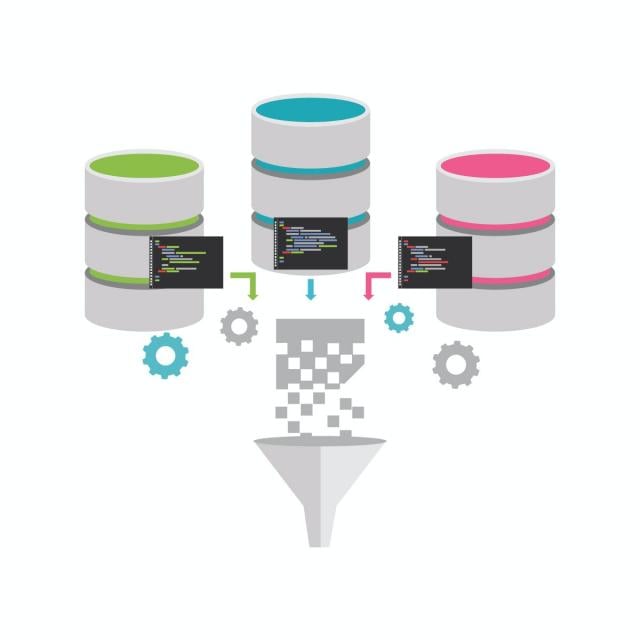
  • Perform streamlined ETL tasks using TensorFlow Data Services
  • Load different datasets and custom feature vectors using TensorFlow Hub and TensorFlow Data Services APIs
  • Create and use pre-built pipelines for generating highly reproducible I/O pipelines for any dataset
  • Optimize data pipelines that become a bottleneck in the training process
  • Publish your own datasets to the TensorFlow Hub library and share standardized data with researchers and developers around the world

This Specialization builds upon our TensorFlow in Practice Specialization. If you are new to TensorFlow, we recommend that you take the TensorFlow in Practice Specialization first. To develop a deeper, foundational understanding of how neural networks work, we recommend that you take the Deep Learning Specialization.

What You Will Learn

  • Perform efficient ETL tasks using Tensorflow Data Services APIs
  • Construct train/validation/test splits of any dataset - either custom or present in TensorFlow Hub Dataset library - using Splits API
  • Use different modules and functions of the TFDS API to prepare your data for training pipelines
  • Identify bottlenecks in your input pipelines and increase your workflow efficiency by input parallelization

We recommend taking Course 1 of the TensorFlow in Practice Specialization first, or have a basic familiarity with building models in TensorFlow

Course 3 of 4 in the TensorFlow: Data and Deployment Specialization.

Syllabus

WEEK 1
Data Pipelines with TensorFlow Data Services
This week, you will be able to perform efficient ETL tasks using Tensorflow Data Services APIs

WEEK 2
Splits and Slices API for Datasets in TF
In this week, you will construct train/validation/test splits of any dataset - either custom or present in TensorFlow hub dataset library - using Splits API

WEEK 3
Exporting Your Data into the Training Pipeline
This week you will extend your knowledge of data pipelines

WEEK 4
Performance
You'll learn how to handle your data input to avoid bottlenecks, race conditions and more!


Go to Class
MOOC List is learner-supported. When you buy through links on our site, we may earn an affiliate commission.

Related Courses

Practical Python for AI Coding 2 (Coursera) Coursera
Korea Advanced Institute of Science and Technology - KAIST

Practical Python for AI Coding 2 (Coursera)

This course is for a complete novice of Python coding, so no prior knowledge or experience in software coding is required. This course selects, introduces and explains Python syntaxes, functions and libraries that were frequently used in AI coding. In addition, this course introduces vital syntaxes, and functions often used in AI coding and explains the complementary relationship among NumPy, Pandas and TensorFlow, so this course is helpful for even seasoned python users.

Sep 28th 2026
5-12 Weeks
Optimización de Redes Neuronales Profundas (Coursera) Coursera
Universidad Austral

Optimización de Redes Neuronales Profundas (Coursera)

Este curso se centrará en la optimización de Redes Neuronales Profundas, cambiando la idea de que todo el proceso es una “caja negra”. Comprenderá qué impulsa el rendimiento y podrá obtener mejores resultados de manera más sistemática. Entenderá cómo optimizar los principales Hiperparámetros y su implementación. Además, aprenderá nuevos conceptos útiles para el entrenamiento de las redes como los mini-batch y las regularizaciones. También, aprenderá a implementar una red neuronal utilizando TensorFlow

Sep 28th 2026
3 Weeks
Data Warehouse Concepts, Design, and Data Integration (Coursera) Coursera
University of Colorado System

Data Warehouse Concepts, Design, and Data Integration (Coursera)

This is the second course in the Data Warehousing for Business Intelligence specialization. Ideally, the courses should be taken in sequence. In this course, you will learn exciting concepts and skills for designing data warehouses and creating data integration workflows. These are fundamental skills for data warehouse developers and administrators. You will have hands-on experience for data warehouse design and use open source products for manipulating pivot tables and creating data integration workflows.

Sep 14th 2026
5-12 Weeks
ETL and Data Pipelines with Shell, Airflow and Kafka (Coursera) Coursera
IBM

ETL and Data Pipelines with Shell, Airflow and Kafka (Coursera)

After taking this course, you will be able to describe two different approaches to converting raw data into analytics-ready data. One approach is the Extract, Transform, Load (ETL) process. The other contrasting approach is the Extract, Load, and Transform (ELT) process. ETL processes apply to data warehouses and data marts. ELT processes apply to data lakes, where the data is transformed on demand by the requesting/calling application.

Sep 21st 2026
5-12 Weeks
Follow a Machine Learning Workflow (Coursera) Coursera
CertNexus

Follow a Machine Learning Workflow (Coursera)

Machine learning is not just a single task or even a small group of tasks; it is an entire process, one that practitioners must follow from beginning to end. It is this process—also called a workflow—that enables the organization to get the most useful results out of their machine learning technologies. No matter what form the final product or service takes, leveraging the workflow is key to the success of the business's AI solution. This second course within the Certified Artificial Intelligence Practitioner (CAIP) professional certificate explores each step along the machine learning workflow, from problem formulation all the way to model presentation and deployment.

Sep 21st 2026
5-12 Weeks
Neural Networks and Random Forests (Coursera) Coursera
LearnQuest

Neural Networks and Random Forests (Coursera)

In this course, we will build on our knowledge of basic models and explore advanced AI techniques. We’ll start with a deep dive into neural networks, building our knowledge from the ground up by examining the structure and properties. Then we’ll code some simple neural network models and learn to avoid overfitting, regularization, and other hyper-parameter tricks.

Sep 21st 2026
3 Weeks
Machine Learning (Coursera) Coursera
Stanford University

Machine Learning (Coursera)

Machine learning is the science of getting computers to act without being explicitly programmed. In the past decade, machine learning has given us self-driving cars, practical speech recognition, effective web search, and a vastly improved understanding of the human genome. Machine learning is so pervasive today that you probably use it dozens of times a day without knowing it. Many researchers also think it is the best way to make progress towards human-level AI. In this class, you will learn about the most effective machine learning techniques, and gain practice implementing them and getting them to work for yourself. More importantly, you'll learn about not only the theoretical underpinnings of learning, but also gain the practical know-how needed to quickly and powerfully apply these techniques to new problems.

Sep 21st 2026
5-12 Weeks
Experimental Methods in Systems Biology (Coursera) Coursera
Icahn School of Medicine at Mount Sinai

Experimental Methods in Systems Biology (Coursera)

Learn about the technologies underlying experimentation used in systems biology, with particular focus on RNA sequencing, mass spec-based proteomics, flow/mass cytometry and live-cell imaging. A key driver of the systems biology field is the technology allowing us to delve deeper and wider into how cells respond to experimental perturbations. This in turns allows us to build more detailed quantitative models of cellular function, which can give important insight into applications ranging from biotechnology to human disease. This course gives a broad overview of a variety of current experimental techniques used in modern systems biology, with focus on obtaining the quantitative data needed for computational modeling purposes in downstream analyses.

Sep 21st 2026
5-12 Weeks
Generative Deep Learning with TensorFlow (Coursera) Coursera
DeepLearning.AI

Generative Deep Learning with TensorFlow (Coursera)

In this course, you will: a) Learn neural style transfer using transfer learning: extract the content of an image (eg. swan), and the style of a painting (eg. cubist or impressionist), and combine the content and style into a new image; b) Build simple AutoEncoders on the familiar MNIST dataset, and more complex deep and convolutional architectures on the Fashion MNIST dataset, understand the difference in results of the DNN and CNN AutoEncoder models, identify ways to de-noise noisy images, and build a CNN AutoEncoder using TensorFlow to output a clean image from a noisy one; c) Explore Variational AutoEncoders (VAEs) to generate entirely new data, and generate anime faces to compare them against reference images; d) Learn about GANs; their invention, properties, architecture, and how they vary from VAEs, understand the function of the generator and the discriminator within the model, the concept of 2 training phases and the role of introduced noise, and build your own GAN that can generate faces.

Sep 21st 2026
4 Weeks