Cosmetic Formulation Science (Coursera)

Offered by Olay,
Cosmetic Formulation Science (Coursera)

The second course in the specialization, Cosmetic Formulation Science, delves deeper into the fundamentals of cosmetic formulations. The focus here is on the selection and use of raw materials, a critical aspect of cosmetic science. You will develop more detailed insight into choosing and using various cosmetic raw materials.

Class Deals by MOOC List - Click here and see Coursera's Active Discounts, Deals, and Promo Codes.

Moreover, you will learn the essentials of safe and effective laboratory work and documentation. This course is a blend of theoretical knowledge and practical application, setting the stage for advanced learning in cosmetic science.
This course is part of the Introduction to Cosmetic Science and Ingredients Specialization.

What you'll learn

  • Develop skills in selecting and using cosmetic raw materials
  • Understand the essentials of cosmetic formulation and laboratory safety
  • Learn effective documentation techniques for cosmetic science.
  • Acquire practical knowledge in writing and processing cosmetic formulas

Syllabus

Introduction to Cosmetic Formulation Science
Welcome to Cosmetic Formulation Science. This is the second course of the P&G Cosmetic Science Specialization program. In this course, you will explore the fundamentals of cosmetic formulations, emphasizing the selection and use of raw materials for your formulations. This week, you will learn about the importance of raw materials in cosmetic formulations. You'll learn to identify and select the ideal raw materials, ensuring your formulations are effective and innovative. This foundational knowledge is essential for anyone aspiring to excel in the cosmetic industry. Let's dive in!

Raw Materials
This week, you will get into the details of the cosmetic formulation process, specifically focusing on surfactants and additives. You'll explore the diverse behaviors of different surfactants and additives and learn about the hydrophilic-lipophilic balance (HLB) scale for emulsifier selection. Additionally, you'll delve into the various categories of preservatives, enriching your understanding of the components that make up effective cosmetic products.

Working in the Lab
This week, you'll become well-versed in the importance of laboratory safety and the relevant codes that govern it. You'll identify and utilize cosmetic personal protective equipment (PPE) and become familiar with the best practices for working in a cosmetic laboratory. Furthermore, this module will help you develop insights into the importance of meticulous record-keeping, emphasizing the use of laboratory notebooks and digital records.

Formulating Products
In this week, we explore the fundamental concepts of skincare formulation. You will learn about their differences and how to use them effectively in your product formulation. You will explore using weight percentages in formulations and learn how to convert mass percentages accurately. You will also learn about different types of skincare formulations and explore the concept of Certificate analysis and determining specifications.
Go to Class
MOOC List is learner-supported. When you buy through links on our site, we may earn an affiliate commission.

Related Courses

Planning & Design of Sanitation Systems and Technologies (Coursera) Coursera
École Polytechnique Fédérale de Lausanne

Planning & Design of Sanitation Systems and Technologies (Coursera)

Do you want to learn how to plan affordable and context-specific sanitation solutions? Do you want to be updated on the newest developments in urban sanitation planning and programming? Do you want to get insights about best practices examples of urban sanitation systems in low- and middle-income countries? If yes, this course is for you! This course provides you with an introduction to integrated sanitation planning, both on a citywide scale and for specific contexts such as informal settlements.

Oct 5th 2026
5-12 Weeks
Introduction to Hearing Loss (Coursera) Coursera
Icahn School of Medicine at Mount Sinai

Introduction to Hearing Loss (Coursera)

Welcome to Introduction to Hearing Loss. Disorders of the ear range from simple, easily treated entities (such as wax or cerumen impaction) to the highly complex (such as permanent hearing loss). Many of these disorders manifest with similar symptoms and may be difficult to differentiate without a basic understanding of the anatomy of the ear and auditory pathway.

Oct 5th 2026
4 Weeks
Critical Raw Materials: Managing Resources for a Sustainable Future (edX) EdX
Delft University of Technology,DelftX

Critical Raw Materials: Managing Resources for a Sustainable Future (edX)

Gain a systemic understanding of critical raw materials and learn about strategies and solutions to manage them in a sustainable way. The availability of critical raw materials (CRMs) is under massive pressure. However, these materials are essential for products, technologies and solutions to some of the world’s most crucial issues – such as the energy transition.

Self Paced
Self-Paced
Waste Management and Critical Raw Materials (edX) EdX
Delft University of Technology,DelftX

Waste Management and Critical Raw Materials (edX)

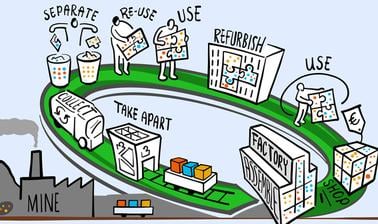
Learn about waste management and its key role in saving critical raw materials. Gain practical knowledge of the circular economy, recycling, refurbishment, and remanufacturing as a means of identifying new business opportunities. How can we ensure the continuous supply of the increasingly scarce raw materials that are needed to make the products we use every day? In this course, we will look at the potential benefits of circular procurement and how recycling technologies and more efficient ways of collecting and recycling critical raw materials (CRMs) can make your business and production more resource resilient.

Self Paced
Self-Paced
The E-waste Challenge MOOC (Climate-KIC) Other Providers
United Nations Environment Programme - UNEP,KU Leuven University,Climate-KIC,World Resources Forum

The E-waste Challenge MOOC (Climate-KIC)

With our growing appetite for electrical and electronic products, combined with rapid innovation and ever-shorter product lifespans, e-waste has now become one of the fast growing waste streams. This course will help the participant to understand why and how we must manage e-waste in an environmentally sound manner and how we can take action on e-waste in their own life, business, or organization.

No sessions available
No Information
The E-waste Challenge (EMMA) EMMA
Climate-KIC

The E-waste Challenge (EMMA)

E-waste can be a threat to our planet: Illegal and poorly managed e-waste is polluting our environment, harming human health, and contributing to human-made climate change. The worst impacts are often in the countries that are least equipped to manage it. Or it can be a valuable resource: By recycling materials contained in e-waste, we can save on greenhouse gas (GHG) emissions from primary mining, we can create green jobs, and we can create economic opportunities.

No sessions available
5-12 Weeks
Introduction to Breast Cancer (Coursera) Coursera
Yale University

Introduction to Breast Cancer (Coursera)

Welcome to an Introduction to Breast Cancer! In this course, we’ll learn a bit about the leading cause of cancer in women worldwide – from the basic biology of the disease, to risk factors and prevention, to treatment modalities to survivorship. We’ll talk to leading experts, explore some of the milestone studies that have pushed this field forward, and have interactive discussions on discussion boards and social media. You’ll even have an opportunity to let us know what topics you want to cover on tweetchats, so we can try to make the content fit your interests.

Oct 5th 2026
5-12 Weeks
Positive Psychiatry and Mental Health (Coursera) Coursera
The University of Sydney

Positive Psychiatry and Mental Health (Coursera)

In today’s world, mental illness and distress are common and these account for a significant burden of disability within our community. At the same time, there is a growing interest in understanding and enhancing positive mental health and wellbeing; particularly from developments in the fields of positive psychology and mental health promotion. Positive Psychiatry is a new term (Jeste et al 2016) that describes a dual approach to mental health, where we build strengths, supports and healthy lifestyles as well as treating illness and distress.

Oct 5th 2026
5-12 Weeks
Global Health Policy (Coursera) Coursera
The University of Tokyo

Global Health Policy (Coursera)

In this course, learners will become familiar with principles and theories of global health problems, and major challenges and controversies in improving global population health as well as practical applications of quantitative methods to analyze and interpret issues and challenges for policy. Topics will include health and foreign policy, health governance, acute disease surveillance, non-communicable diseases, burden of disease, universal health coverage, health systems strengthening, health financing, and human resources for health and ageing.

Oct 5th 2026
4 Weeks
Sustainable Food Production Through Livestock Health Management (Coursera) Coursera
University of Illinois at Urbana-Champaign

Sustainable Food Production Through Livestock Health Management (Coursera)

Learn about the impact of infectious disease on sustainable animal-based food production by understanding the science of growth, immunity, and infection and by learning the problem-solving skills needed to advance animal health and food production through optimal management practices. In this course we will explore the effect of infectious disease on sustainable animal-based food production. The content and learning outcomes of this new course will be designed to be relevant across different food production sectors (i.e., beef, dairy, poultry, and pigs).

Oct 5th 2026
5-12 Weeks
Psychological First Aid (Coursera) Coursera
Johns Hopkins University

Psychological First Aid (Coursera)

Learn to provide psychological first aid to people in an emergency by employing the RAPID model: Reflective listening, Assessment of needs, Prioritization, Intervention, and Disposition. Utilizing the RAPID model (Reflective listening, Assessment of needs, Prioritization, Intervention, and Disposition), this specialized course provides perspectives on injuries and trauma that are beyond those physical in nature. The RAPID model is readily applicable to public health settings, the workplace, the military, faith-based organizations, mass disaster venues, and even the demands of more commonplace critical events, e.g., dealing with the psychological aftermath of accidents, robberies, suicide, homicide, or community violence.

Oct 5th 2026
5-12 Weeks