Climate Justice: Lessons from the Global South (FutureLearn)

Offered by UNESCO,
Climate Justice: Lessons from the Global South (FutureLearn)

Understand how we can balance human needs with caring for the planet with this free online course about climate change. Climate change is a global problem we all must face. This course will deal with some of the key issues related to the ethical dimensions implied by climate change – learning especially from the problems faced as well as the resilience models formulated by the marginalized sectors of society or the so-called “Global South”.

Class Deals by MOOC List - Click here and see FutureLearn's Active Discounts, Deals, and Promo Codes.

Understand the environmental problems and proposed solutions by the Global South
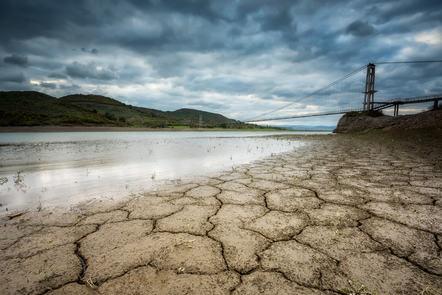
Although the populations of the Global South have least contributed to the greenhouse gas emissions that have exacerbated the negative effects of climate change, they are also the ones who are most vulnerable to extreme weather conditions such as droughts, floods, typhoons, sea-level rise and desertification. Needless to say, these phenomena have profound social implications that may harm future generations.
This situation raises some major ethical questions:

  • To what extent are human beings entitled to exploit nature for their needs and interests?
  • What kind of shared responsibility is appropriate in addressing climate change?
  • How can we respond to the adverse effects of climate change being experienced by the peoples of the Global South?

The effects of climate change disasters, however, are not only confined to the global south but are also felt by the more affluent sectors of societies or the Global North.
In order to achieve a more sustainable world where nature can continue to support the aspirations for better living conditions for future and disadvantaged generations, a notion of justice that balances the ecological integrity of nature and the human beings’ rights to live and enjoy the fruits of their labor must be formulated.

Learn about climate justice
Following the recommendation of UNESCO’s World Commission for the Ethics of Science and Technology (COMEST) in the promotion of Biological and Cultural Diversity as starting point of Climate Change Ethics, UNESCO is currently pioneering a worldwide reflection on the ‘ethical principles in relation to climate change’. Along the same line, within its philosophy programme, in 2014 UNESCO published the “Manual of Philosophy – A South-South Perspective”. This Manual sheds a new light on the singularity of some major philosophical texts and traditions from the Global South.
This course has been built upon these two major undertakings. It will propose a notion of climate justice that balances the ecological integrity of nature, on the one hand, while supporting the biological and economic needs of human populations, on the other hand. Human needs and ecological integrity, therefore, need not be opposing but more supportive of one another in so far as human beings allow nature to regenerate herself by regulating their excessive consumption of natural resources.
The course proposes groundbreaking reflections on Climate Justice, within the contexts of Biological and Cultural Diversity and the Precautionary Principle, while exploring the Global South’s approaches.

Explore how humans can balance their needs with the needs of the planet
At the end of the course, you’ll learn about the various practices of frugality in the global south and enable you to adapt these practices to your own circumstances in view of contributing to the needs of the most vulnerable populations of society.
You will also be able to imagine different ways of extracting natural resources without compromising the regenerating capacity of nature to sustain herself and thus continuously support the needs of all human beings.

Go to Class
MOOC List is learner-supported. When you buy through links on our site, we may earn an affiliate commission.

Related Courses

Real Climate Action: How to Engage People in Climate Change (FutureLearn) FutureLearn
EIT Climate-KIC

Real Climate Action: How to Engage People in Climate Change (FutureLearn)

Engage with and motivate others to join you in the fight against climate change using a variety of approaches. Inspire climate action in others with strategies that really work. To take effective climate action, it’s important to communicate and engage with others around climate change. This four-week course from EIT Climate-KIC will show you how to do that, while achieving audience buy-in and behaviour change.

Nov 1st 2021
5-12 Weeks
Sustainable Food Teach-Out (FutureLearn) FutureLearn
University of Michigan

Sustainable Food Teach-Out (FutureLearn)

Discover the link between food and climate change and learn about the collective journey towards a sustainable global diet. Explore the importance of food choices in reducing greenhouse gas emissions. What we choose to eat matters. Did you know that a quarter of all greenhouse gas emissions come from food and agricultural systems? One way each and every one of us can reduce our impact on the environment is to change what is on the end of our forks.

Nov 1st 2021
2 Weeks
Learning for a Sustainable Future (FutureLearn) FutureLearn
University of Edinburgh,British Council,Learning for a Sustainable Scotland

Learning for a Sustainable Future (FutureLearn)

Join a personal and professional global learning journey towards a sustainable future. What on Earth could be more important? Grow your knowledge of sustainability. Climate change, gender equality, health, social equity, and inclusion are issues that affect us all, impacting human well-being and economic stability. How to live a sustainable life affects – and connects - us all.

Mar 13th 2023
5-12 Weeks
Gender and Labour in the Global South (FutureLearn) FutureLearn
University of Basel,University of Bern, Interdisciplinary Centre for Gender Studies (ICFG)

Gender and Labour in the Global South (FutureLearn)

Delve into the Global South's labour market to understand gender issues and impacts on sustainable development. Examine gender discrimination in the Global South’s labour market. Although women’s participation in the paid labour market has increased in recent decades, gender discrimination in access to decent work persists. Women, particularly in the Global South, have the lowest participation in the labour market due to a number of factors. This three-week course from the University of Basel will guide you in assessing the Global South’s labour market to understand the impact of gender inequality in labour.

Mar 14th 2022
3 Weeks
Understanding Climate Change using Satellite Data (FutureLearn) FutureLearn
University of Twente

Understanding Climate Change using Satellite Data (FutureLearn)

Explore cutting-edge technology and learn how to analyse satellite climate data to help measure and mitigate climate change. Explore the tools that can help with climate change solutions. To accurately study climate change, assess its risks, and mitigate the impact, we need systematic observations of the climate.

Nov 29th 2021
3 Weeks
Environmental Challenges: Justice in Natural Resource Management (FutureLearn) FutureLearn
University of Leeds

Environmental Challenges: Justice in Natural Resource Management (FutureLearn)

How do we ensure that the difficult decisions about the management of natural resources are just and fair for all? When looking at different societies and cultures around the world, it is interesting how ubiquitous the principles of justice are. It is part of our human nature to think about equality, and consider fairness as something that we do naturally. However, in practical terms, equality is hard to achieve.

Sep 30th 2024
2 Weeks
Taking on the Climate Crisis with Social Change (FutureLearn) FutureLearn
Stockholm University

Taking on the Climate Crisis with Social Change (FutureLearn)

Explore the reasons and solutions for the climate crisis, equipping you to create a better today and tomorrow. Discover how social transformation can help us tackle the climate crisis The harsh realities of global warming and climate change often make people feel helpless, but there is a lot that can be done. This three-week course will open your eyes to the actions you can take.

Feb 13th 2023
3 Weeks
Using Systems Thinking to Tackle the Climate and Biodiversity Crisis (FutureLearn) FutureLearn
University of Reading

Using Systems Thinking to Tackle the Climate and Biodiversity Crisis (FutureLearn)

Discover how switching to a systems mindset could help overcome the global environmental challenges we face today. Take a big picture approach to the climate and biodiversity crisis. With crises as vast, complex, and interconnected as climate change and biodiversity loss, focusing on one aspect of the problem will never be enough. Systems thinking offers a new way of seeing and understanding environmental issues, which could radically change how we go about tackling them. On this two-week course from the University of Reading, you’ll learn what systems thinking is and how it could transform your approach to the climate and biodiversity crisis.

Feb 27th 2023
2 Weeks
Snow: What It Is and Why It Matters (FutureLearn) FutureLearn
Luleå University of Technology

Snow: What It Is and Why It Matters (FutureLearn)

Explore the science of snow – how it forms, its different types, and how it can best be used. Learn all about snow from cold weather experts in Sweden. Snow can affect every aspect of life, from transport systems to business operations; that’s why it’s crucial to understand what exactly snow is, how it forms, and how we can manage it.

Oct 25th 2021
2 Weeks