EdX

Classical Mechanics (edX)

Offered by MIT,
Classical Mechanics (edX)

Covers Newtonian mechanics, fluid mechanics, kinetic gas theory, and thermodynamics.

Class Deals by MOOC List - Click here and see EdX's Active Discounts, Deals, and Promo Codes.

8.01x is an online version of Classical Mechanics, which is the first of MIT's introductory physics courses. In addition to the basic concepts of Newtonian mechanics, fluid mechanics, and kinetic gas theory, a variety of other interesting topics are covered, such as resonance phenomena, musical instruments, astronomical phenomena such as binary stars, neutron stars, black holes, stellar collapse, and supernovae. You will also be given a peek into the intriguing world of quantum mechanics.

The course follows the MIT on-campus class as it was given by the renowned Professor Walter Lewin in the Fall of 1999, and includes his video lectures and problem solving sessions.

You will complete automatically graded weekly homework problems and exams to test your understanding and to help you master the material. Lectures are interspersed with questions to be answered. There is a moderated forum for student-to-student threaded discussions. While homework deadlines will be strictly enforced, the lowest homework grade will be dropped. Your grade will be based on the interactive questions during the lectures (10%), homework problems (15%), three midterm exams (15% each), and the final exam (30%). Your grade will be as follows: A (more than 85%), B (70-85%), C (60-70%). At least 60% must be obtained to qualify for a certificate.

Note: This course is currently not available.

Related Courses

Animation and CGI Motion (edX) EdX
Columbia University,ColumbiaX

Animation and CGI Motion (edX)

Learn the science behind movie animation from the Director of Columbia’s Computer Graphics Group. How do you create realistic animations? How do you predict the motion of materials? It’s key to the success of animated films to ensure (was insure) audiences believe in characters. This course will show you how to create lifelike animations focusing on the technical aspects of CGI animation and also give you a glimpse into how studios approach the art of physically-based animation.

No sessions available
5-12 Weeks
How Stuff Moves, Part 3: Wave Motion (edX) EdX
Harvey Mudd College,HarveyMuddX

How Stuff Moves, Part 3: Wave Motion (edX)

WHAT IS “HOW STUFF MOVES”? Mechanics is the study of how things move. It was the first quantitative science to achieve wide power to predict behavior, including things never before directly observed. Newton, Leibniz, and others invented calculus to describe motion and we will find both differential and integral calculus extremely useful throughout this course.

No sessions available
4 Weeks
Statistical Thermodynamics: Molecules to Machines (Coursera) Coursera
Carnegie Mellon University

Statistical Thermodynamics: Molecules to Machines (Coursera)

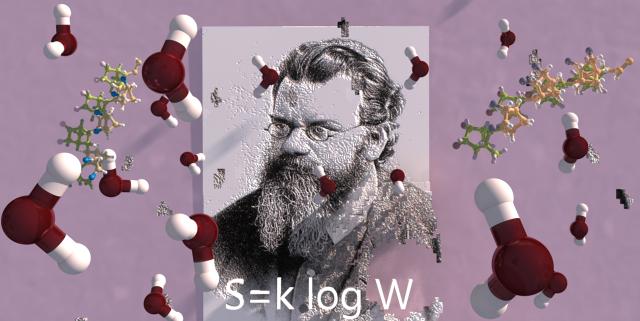
Modern engineering research focuses on designing new materials and processes at the molecular level. Statistical thermodynamics provides the formalism for understanding how molecular interactions lead to the observed collective behavior at the macroscale. This course will develop a molecular-level understanding of key thermodynamic quantities like heat, work, free energy and entropy. These concepts will be applied in understanding several important engineering and biological applications.

Jun 14th 2026
5-12 Weeks
Physics 101 - Forces and Kinematics (Coursera) Coursera
Rice University

Physics 101 - Forces and Kinematics (Coursera)

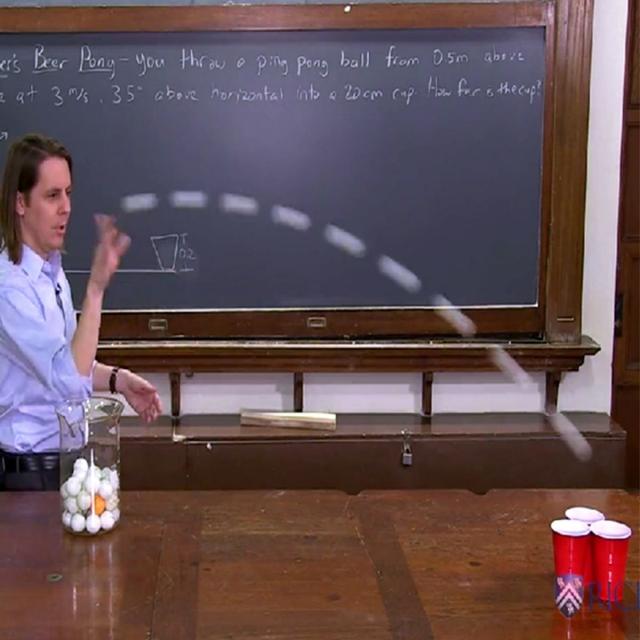
This course serves as an introduction to the physics of force and motion. Upon completion, learners will have an understanding of how mathematical laws and conservation principles describe the motions and interactions of objects all around us. They will gain experience in solving physics problems with tools such as graphical analysis, algebra, vector analysis, and calculus.

Jun 15th 2026
4 Weeks
Chemical Thermodynamics I: Thermodynamics and Statistical Mechanics (edX) EdX
MIT,MITx

Chemical Thermodynamics I: Thermodynamics and Statistical Mechanics (edX)

Based on 5.601 Thermodynamics I, this course introduces learners to fundamental concepts in thermodynamics and statistical mechanics. Learners will develop an understanding of fundamental thermodynamic principles and how they arise from molecular scale system properties. This course is the first in a series of two thermodynamics courses that together, cover chemical thermodynamics, statistical mechanics, phase equilibria, and kinetics.

Apr 14th 2022
5-12 Weeks
Advanced Fluid Mechanics 2: The Navier-Stokes Equations for Viscous Flows (edX) EdX
MIT,MITx

Advanced Fluid Mechanics 2: The Navier-Stokes Equations for Viscous Flows (edX)

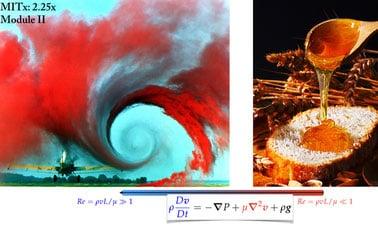
Learn to apply the Navier-Stokes equations to viscous-dominated flows; including pipe flows, channel flows and free surface flows, use dynamical similarity and dimensional analysis, Stokes flows, similarity solutions and transient responses, lubrication analysis and surface tension. This course covers the Navier-Stokes equations for viscous flows: including pipe flows, channel flows and free surface flows, dynamical similarity and dimensional analysis, Stokes flows, similarity solutions and transient responses, lubrication analysis and surface tension.

Self Paced
Self-Paced
Mecanique des Fluides (edX) EdX
École Polytechnique Fédérale de Lausanne,EPFLx

Mecanique des Fluides (edX)

Ce cours de base est composé des sept premiers modules communs à deux cours bachelor, donnés à l’EPFL en génie mécanique et génie civil. Ce cours est une première introduction à la mécanique des fluides. Nous allons aborder tout d'abord les propriétés physiques des fluides : les états de la matière et la notion de viscosité.

No sessions available
5-12 Weeks
Mécanique de Newton (Coursera) Coursera
École Polytechnique Fédérale de Lausanne

Mécanique de Newton (Coursera)

À l’École Polytechnique Fédérale de Lausanne, un cours de mécanique fait partie de la formation de tous les futurs ingénieurs et scientifiques. Il a pour but de leur apprendre à transcrire sous forme mathématique un phénomène physique, afin de pouvoir en formuler une analyse raisonnée. Cette partie couvrira notamment la cinématique du point matériel, la balistique dans le champ de la pesanteur et l’oscillateur harmonique.

Jun 15th 2026
5-12 Weeks
Energy Harvesting (Coursera) Coursera
Sungkyunkwan University - SKKU

Energy Harvesting (Coursera)

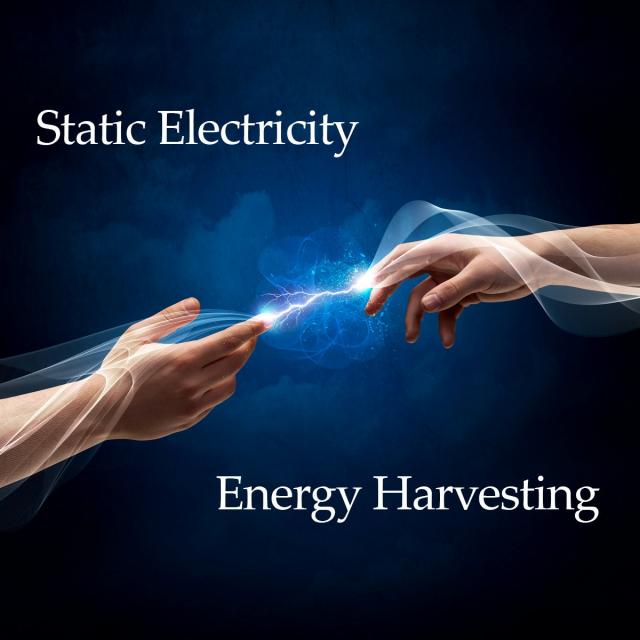
Joining this course presents opportunity to learn about energy harvesting that refers to a technology that converts the energy discarded in our daily lives into useful electrical energy that we can use. As we all know, most of low-power electronics, such as remote sensors, are driven by batteries. However, even when it comes to long-lasting batteries, they face an issue that is a regular replacement. It can turn out to be costly as there are hundreds of sensors in remote locations.

Jun 15th 2026
4 Weeks