EdX

Chemical Thermodynamics II: Equilibrium and Kinetics (edX)

Offered by MIT, MITx,
Chemical Thermodynamics II: Equilibrium and Kinetics (edX)

Discover the flow of energy at a fundamental physical level, and learn how to approach multi-component systems as they evolve with time. Chemical Thermodynamics II: Equilibrium and Kinetics is an online course that will teach you how to apply fundamental concepts and principles of thermodynamics to multi-component systems.

Class Deals by MOOC List - Click here and see EdX's Active Discounts, Deals, and Promo Codes.

The second in a two-part series, this course builds on concepts from 5.601x Chemical Thermodynamics I. Together, the pair covers chemical thermodynamics, statistical mechanics, phase equilibria, and kinetics.
In this course, you will leverage the ideas of entropy and free energy (previously developed in 5.601x) to describe chemical potential and how it relates to equilibrium. You will explore chemical equilibria between different chemical species and phase equilibria between different phases of the same chemical species, finally combining both to examine the multiple equilibria present in non-reactive mixtures of species.
You will then change gears to focus on the evolution of chemical systems with time, exploring the concepts of kinetics. After appreciating links between molecular mechanisms and reaction dynamics, you will explore a variety of advanced topics, including catalysis, enzymatics, chain reactions, and oscillating chemical reactions.
Based on the MIT undergraduate course 5.602 Thermodynamics II and Kinetics required of all Chemistry majors, this online version is best suited for learners with some knowledge of undergraduate general chemistry and multivariable calculus. However, any learner who wants to get an introduction to fundamental concepts in equilibrium and kinetics will benefit. We welcome undergraduate university students reviewing or supplementing their own course work, as well as mid-career professionals seeking to advance their careers or pursuing post-baccalaureate engineering and technology degrees.

What you'll learn
• Chemical Potential and Chemical Equilibria
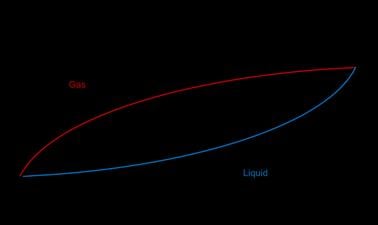
• One Component Phase Equilibria and Phase Diagrams
• Ideal and Non-Ideal Solutions
• Kinetic Description of Chemical Reactions
• Chain Reactions and Oscillating Chemical Reactions
Go to Class
MOOC List is learner-supported. When you buy through links on our site, we may earn an affiliate commission.

Related Courses

Science in Art: The Chemistry of Art Materials and Conservation (edX) EdX
Trinity College, Hartford

Science in Art: The Chemistry of Art Materials and Conservation (edX)

Learn the chemistry behind the visual arts, and how an understanding of art’s material properties helps preserve our cultural heritage. How do artists create visual effects? In order to create an artistic impression, artists select materials that allow image formation, and that lend color, emphasis, shape, and size to the object created.

No sessions available
5-12 Weeks
Formulación y nomenclatura de compuestos químicos (edX) EdX
Universitat Politècnica de València,UPValenciaX

Formulación y nomenclatura de compuestos químicos (edX)

Aprenderemos cómo establecer las fórmulas de los compuestos químicos inorgánicos y orgánicos más usuales y las reglas para nombrarlos. Toda la materia está formada por elementos o compuestos químicos que son resultado de la combinación de átomos. Cada compuesto presenta una determinada composición que se corresponde con una fórmula y se identifica con un nombre.

Self Paced
Self-Paced
Food Fermentation: The Science of Cooking with Microbes (edX) EdX
HarvardX,Harvard University

Food Fermentation: The Science of Cooking with Microbes (edX)

In Food Fermentation: The Science of Cooking with Microbes, explore the history of food and beverage fermentations and how tiny microbes change and enhance flavors, aromas, and tastes in our food. What’s living in your food? Many of the foods that we consume daily owe their distinct characteristics and flavors to microbes, specifically through a biochemical process of fermentation (using bacteria, fungi, and other microorganisms to produce diverse foods).

Self Paced
Self-Paced
Basic Analytical Chemistry (edX) EdX
The University of Tokyo,UTokyoX

Basic Analytical Chemistry (edX)

Gain a physical understanding of the principles of analytical chemistry and their application in scientific research. Analytical chemistry takes a prominent position among all fields of experimental sciences, ranging from fundamental studies of Nature to industrial or clinical applications. Analytical chemistry covers the fundamentals of experimental and analytical methods and the role of chemistry around us.

Self-Paced
Self-Paced
Life in the Universe: Syntheses for Life (edX) EdX
Seoul National University,SNUx

Life in the Universe: Syntheses for Life (edX)

Learn about the chemical principles behind key synthetic processes relevant to life such as protein synthesis, photosynthesis, and ammonia synthesis. Nobel Lectures and key scientific papers will be used. “Syntheses for Life” will start with the Bohr model of hydrogen atom and discuss chemical evolution, protein synthesis and structure, photosynthesis, and Haber’s synthesis of ammonia. The course provides an overview of remarkable scientific discoveries.

This course is archived
5-12 Weeks
Solid State Devices 1 (edX) EdX
Purdue University,PurdueX

Solid State Devices 1 (edX)

Semiconductor are everywhere in human activities, from your credit card to space exploration. This graduate-level introduction brings aspects of physics, chemistry, and engineering together to understand, analyze, and design transistors and solar cells. This course provides the graduate-level introduction to understand, analyze, characterize and design the operation of semiconductor devices such as transistors, diodes, solar cells, light-emitting devices, and more.

Jan 9th 2023
13-24 Weeks