Cell Culture Basics (Canvas.net)

Cell Culture Basics (Canvas.net)

This course is sponsored by Gibco® and designed to prepare you for their Cell Culture Basics Certification. Learn the basic techniques for effective, reproducible laboratory cell culture, including optimized procedures and products that will help you get the consistency your lab work demands.

Cell Culture Basics is designed to introduce you to the practice of laboratory cell culture, covering topics such as laboratory set-up, safety, and aseptic technique. You’ll also learn basic methods for passaging, freezing, and thawing cultured cells. Upon the successful completion of this course, you will have a basic understanding of the principles and practice of cell culture that you can immediately apply to your research projects. Aspiring cell culturists, experienced researchers, as well as lab managers and principal investigators may all find value in Gibco® Cell Culture Basics. Students completing this course will be eligible to take the free Gibco® Cell Culture Basics certification test and earn the corresponding certificate.
Topics covered include:
Week One: Cell Culture Lab - Introduction, lab safety, aseptic techniques, contamination types, use of antibiotics
Week Two: Cell Culture Basics - Cell lines, culture environment, mammalian and insect cell morphology
Week Three: Methods - Guidelines for maintaining cultured cells, subculturing adherent cells, freezing cells, thawing frozen cells, various protocols
Week Four: Additional Topics - Troubleshooting, cell culture products, transfection & selection, additional resources
Note: This course is currently not available.

Related Courses

The Brain and Space (Coursera) Coursera
Duke University

The Brain and Space (Coursera)

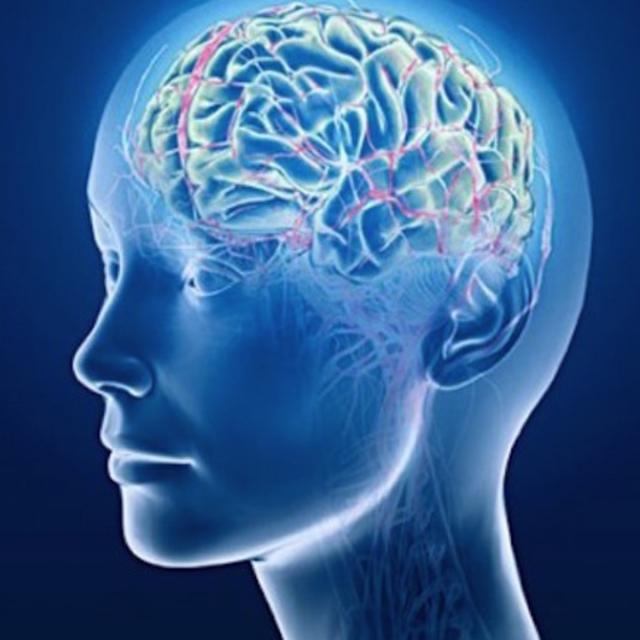
This course is about how the brain creates our sense of spatial location from a variety of sensory and motor sources, and how this spatial sense in turn shapes our cognitive abilities. Knowing where things are is effortless. But “under the hood,” your brain must figure out even the simplest of details about the world around you and your position in it.

Jun 22nd 2026
5-12 Weeks
Introduction to Biology: Biodiversity (Coursera) Coursera
Rice University

Introduction to Biology: Biodiversity (Coursera)

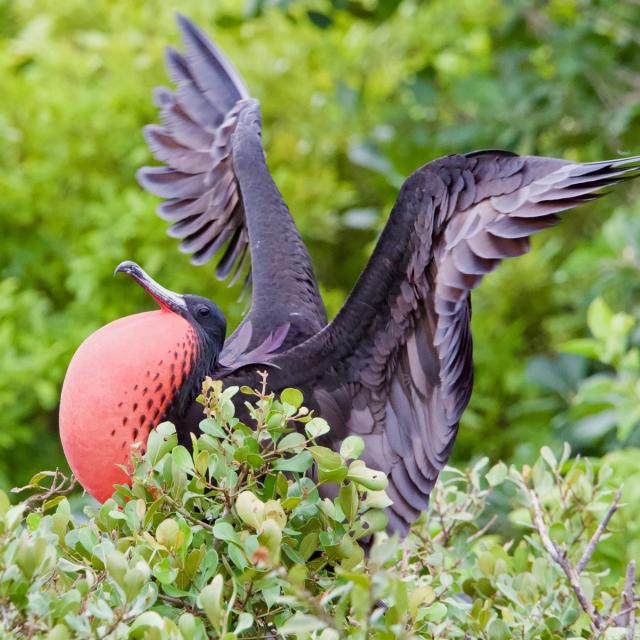
In this course we will examine the incredible variety of life that inhabits this planet including microorganisms, plants, and animals. For each of the major groups we’ll learn about their characteristics, functions, and how they came into existence as well as some of the roles they play in the natural world, and how they’re relevant to people. We’ll also take a close look at us humans and consider what we know about our origins and what might become of us in the future.

Jun 22nd 2026
5-12 Weeks
Agroforestry V: Ecosystem Services, Food and Sustainability (Coursera) Coursera
University of Florida

Agroforestry V: Ecosystem Services, Food and Sustainability (Coursera)

Welcome to Agroforestry V: Ecosystem Services, Food Security and Sustainable Development, a detailed review of fundamental principles and best practices for successful agroforestry projects. This interdisciplinary module, presented by leading experts in the field, is the final in the five-module course covering the various aspects of agroforestry including the global distribution of the practices, their underlying principles, and major scientific advances during the past nearly five decades.

Jun 22nd 2026
2 Weeks
Bioinformatics: Introduction and Methods 生物信息学: 导论与方法 (Coursera) Coursera
Peking University

Bioinformatics: Introduction and Methods 生物信息学: 导论与方法 (Coursera)

A big welcome to “Bioinformatics: Introduction and Methods” from Peking University! In this MOOC you will become familiar with the concepts and computational methods in the exciting interdisciplinary field of bioinformatics and their applications in biology, the knowledge and skills in bioinformatics you acquired will help you in your future study and research.

Jun 22nd 2026
13-24 Weeks
Epidemics - the Dynamics of Infectious Diseases (Coursera) Coursera
Pennsylvania State University

Epidemics - the Dynamics of Infectious Diseases (Coursera)

Not so long ago, it was almost guaranteed that you would die of an infectious disease. In fact, had you been born just 150 years ago, your chances of dying of an infectious disease before you've reached the tender age of 5 would have been extremely high. Since then, science has come a long way in understanding infectious diseases - what they are, how they spread, and how they can be prevented. But diseases like HIV/AIDS, Malaria, Tuberculosis, or the flu are still major killers worldwide, and novel emerging diseases are a constant threat to public health. In addition, the bugs are evolving. Antibiotics, our most potent weapon against bacterial infections, are losing their power because the bacteria are becoming resistant. In this course, we'll explore the major themes of infectious diseases dynamics.

Jun 22nd 2026
5-12 Weeks
Agroforestry II: Major Systems of the World (Coursera) Coursera
University of Florida

Agroforestry II: Major Systems of the World (Coursera)

Welcome to Agroforestry II: Major Systems of the World. A focused exploration of agroforestry practices from around the world. This is the second module of the five-module course covering the various aspects of agroforestry including the global distribution of the practices, their underlying principles, and major scientific advances during the past nearly five decades, presented by leading experts in the field.

Jun 22nd 2026
2 Weeks
Biosphere 2 Science for the Future of Our Planet (Coursera) Coursera
University of Arizona

Biosphere 2 Science for the Future of Our Planet (Coursera)

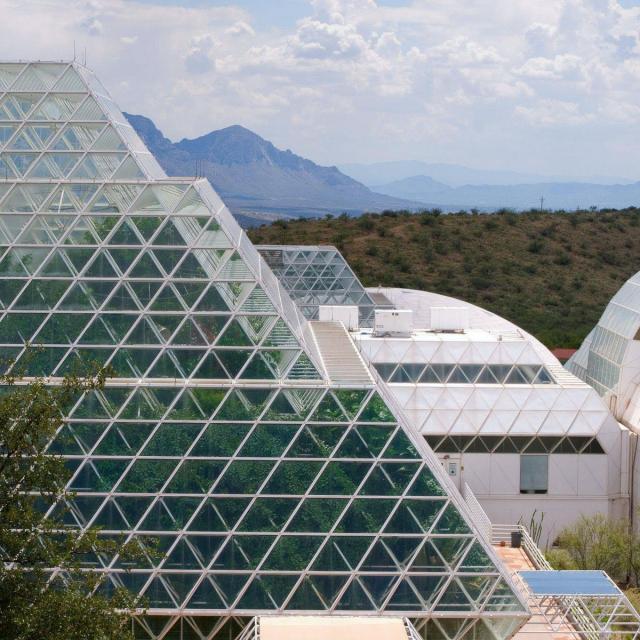
Are you ready to take an incredible journey around Planet Earth and beyond? In this course, you will delve into a world of innovative science and learn from a team of Biosphere 2 and University of Arizona researchers. From plants and soils, to oceans and rainforests, the Moon, Mars, and more, this course is an exciting opportunity for anyone interested in science and Earth stewardship.

Jun 22nd 2026
5-12 Weeks
Philosophy, Science and Religion: Science and Philosophy (Coursera) Coursera
University of Edinburgh

Philosophy, Science and Religion: Science and Philosophy (Coursera)

Philosophy, Science and Religion mark three of the most fundamental modes of thinking about the world and our place in it. Are these modes incompatible? Put another way: is the intellectually responsible thing to do to ‘pick sides’ and identify with one of these approaches at the exclusion of others? Or, are they complementary or mutually supportive? As is typical of questions of such magnitude, the devil is in the details. For example, it is important to work out what is really distinctive about each of these ways of inquiring about the world. In order to gain some clarity here, we’ll be investigating what some of the current leading thinkers in philosophy, science and religion are actually doing.

Jun 22nd 2026
5-12 Weeks