Blockchain: Foundations and Use Cases (Coursera)

Offered by ConsenSys Academy,
Blockchain: Foundations and Use Cases (Coursera)

This course is the definitive introduction to blockchain for both the developer and non-developer audience. Beyond the technology, this course will introduce you to some of the philosophy behind decentralization and why there is so much excitement around it. During the first three modules, you'll be introduced to blockchain and the technology behind it. In module four, we'll go beyond bitcoin and delve deeper into a next-generation blockchain called Ethereum to introduce you to what modern blockchains can do.

Class Deals by MOOC List - Click here and see Coursera's Active Discounts, Deals, and Promo Codes.

The use cases featured in the final module are drawn from among the businesses in ConsenSys' startup portfolio. We believe we're uniquely positioned to present you with a valuable behind-the-scenes look at the people and companies working in this space to help give you a better understanding of the business side of blockchain.
Together, we'll examine businesses use cases, hear from industry leaders, and give you the opportunity to develop and analyze a use case yourself. With this course, not only will you be the one who is able to explain blockchain to your colleagues, you'll be well on your way to making educated business decisions with your new, foundational understanding of the technology.

Syllabus

WEEK 1
Blockchain Foundations
In this module we will cover the following topics: 1. Why are People Excited About Blockchain? 2.The Brief, Brief History of Blockchain 3.The Move to Decentralization 4. Ledgers, Distributed Ledgers, and Consensus 5. What is Blockchain? The reading materials will help you to expand your knowledge of the materials presented in this module. There is an assessment at the end of this module. You need to achieve 80% or higher to pass and receive the Course Certificate.

WEEK 2
The Technical Side
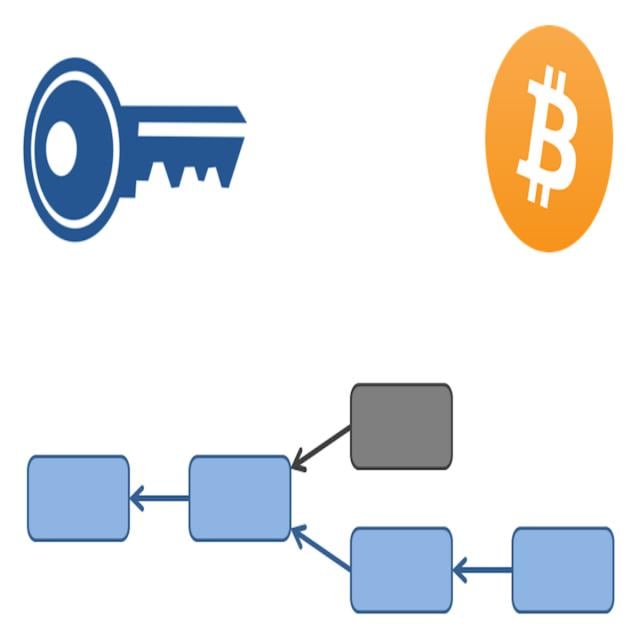
In this module we will cover the following topics: Cryptography, Hash Functions, Public Key Cryptography and Signing, Blocks and Blockchain, the Chain, Nodes and Network. The reading materials will help you to expand your knowledge of the materials presented in this module. There is an assessment at the end of this module. You need to achieve 80% or higher to pass and receive the Course Certificate.

WEEK 3
Blockchain in Use
Welcome to the Blockchain in Use module. In this module we will cover the following topics: Introduction, Trust Framework and Consensus Mechanisms, Public, Consortium, Private Blockchains, Blockchain Interoperability, When to Use a Blockchain (Limitations and Misconceptions), Implications of Blockchain on Traditional Business. The reading materials will help you to expand your knowledge of the materials presented in this module. There is an assessment at the end of this module. You need to achieve 80% or higher to pass and receive the Course Certificate.

WEEK 4
Further Topics
In this module we will cover the following topics: Introduction, Bitcoin and Ethereum, Ethereum, Smart Contracts, Cryptocurrency Tokens, Wallets and the Marketplaces, and Implications on Traditional Businesses. The reading materials will help you to expand your knowledge of the materials presented in this module. There is an assessment at the end of this module. You need to achieve 80% or higher to pass and receive the Course Certificate.

WEEK 5
Use Cases
In this module we will review the following use cases: Self-Sovereign Identity and Reputation, Ownership and Governance, Supply Chain and Asset Tracking, and Royalties in the Music Industry.

Go to Class
MOOC List is learner-supported. When you buy through links on our site, we may earn an affiliate commission.

Related Courses

Principles of Secure Coding (Coursera) Coursera
University of California, Davis

Principles of Secure Coding (Coursera)

This course introduces you to the principles of secure programming. It begins by discussing the philosophy and principles of secure programming, and then presenting robust programming and the relationship between it and secure programming. We'll go through a detailed example of writing robust code and we'll see many common programming problems and show their connection to writing robust, secure programs in general.

Jun 29th 2026
4 Weeks
Enterprise System Management and Security (Coursera) Coursera
University of Colorado System

Enterprise System Management and Security (Coursera)

The world runs on computers. Your watch, your TV, your car. You might be familiar on how to operate each of these. Your home computer you are even more familiar with operating it. But what does it take to really take computer systems to the next level? - The enterprise level. In this course we discuss what makes home computing systems different from enterprise computing systems. This course will also help you prepare and design your own home lab to explore enterprise operating systems.

Jun 29th 2026
5-12 Weeks
Security & Safety Challenges in a Globalized World (Coursera) Coursera
Leiden University

Security & Safety Challenges in a Globalized World (Coursera)

Security and safety challenges rank among the most pressing issues of modern times. Challenges such as, cyber-crime, terrorism, and environmental disasters impact the lives of millions across the globe. These issues also rank high on the agenda of politicians, international organizations and businesses. They also feature prominently in the public conscience and in governmental policies.

Jun 29th 2026
5-12 Weeks
Homeland Security & Cybersecurity Connection - It's Not About the Terrorists (Coursera) Coursera
University of Colorado System

Homeland Security & Cybersecurity Connection - It's Not About the Terrorists (Coursera)

Welcome to Course 1 in CS4950, Homeland Security and Cybersecruity. In this course we examine the origins of homeland security and its co0nnection with cybersecurity. Homeland security is about safeguarding the United States from domestic catastrophic destruction. Catastrophic destruction comes in two forms: natural and manmade. For most of history the man-made variety came in the form of warfare and required the combined resources of a nation state. All that changed March 20th, 1995. On that date, members of a quasi-religious cult in Japan attacked the Tokyo subway system using Sarin gas. It was the first deployment of a weapon of mass destruction my a non-state actor.

Jun 29th 2026
4 Weeks
Introduction to Cybersecurity Tools & Cyber Attacks (Coursera) Coursera
IBM

Introduction to Cybersecurity Tools & Cyber Attacks (Coursera)

This course gives you the background needed to understand basic Cybersecurity. You will learn the history of Cybersecurity, types and motives of cyber attacks to further your knowledge of current threats to organizations and individuals. Key terminology, basic system concepts and tools will be examined as an introduction to the Cybersecurity field.

Jun 29th 2026
4 Weeks
Cryptography I (Coursera) Coursera
Stanford University

Cryptography I (Coursera)

Cryptography is an indispensable tool for protecting information in computer systems. In this course you will learn the inner workings of cryptographic systems and how to correctly use them in real-world applications. The course begins with a detailed discussion of how two parties who have a shared secret key can communicate securely when a powerful adversary eavesdrops and tampers with traffic.

Jun 29th 2026
5-12 Weeks
Blockchain, Cryptoassets, and Decentralized Finance (Coursera) Coursera
INSEAD

Blockchain, Cryptoassets, and Decentralized Finance (Coursera)

Today, large intermediaries establish trust in our economy and control the movement, storage, and allocation of money and assets. The status quo, however, is rife with inefficiencies. In this course, we’ll address the many challenges of the status quo and discuss how cryptoassets, smart contracts, new identity systems, and new financial business models can help overcome them. You’ll learn how blockchain technology empowers individuals, entrepreneurs, and businesses with the tools they need to help level the playing field and to participate in the value they create.

Jun 29th 2026
4 Weeks
Cybersecurity and the X-Factor (Coursera) Coursera
University System of Georgia

Cybersecurity and the X-Factor (Coursera)

What is the X-Factor? In Cybersecurity, the X-Factor related to unknown and unpredictable human behavior within and outside of your organization. “No one really knows why humans do what they do”, (David K. Reynolds), and because of this organizations can be unprepared for malicious, untrained, or even best intentioned behavior that can cause alarm and sometimes irreparable harm.

Jun 29th 2026
4 Weeks
Cyber Threat Intelligence (Coursera) Coursera
IBM

Cyber Threat Intelligence (Coursera)

This course gives you the background needed to gain Cybersecurity skills as part of the Cybersecurity Security Analyst Professional Certificate program. You will understand network defensive tactics, define network access control and use network monitoring tools. You will understand data protection risks and explore mobile endpoint protection. Finally you will recognize various scanning technologies, application security vulnerabilities and threat intelligence platforms.

Jun 29th 2026
5-12 Weeks