Basic Data Analysis and Model Building using Python (Coursera)

Basic Data Analysis and Model Building using Python (Coursera)

By the end of this project learners will be able to perform data ingestion using Pandas and Numpy, preprocess and visualize the data using Matplotlib and Seaborn. Learners will also build a binary classification model using Scikit-Learn. Additionally, learners will be introduced to other data science concepts and techniques such as standardization and up- and down-sampling of biased data. It is important to manipulate your data such that it can then be used to build a predictive model.

Class Deals by MOOC List - Click here and see Coursera's Active Discounts, Deals, and Promo Codes.

In this Guided Project, you will:

  • Ingest a dataset into a Jupyter Notebook environment using Pandas and create visualizations using the Matplotlib and Seaborn libraries.
  • Preprocess data through standardization, resampling using Scikit-Learn.
  • Build, train and save an accurate binary classification model.

Learn step-by-step

  • Data ingestion and visualization
  • Data preprocessing (standardization and scaling)
  • Data preparation and Principal Component Analysis intro
  • Build and train a binary classification model
  • Versioning
Go to Class
MOOC List is learner-supported. When you buy through links on our site, we may earn an affiliate commission.

Related Courses

Reproducible Templates for Analysis and Dissemination (Coursera) Coursera
Emory University

Reproducible Templates for Analysis and Dissemination (Coursera)

This course will assist you with recreating work that a previous coworker completed, revisiting a project you abandoned some time ago, or simply reproducing a document with a consistent format and workflow. Incomplete information about how the work was done, where the files are, and which is the most recent version can give rise to many complications.

Oct 12th 2026
5-12 Weeks
Advanced Reproducibility in Cancer Informatics (Coursera) Coursera
Johns Hopkins University

Advanced Reproducibility in Cancer Informatics (Coursera)

This course introduces tools that help enhance reproducibility and replicability in the context of cancer informatics. It uses hands-on exercises to demonstrate in practical terms how to get acquainted with these tools but is by no means meant to be a comprehensive dive into these tools. The course introduces tools and their concepts such as git and GitHub, code review, Docker, and GitHub actions.

Oct 12th 2026
5-12 Weeks
Escalamiento exitoso e Innovación en los Negocios (Coursera) Coursera
Pontificia Universidad Católica de Chile

Escalamiento exitoso e Innovación en los Negocios (Coursera)

Este curso fue diseñado para apoyar a emprendedores y empresarios que se encuentran en la etapa de escalamiento de sus negocios, con el fin de prepararlos para enfrentar los desafíos de esta etapa y tomar las decisiones estratégicas adecuadas que conlleva. El curso permite profundizar en las áreas de estrategia, administración, personas, finanzas y marketing, entregando conceptos y herramientas que permitan a los empresarios ampliar su visión estratégica de negocios y su capacidad para generar e implementar planes de escalamiento eficazmente, impulsando mecanismos que sustenten la innovación y el crecimiento y adoptando buenas prácticas de gestión.

Oct 12th 2026
5-12 Weeks
Matrix Methods (Coursera) Coursera
University of Minnesota

Matrix Methods (Coursera)

Mathematical Matrix Methods lie at the root of most methods of machine learning and data analysis of tabular data. Learn the basics of Matrix Methods, including matrix-matrix multiplication, solving linear equations, orthogonality, and best least squares approximation. Discover the Singular Value Decomposition that plays a fundamental role in dimensionality reduction, Principal Component Analysis, and noise reduction.

Oct 12th 2026
5-12 Weeks
Fundamentos de Excel para Negocios (Coursera) Coursera
Universidad Austral

Fundamentos de Excel para Negocios (Coursera)

Cuando finalices este curso habrás logrado un gran número de habilidades como introducir información, ordenarla, manipularla, realizar cálculos de diversa índole (matemáticos, trigonométricos, estadísticos, financieros, ingenieriles, probabilísticos), extraer conclusiones, trabajar con fechas y horas, construir gráficos, imprimir reportes y muchas más.

Oct 12th 2026
5-12 Weeks
Principles of fMRI 1 (Coursera) Coursera
Johns Hopkins University

Principles of fMRI 1 (Coursera)

Functional Magnetic Resonance Imaging (fMRI) is the most widely used technique for investigating the living, functioning human brain as people perform tasks and experience mental states. It is a convergence point for multidisciplinary work from many disciplines. Psychologists, statisticians, physicists, computer scientists, neuroscientists, medical researchers, behavioral scientists, engineers, public health researchers, biologists, and others are coming together to advance our understanding of the human mind and brain. This course covers the design, acquisition, and analysis of Functional Magnetic Resonance Imaging (fMRI) data, including psychological inference, MR Physics, K Space, experimental design, pre-processing of fMRI data, as well as Generalized Linear Models (GLM’s).

Oct 12th 2026
4 Weeks
Julia Scientific Programming (Coursera) Coursera
University of Cape Town

Julia Scientific Programming (Coursera)

This four-module course introduces users to Julia as a first language. Julia is a high-level, high-performance dynamic programming language developed specifically for scientific computing. This language will be particularly useful for applications in physics, chemistry, astronomy, engineering, data science, bioinformatics and many more.

Oct 12th 2026
4 Weeks
Fundamentos de la visualización de datos con Tableau (Coursera) Coursera
Universidad Austral

Fundamentos de la visualización de datos con Tableau (Coursera)

En este curso descubrirás qué es la visualización de datos y cómo podemos usarla para ver y comprender mejor los datos. Con Tableau, examinaremos los conceptos fundamentales de visualización de datos y exploraremos la interfaz de Tableau, identificando y aplicando las diversas herramientas que Tableau tiene para ofrecer. Este curso está diseñado para el alumno que nunca ha usado antes Tableau, o que puede necesitar un repaso, o desea explorar Tableau con más profundidad.

Oct 12th 2026
4 Weeks
Structural Equation Model and its Applications | 结构方程模型及其应用 (普通话) (Coursera) Coursera
The Chinese University of Hong Kong

Structural Equation Model and its Applications | 结构方程模型及其应用 (普通话) (Coursera)

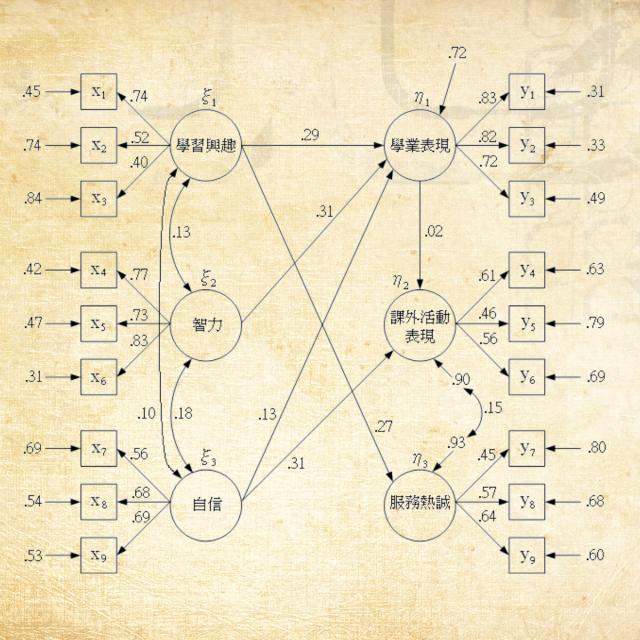
在社会学、心理学、教育学、经济学、管理学、市场学等研究领域的数据分析中,结构方程建模是当前最前沿的统计方法中应用最广、研究最多的一个。它包含了方差分析、回归分析、路径分析和因子分析,弥补了传统回归分析和因子分析的不足,可以分析多因多果的联系、潜变量的关系,

Oct 12th 2026
5-12 Weeks
Data-Driven Decisions with Power BI (Coursera) Coursera
Knowledge Accelerators

Data-Driven Decisions with Power BI (Coursera)

New Power BI users will begin the course by gaining a conceptual understanding of the Power BI desktop application and the Power BI service. Learners will explore the Power BI interface while learning how to manage pages and understand the basics of visualizations. Learners will engage in numerous hands-on experiences to discover how to import, connect, clean, transform, and model their own data in the Power BI desktop application.

Oct 12th 2026
5-12 Weeks