Arts of Asia (saylor.org)

Offered by Saylor.org,
Arts of Asia (saylor.org)

This course serves as an introduction to the major pre-Modern artistic traditions of India, China, and Japan. It is organized into three units that focus on the art and architecture of India, China, and Japan respectively.

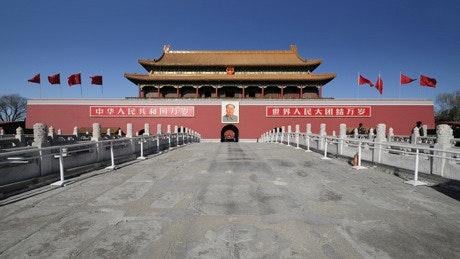
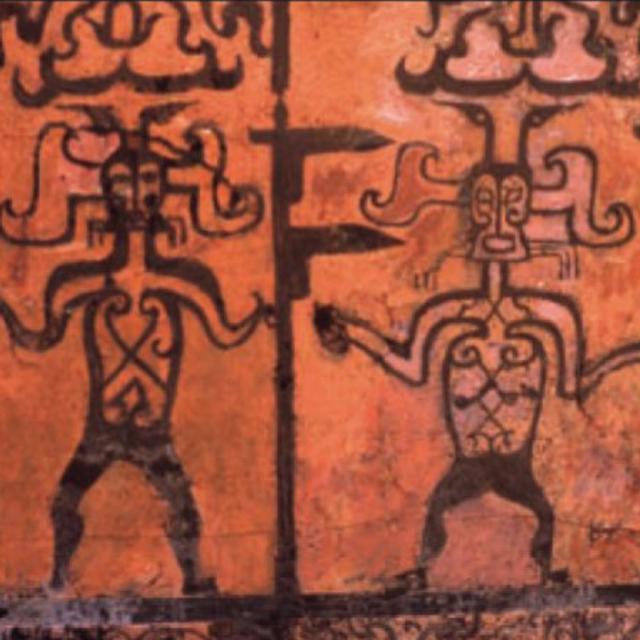
This course serves as an introduction to the major pre-Modern artistic traditions of India, China, and Japan. It is organized into three units that focus on the art and architecture of India, China, and Japan respectively. Each unit is structured chronologically. Unit 1 examines Indian Art from the Indus Valley Civilization (c. 2600-1900 BCE) through the art of the Mughal Empire (1526-1858), focusing on Buddhist, Hindu, and Islamic art and architecture. Unit 2 covers the arts of China from the Shang Dynasty (c.1600-1050 BCE) through the Qing Dynasty (1644-1911), detailing the interaction between art, politics, and culture throughout Chinese dynastic history. Unit 3 introduces Japanese Art from the Jomon Period (c.10,500-300 BCE) through the Edo Period (1615-1868), exploring the effects that various sub-traditions and sub-cultures (Tang Dynasty China, Buddhism, and the warrior class) had on the art of Japan.

After completing this course, you will have a comprehensive understanding of the arts and architecture of pre-Modern India, China, and Japan and their relationship to the history and culture of their respective times and places.

Upon successful completion of this course, students will be able to:

Identify major pre-modern Indian, Chinese, and Japanese works of art and architecture.
Identify the major art historical time periods in India, China, and Japan and the important artistic developments that occurred during each of them.
Recognize how art and architecture can be used to understand the politics, history, and culture of India, China, and Japan.
Look at, analyze, and compare and contrast different types of Asian art.


Go to Class
MOOC List is learner-supported. When you buy through links on our site, we may earn an affiliate commission.

Related Courses

Social Science Approaches to the Study of Chinese Society Part 1 (Coursera) Coursera
The Hong Kong University of Science and Technology - HKUST

Social Science Approaches to the Study of Chinese Society Part 1 (Coursera)

This course seeks to turn learners into informed consumers of social science research. It introduces concepts, standards, and principles of social science research to the interested non-expert. Learners who complete the course will be able to assess evidence and critically evaluate claims about important social phenomena. It reviews the origins and development of social science, describes the process of discovery in contemporary social science research, and explains how contemporary social science differs from apparently related fields. It describes the goals, basic paradigms, and methodologies of the major social science disciplines.

Sep 28th 2026
5-12 Weeks
International Communication and East Asian Affairs (2) (Coursera) Coursera
National Taiwan University

International Communication and East Asian Affairs (2) (Coursera)

Law

"International Communication and East Asian Affairs: Current Political and Economic Conditions" is an online course provided by the Graduate Institute of Journalism, National Taiwan University, and Radio Taiwan International. This course delves into East Asian affairs, particularly focusing on China and Taiwan. Topics covered include China's Third Revolution and its implications for the Sino-American strategic competition, the political economy of China, state-society relations within China, and an exploration of recent youth politics in Taiwan.

Sep 21st 2026
5-12 Weeks
文物精品与文化中国:农业与制造业 | Relics in Chinese History - Part 1: Agriculture and Manufacturing (edX) EdX
Tsinghua University,TsinghuaX

文物精品与文化中国:农业与制造业 | Relics in Chinese History - Part 1: Agriculture and Manufacturing (edX)

Discover manufacturing and agriculture’s role in the history of China as we explore Chinese culture through artifacts and relics. 本课程以精品文物作引子,将学术界探索中华文明的过程作为线索,介绍古代中国在造船、玉器等诸多领域的杰出成就

Self Paced
Self-Paced
Literati China: Examinations, Neo-Confucianism, and Later Imperial China (edX) EdX
HarvardX,Harvard University

Literati China: Examinations, Neo-Confucianism, and Later Imperial China (edX)

Explore China’s imperial period, with a focus on the Song dynasty and the role of the exam system in government. Fundamental changes in government, the economy, and broader society took place between the 8th and 11th centuries in China. The state aristocracy gave way to new literati elite: educated men who sought to enter government through competitive examinations. A new kind of Confucianism also took shape, which prized the moral autonomy of individuals. With this, the later imperial period of China’s history begins.

Self Paced
Self-Paced
Mandarin Chinese 3: Chinese for Beginners (Coursera) Coursera
Shanghai Jiao Tong University

Mandarin Chinese 3: Chinese for Beginners (Coursera)

Mandarin Chinese 3: Chinese for beginners is a beginner's course of Mandarin Chinese in continuation of Mandarin Chinese 2: Chinese for beginners. It uses lectures, short plays, interactive exercises and cultural tips to help learners build a fundamental capability of oral Chinese in real-life situations. At the end of the 5-lesson course, the learners will reach the following proficiency: 500 words; 60 language points; handling 15 real-life situations.

Sep 21st 2026
5-12 Weeks
Social Science Approaches to the Study of Chinese Society Part 2 (Coursera) Coursera
The Hong Kong University of Science and Technology - HKUST

Social Science Approaches to the Study of Chinese Society Part 2 (Coursera)

This course is intended as a first step for learners who seek to become producers of social science research. It is organized as an introduction to the design and execution of a research study. It introduces the key elements of a proposal for a research study, and explains the role of each. It reviews the major types of qualitative and quantitative data used in social science research, and then introduces some of the most important sources of existing data available freely or by application, worldwide and for China.

Sep 21st 2026
5-12 Weeks
Understanding China, 1700-2000: A Data Analytic Approach, Part 1 (Coursera) Coursera
The Hong Kong University of Science and Technology - HKUST

Understanding China, 1700-2000: A Data Analytic Approach, Part 1 (Coursera)

The purpose of this course is to summarize new directions in Chinese history and social science produced by the creation and analysis of big historical datasets based on newly opened Chinese archival holdings, and to organize this knowledge in a framework that encourages learning about China in comparative perspective. Our course demonstrates how a new scholarship of discovery is redefining what is singular about modern China and modern Chinese history.

Sep 28th 2026
5-12 Weeks
Intellectual Change in Early China: Warring States and Han (Coursera) Coursera
The Chinese University of Hong Kong

Intellectual Change in Early China: Warring States and Han (Coursera)

This sequence of four courses will propose a multi-disciplinary approach to the study of Chinese cultural history conceived of as a succession of modes of rationality (philosophical, bureaucratic, and economic). The focus will be on the moments of paradigm shift from one mode of rationality to another. For each of these moments, cultural facts and artifacts—thought, literature, ritual—will be examined in relationship to changing social, political, and economic systems.

Oct 5th 2026
5-12 Weeks
China’s First Empires and the Rise of Buddhism (edX) EdX
HarvardX,Harvard University

China’s First Empires and the Rise of Buddhism (edX)

Learn about the Qin and Han dynasties, and how Buddhism and ideas of self-realization influenced the medieval period. This course, the second in a collection on Chinese history and culture, addresses how the Qin dynasty conquered China and established a new system of government and how the Han dynasty built a stable, centralized empire that lasted for hundreds of years. We cover the early history of Buddhism in China and how the rising feudal aristocracy responded to the loss of empire by looking inward.

Self Paced
Self-Paced