EdX

Artistic Research in Music – an Introduction (edX)

Artistic Research in Music – an Introduction (edX)

Learn about the topics, issues, and approaches of artistic research in music – research in and through musical practice - vital to today’s musicians and music culture. Artistic research (AR) is one of the most vibrant areas of creative thought in music – in the academic and professional worlds, but also among artists of all kinds who want to develop their practice by working and thinking coherently through its implications, questions, context and potential.

Class Deals by MOOC List - Click here and see EdX's Active Discounts, Deals, and Promo Codes.

AR (along with its various cognate versions) puts musicians themselves – their practices, their knowledge, experience and imagination – at the centre of the production of new understanding, knowledge, vision and discourses for music. In the current moment of great musical richness and diversity, this is more important than ever. Future or historical, acoustic or technological, performer, composer or producer – if you want to participate in this exciting and expanding field (or just want to know what’s going on) this course is for you.

The course is curated by the Orpheus Institute, Ghent – a world-leading centre for artistic research in music. Their artist-researchers are joined by experts from international institutions across the globe, who share their experience and understanding. The course is intended to be accessible to musicians with an expert artistic practice and some engagement with its theory, history, and context – as well as an inquiring mind. Masters or advanced Bachelors students will find this relevant, as well as researchers beginning their PhD, teachers at conservatories or universities, and independent artists who wish to engage with this exciting field.

What you'll learn

  • The key concepts of artistic research in music
  • How to refine potential research questions and lines of development in your own practice
  • Some of the most relevant research tools, techniques, and methodologies, and how these might relate to your work
  • How not to be afraid of theory! Instead, you will understand how it can be a vital tool in developing a coherent understanding of the context and potential of your artistic practice
  • Ways to develop a coherent reflective approach to expanding your practice
  • The range and potential of different modes of presenting your work and thought
  • How to produce a complete research proposal

Prerequisites:

  • An advanced practice (e.g. performance, composition) at Bachelor’s or Master’s level
  • Acquaintance with historical, theoretical and critical topics relevant to your practice
  • Skills in written communication
  • A critical, inquiring mind
Go to Class
MOOC List is learner-supported. When you buy through links on our site, we may earn an affiliate commission.

Related Courses

History of Rock, Part Two (Coursera) Coursera
University of Rochester

History of Rock, Part Two (Coursera)

This course, part 2 of a 2-course sequence, examines the history of rock, primarily as it unfolded in the United States, from the early 1970s to the early 1990s. This course covers the music of Led Zeppelin, the Allman Brothers, Carole King, Bob Marley, the Sex Pistols, Donna Summer, Michael Jackson, Madonna, Prince, Metallica, Run-DMC, and Nirvana, and many more artists, with an emphasis both on cultural context and on the music itself. We will also explore how developments in the music business and in technology helped shape the ways in which styles developed.

Nov 23rd 2026
5-12 Weeks
Guitar for Beginners (Coursera) Coursera
Berklee College of Music

Guitar for Beginners (Coursera)

Grasp the essentials needed to begin playing acoustic or electric guitar. You'll learn an easy approach to get you playing quickly, through a combination of exploring the instrument, performance technique, and basic music theory. For students who have long thought about picking up the acoustic or electric guitar, this course will provide an easy-access foundation that will get you playing.

Nov 23rd 2026
5-12 Weeks
First Nights: Monteverdi’s L’Orfeo and the Birth of Opera (edX) EdX
HarvardX,Harvard University

First Nights: Monteverdi’s L’Orfeo and the Birth of Opera (edX)

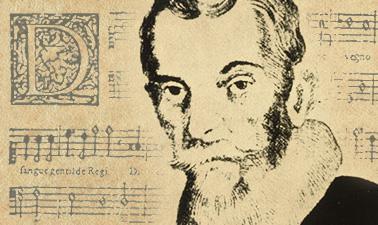
Learn about Claudio Monteverdi’s L’Orfeo, one of the first operas ever written. Claudio Monteverdi’s L’Orfeo premiered in Mantua in 1607, and continues to be regarded as one of the most important examples of early opera. With L’Orfeo, Monteverdi helped to establish the techniques and traditions that continue to inform the genre of opera to this day.

Self Paced
Self-Paced
19th-Century Opera: Meyerbeer, Wagner, & Verdi (edX) EdX
HarvardX,Harvard University

19th-Century Opera: Meyerbeer, Wagner, & Verdi (edX)

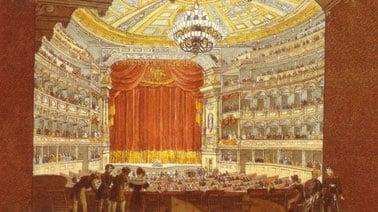
Learn the music and cultural impact of three canonical operas from the 1800s: Les Huguenots, Das Rheingold, and Otello. Travel through central Europe in the 1800s to experience the premieres of Meyerbeer’s Les Huguenots, Wagner’s Das Rheingold, and Verdi’s Otello. A complement to our course on 18th-century opera, you’ll be introduced to opera through an in-depth study of these canonical works.

Self Paced
Self-Paced
Vocal Recording Technology (edX) EdX
Berklee College of Music,BerkleeX

Vocal Recording Technology (edX)

Explore emerging innovations in vocal production, audio engineering, recording, and mixing. We are in the midst of an explosion of musical creativity as a result of technologies that allow you to record music using your laptop or tablet. Whether you are a singer, music producer, audio engineer, or just someone that likes to make good music with vocals, it is essential to have an understanding of vocal technologies for music production.

Self Paced
Self-Paced
First Nights: Berlioz’s Symphonie Fantastique and Program Music in the 19th Century (edX) EdX
HarvardX,Harvard University

First Nights: Berlioz’s Symphonie Fantastique and Program Music in the 19th Century (edX)

Learn about Hector Berlioz’s Symphonie Fantastique, an iconic Romantic symphony that ushered in an era of narrative “program music.” Six years after the premiere of Beethoven’s monumental Ninth Symphony, composer Hector Berlioz sought to make use of the symphonic genre, but on his own terms. Indeed, he wrote not only a five-movement symphony, but also a narrative program to accompany and explain the symphony.

Self Paced
Self-Paced
Music, Art, Society, and Self (edX) EdX
University of Wisconsin–Madison,WisconsinX

Music, Art, Society, and Self (edX)

This course will provide a chance for you to explore yourself and your experiences with music and art. It is based on your own point of view and the environment around you. You'll learn about yourself and how music and art influence you while while observing and doing.

Self Paced
Self-Paced
Soundcool: Módulos de vídeo y propuestas creativas (edX) EdX
Universitat Politècnica de València,UPValenciaX

Soundcool: Módulos de vídeo y propuestas creativas (edX)

Aprende los conceptos básicos para poder usar la parte correspondiente a vídeo del sistema Soundcool para educación musical y creación colaborativa mediante móviles, tablets y Kinect. En este curso en línea aprenderás los conceptos básicos para poder usar la parte de vídeo del sistema Soundcool para educación musical y creación colaborativa mediante móviles, tablets y otros dispositivos.

Self Paced
Self-Paced
Producción musical y su efecto en la composición (edX) EdX
Berklee College of Music,BerkleeX

Producción musical y su efecto en la composición (edX)

Exploraremos cómo el proceso de producir música interactúa con los elementos de la composición de la música que se está produciendo. En este curso de producción musical aprenderás sobre el proceso de producción y cómo este está relacionado directamente con la composición, conocerás lo que pasa en un estudio de grabación. Este curso te permitirá aprender de un equipo de músicos con reconocimiento internacional y conocerás los pasos del proceso de producir música.

Self Paced
Self-Paced
Teaching the Violin and Viola: Creating a Healthy Foundation (Coursera) Coursera
Northwestern University

Teaching the Violin and Viola: Creating a Healthy Foundation (Coursera)

Join us as we explore the fundamental principles and early stages of teaching violin and viola through a series of engaging video lectures and lesson demonstrations, including: 1) Master classes with some of the world’s top string pedagogues, 2) Individual lesson demos of teaching violin/viola set up, left and right hand technique and pieces from the early violin/viola repertoire, 3) Group lesson demos of teaching music theory, ear training and fun activities that encourage good playing habits, and 4) A “field trip” to the violin shop, where we will outfit a new beginning student with a proper instrument and bow.

Nov 23rd 2026
5-12 Weeks