Animals, Self, and Society (Coursera)

Animals, Self, and Society (Coursera)

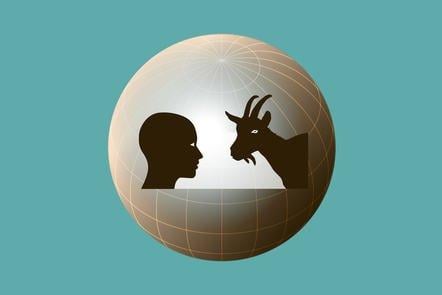
This course explores how animals and people are situated within the web of structures and connections known as “society.” Module 1 considers some of the key symbolic roles that animals play in society by investigating the practice of “thinking with animals.” We investigate how people construct different meanings of animals and the implications these meanings have for both animals and humans. You will gain first-hand experience of this by analyzing how animals are represented in the media.

Class Deals by MOOC List - Click here and see Coursera's Active Discounts, Deals, and Promo Codes.

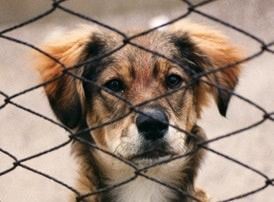
Modules 2 and 3 investigate human-animal relationships, including those that involve suffering as well as those that are beneficial. Although many people describe their pets as friends or family members, Module 2 takes a deeper dive into what constitutes friendship and family membership where other species are concerned. Module 3 examines the dark side of these relationships, focusing on animal abuse and its relationship to domestic violence. Module 4 focuses on people’s encounters with those animals outside the boundaries of the home and the farm. The way people understand and regard the species commonly considered “wild” shapes the treatment and moral status of these animals.
What You Will Learn

  • Demonstrate knowledge of how animals serve as symbols and metaphors in the media
  • Summarize the practices and interactions that allow for human-animal relationships
  • Identify the major factors that lead to animal abuse
  • Represent instances of human-wildlife conflict

Course 1 of 3 in the Animals and Society Specialization.

Syllabus

WEEK 1
Thinking with Animals
In this module, you will gain an understanding of how we socially construct animals.

WEEK 2
Close Relationships
In this module, you will examine the interaction between humans and the animals we consider pets.

WEEK 3
The Dark Side
In this module, you will investigate the process of defining animal abuse and its relationship with other aspects of society.

WEEK 4
Wild(life) Encounters
In this module, you will explore key questions about the interactions between humans and wild animals.

Go to Class
MOOC List is learner-supported. When you buy through links on our site, we may earn an affiliate commission.

Related Courses

Chimpanzee Behavior and Conservation (Coursera) Coursera
Duke University

Chimpanzee Behavior and Conservation (Coursera)

Chimpanzees are one of our closest living relatives, yet almost nothing was known about their behavior in the wild until Jane Goodall started her groundbreaking study of the chimpanzees of Gombe, Tanzania in 1960. This study continues today, following the same chimpanzee families that Jane Goodall first encountered over 55 years ago. Guided by three course instructors who have lived and worked with the Gombe chimpanzees, you will learn how Goodall’s early discoveries changed our view of human uniqueness.

Aug 31st 2026
5-12 Weeks
Driving business towards the Sustainable Development Goals (Coursera) Coursera
Erasmus University Rotterdam

Driving business towards the Sustainable Development Goals (Coursera)

Extreme weather events, wars, famine and environmental destruction are just a few of the wicked problems faced by humanity. That’s why in 2015 the United Nations adopted the 2030 Agenda for Sustainable Development. This agenda includes 17 Sustainable Development Goals (SDGs) that target the big challenges such as how to eliminate poverty, how to protect the environment and how to bring about peace. Every member state committed to achieving these goals by 2030. What can businesses do to counter climate change and create a sustainable business culture? Why is this relevant for business anyway? Explore how business can contribute to a better future for people AND the planet without giving up profits.

Aug 24th 2026
5-12 Weeks
Understanding Food Labels (FutureLearn) FutureLearn
University of Reading,EIT Food,EIT

Understanding Food Labels (FutureLearn)

Learn how to interpret food labels so you can make informed food choices and buy food that supports your health and wellbeing. Get the facts you need to put your trust in the food system. Huge amounts of information are provided on food product labels, but surveys have shown that we’re often unsure of its meaning. On this course, you’ll learn how to make sense of the regulations, data, and logos on packaging so that you can make more informed food choices.

Jan 2nd 2023
3 Weeks
Zoologia (edX) EdX
University of Naples Federico II,FedericaX

Zoologia (edX)

Comprendere gli animali e i sistemi naturali, attraverso il filo conduttore dell’evoluzione. Un viaggio da percorrere con l’entusiasmo di un bambino e la professionalità di uno studioso. La zoologia è la conoscenza degli animali, i nostri coinquilini. Ci sono centinaia di specie animali che interagiscono insieme a noi in una relazione di comunità o ecosistema. Questo corso di Zoologia è una passeggiata nei temi propri della materia come elemento culturale essenziale per il biologo, il naturalista e chiunque si occupi della vita.

Self Paced
Self-Paced
Religious Symbols of the World (edX) EdX
Seoul National University,SNUx

Religious Symbols of the World (edX)

This course is the third and final course in the series following “Understanding Religious Symbolism” and “Myths, Rituals, and Cosmos.” Through the theories and patterns that you learned in these three courses, I hope that you will be able to interpret the various religious phenomena in different cultures, and through this gain a better understanding of culture and human beings.

Self Paced
Self-Paced
Research Methods in Psychology: Using Animal Models to Understand Human Behaviour (FutureLearn) FutureLearn
University of Padova

Research Methods in Psychology: Using Animal Models to Understand Human Behaviour (FutureLearn)

Learn how animal models can help us learn about human psychology, cognitive skills, and the neurobiology of learning and memory. Discover how animal research has helped us understand how we perceive and learn. Did you know that we can learn a lot about humans through animal research? Animal models derived from invertebrates have helped us to understand the neurobiology of learning and memory. From cats, we have learned how visual experience informs the human visual system, and recent research has identified fish as a promising model to understand the genetic bases of learning disabilities such as dyscalculia!

Self Paced
4 Weeks
Introducción al estudio de los bienes comunes (Coursera) Coursera
Universidad Nacional Autónoma de México

Introducción al estudio de los bienes comunes (Coursera)

El curso te introduce al estudio de los bienes comunes (como bosques, mecanismos de irrigación, tierras de pastoreo, pesquerías, recursos culturales o la información) y su gobernanza. El eje central del curso es la propuesta de la Teoría de la Acción Colectiva y de los Recursos Comunes, considerando sus elementos teóricos centrales y sus implicaciones metodológicas.

Sep 7th 2026
4 Weeks
Political Geography (Coursera) Coursera
Moscow State Institute of International Relations - MGIMO

Political Geography (Coursera)

Political geography is a discipline concerned with the spatial dimensions of politics. This course is an introduction to the study of political science, international relations and area studies, providing a systemic approach to the spatial dimension of political processes at all levels. It covers their basic elements, including states, supranational unions, geopolitical systems, regions, borders, capitals, dependent, and internationally administered territories.

Aug 1st 2022
5-12 Weeks
Risk in Modern Society (Coursera) Coursera
Leiden University,LDE Centre for Safety and Security

Risk in Modern Society (Coursera)

Risk has become one of the defining features of modern society. Almost daily, we are preoccupied with assessing, discussing, or preventing a wide variety of risks. It is a cornerstone notion for businesses and organizations, but also for nation states and their many levels of government. And even for individuals, risk and the avoidance or embracing thereof, is a key theme. The course Risk in Modern Society sheds light on the broad concept of risk.

Sep 14th 2026
5-12 Weeks
Espaço Mundial: Perspectivas França-Brasil (Coursera) Coursera
Sciences Po

Espaço Mundial: Perspectivas França-Brasil (Coursera)

Na perspectiva da França e do Brasil explicam como a globalização reconstitui as políticas públicas e os comportamentos sociais. Nós estudamos os intercâmbios e as interações entre os atores políticos, econômicos e sociais – públicos e privados, individuais e coletivos – e o modo pelo qual redesenham as relações internacionais. Este curso fundamenta-se nas abordagens da sociologia e da história das relações internacionais.

Apr 24th 2023
4 Weeks
Introduction to Biology: Biodiversity (Coursera) Coursera
Rice University

Introduction to Biology: Biodiversity (Coursera)

In this course we will examine the incredible variety of life that inhabits this planet including microorganisms, plants, and animals. For each of the major groups we’ll learn about their characteristics, functions, and how they came into existence as well as some of the roles they play in the natural world, and how they’re relevant to people. We’ll also take a close look at us humans and consider what we know about our origins and what might become of us in the future.

Aug 31st 2026
5-12 Weeks