Análisis de datos con Python (Coursera)

Offered by IBM,
Análisis de datos con Python (Coursera)

Aprenda a analizar datos con Python. Este curso lo llevará desde los conceptos básicos de Python hasta la exploración de muchos tipos diferentes de datos. Aprenderá a preparar datos para el análisis, realizar análisis estadísticos simples, crear visualizaciones de datos significativas, predecir tendencias futuras a partir de datos, ¡y más!

Class Deals by MOOC List - Click here and see Coursera's Active Discounts, Deals, and Promo Codes.

Tópicos cubiertos:
1) Importación de conjuntos de datos
2) Limpiar los datos
3) manipulación del marco de datos
4) Resumen de los datos
5) Creación de modelos de regresión de aprendizaje automático
6) Construcción de canalizaciones de datos
El análisis de datos con Python se entregará a través de conferencias, laboratorio y asignaciones. Incluye las siguientes partes:
Bibliotecas de análisis de datos: aprenderá a usar las bibliotecas Pandas, Numpy y Scipy para trabajar con un conjunto de datos de muestra. Le presentaremos pandas, una biblioteca de código abierto, y la usaremos para cargar, manipular, analizar y visualizar conjuntos de datos interesantes. Luego, le presentaremos otra biblioteca de código abierto, scikit-learn, y usaremos algunos de sus algoritmos de aprendizaje automático para construir modelos inteligentes y hacer predicciones interesantes.
This course can be applied to multiple Specializations or Professional Certificates programs. Completing this course will count towards your learning in any of the following programs:

Syllabus

WEEK 1: Importar Conjuntos de Datos
WEEK 2: Organización de los datos
WEEK 3: Análisis Exploratorio de Datos
WEEK 4: Desarrollo de Modelo
WEEK 5: Evaluación de Modelo
WEEK 6: Trabajo Final
WEEK 7: Insignia Digital de IBM
Go to Class
MOOC List is learner-supported. When you buy through links on our site, we may earn an affiliate commission.

Related Courses

Matrix Methods (Coursera) Coursera
University of Minnesota

Matrix Methods (Coursera)

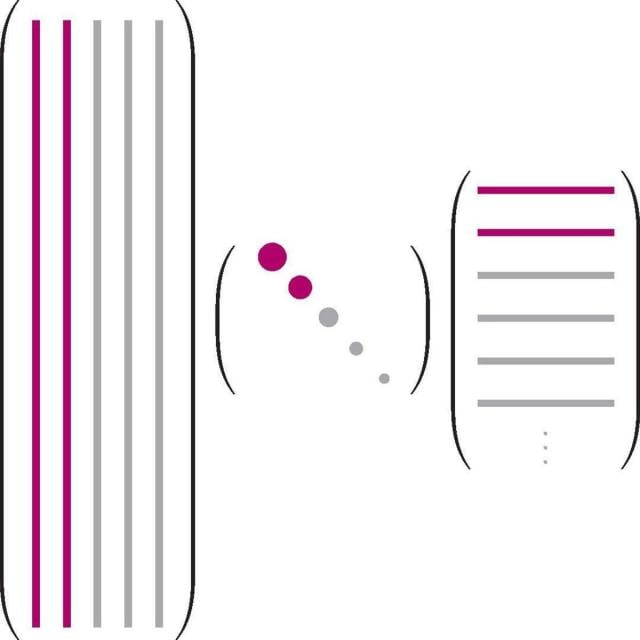
Mathematical Matrix Methods lie at the root of most methods of machine learning and data analysis of tabular data. Learn the basics of Matrix Methods, including matrix-matrix multiplication, solving linear equations, orthogonality, and best least squares approximation. Discover the Singular Value Decomposition that plays a fundamental role in dimensionality reduction, Principal Component Analysis, and noise reduction.

Oct 12th 2026
5-12 Weeks
Análise de Segmentação de Mercado (Coursera) Coursera
FIA Business School

Análise de Segmentação de Mercado (Coursera)

Nossas boas-vindas ao Curso Análise de Segmentação de Mercado. Neste curso, você aprenderá que as organizações estão adotando tecnologias de Big Data como parte de sua estratégia de negócios e em um mercado orientado a dados, trabalhar com a segmentação de forma eficiente é um grande desafio para a maioria das empresas. Uma segmentação eficaz consiste em agrupar seu público-alvo conforme a característica de cada indivíduo, reduzindo esforços e direcionando corretamente ao objetivo desejado.

Oct 12th 2026
4 Weeks
Fundamentos de la visualización de datos con Tableau (Coursera) Coursera
Universidad Austral

Fundamentos de la visualización de datos con Tableau (Coursera)

En este curso descubrirás qué es la visualización de datos y cómo podemos usarla para ver y comprender mejor los datos. Con Tableau, examinaremos los conceptos fundamentales de visualización de datos y exploraremos la interfaz de Tableau, identificando y aplicando las diversas herramientas que Tableau tiene para ofrecer. Este curso está diseñado para el alumno que nunca ha usado antes Tableau, o que puede necesitar un repaso, o desea explorar Tableau con más profundidad.

Oct 12th 2026
4 Weeks
Principios esenciales de diseño en Tableau (Coursera) Coursera
Universidad Austral

Principios esenciales de diseño en Tableau (Coursera)

En este curso, analizarás y aplicarás principios de diseño esenciales para tus visualizaciones en Tableau. Este curso asume que comprendes las herramientas dentro de Tableau y tienes algún conocimiento de los conceptos fundamentales de visualización de datos. Definirás y examinarás las similitudes y diferencias del análisis exploratorio y estudio, así como comenzarás a hacerte las preguntas correctas sobre lo que se necesita en una visualización.

Oct 12th 2026
4 Weeks
Design Computing: 3D Modeling in Rhinoceros with Python/Rhinoscript (Coursera) Coursera
University of Michigan

Design Computing: 3D Modeling in Rhinoceros with Python/Rhinoscript (Coursera)

Why should a designer learn to code? As our world is increasingly impacted by the use of algorithms, designers must learn how to use and create design computing programs. Designers must go beyond the narrowly focused use of computers in the automation of simple drafting/modeling tasks and instead explore the extraordinary potential digitalization holds for design culture/practice.

Oct 12th 2026
5-12 Weeks
Research Design: Inquiry and Discovery (Coursera) Coursera
University of North Texas

Research Design: Inquiry and Discovery (Coursera)

The main purpose of this course is to focus on good questions and how to answer them. This is essential to making considered decisions as a leader in any organization or in your life overall. Topics will include the basis of human curiosity, development of questions, connections between questions and approaches to information gathering design, variable measurement, sampling, the differences between experimental and non-experimental designs, data analysis, reporting and the ethics of inquiry projects.

Oct 12th 2026
4 Weeks
Applied Text Mining in Python (Coursera) Coursera
University of Michigan

Applied Text Mining in Python (Coursera)

This course will introduce the learner to text mining and text manipulation basics. The course begins with an understanding of how text is handled by python, the structure of text both to the machine and to humans, and an overview of the nltk framework for manipulating text. The second week focuses on common manipulation needs, including regular expressions (searching for text), cleaning text, and preparing text for use by machine learning processes. The third week will apply basic natural language processing methods to text, and demonstrate how text classification is accomplished. The final week will explore more advanced methods for detecting the topics in documents and grouping them by similarity (topic modelling).

Oct 12th 2026
4 Weeks
Fundamentos de Excel para Negocios (Coursera) Coursera
Universidad Austral

Fundamentos de Excel para Negocios (Coursera)

Cuando finalices este curso habrás logrado un gran número de habilidades como introducir información, ordenarla, manipularla, realizar cálculos de diversa índole (matemáticos, trigonométricos, estadísticos, financieros, ingenieriles, probabilísticos), extraer conclusiones, trabajar con fechas y horas, construir gráficos, imprimir reportes y muchas más.

Oct 12th 2026
5-12 Weeks
Interprofessional Healthcare Informatics (Coursera) Coursera
University of Minnesota

Interprofessional Healthcare Informatics (Coursera)

Interprofessional Healthcare Informatics is a graduate-level, hands-on interactive exploration of real informatics tools and techniques offered by the University of Minnesota and the University of Minnesota's National Center for Interprofessional Practice and Education. We will be incorporating technology-enabled educational innovations to bring the subject matter to life. Over the 10 modules, we will create a vital online learning community and a working healthcare informatics network.

Oct 12th 2026
5-12 Weeks
Julia Scientific Programming (Coursera) Coursera
University of Cape Town

Julia Scientific Programming (Coursera)

This four-module course introduces users to Julia as a first language. Julia is a high-level, high-performance dynamic programming language developed specifically for scientific computing. This language will be particularly useful for applications in physics, chemistry, astronomy, engineering, data science, bioinformatics and many more.

Oct 12th 2026
4 Weeks