Almeida Garrett e o Teatro do seu Tempo (UAb)

Offered by Universidade Aberta,
Almeida Garrett e o Teatro do seu Tempo (UAb)

Conheça a personalidade política do grande escritor português Almeida Garrett e explore a dimensão histórica da peça Frei Luis de Sousa.

O estudo do elemento histórico na obra-prima de Almeida Garrett, Frei Luís de Sousa, através de uma análise comparativa com uma das fontes desta peça, constitui o objetivo principal deste curso. A enquadrar esta abordagem, dar-se-á atenção específica às práticas teatrais dos anos 30 e 40 da Lisboa Oitocentista, através da exploração de iconografia da época, elucidativa de aspetos da história do teatro de então.
Para melhor conhecermos a personalidade de Garrett e o seu perfil enquanto homem com uma visão estratégica invulgar, apoiar-nos-emos na correspondência que trocou com Portugal no período em que ocupou um cargo diplomático em Bruxelas.
Com a frequência deste MOOC o participante vai:

  • Conhecer a correspondência diplomática de Garrett e a sua importância para o conhecimento do perfil do homem e do político;
  • Perspetivar a produção teatral de Garrett no contexto do teatro na Lisboa de Oitocentos;
  • Examinar a importância do elemento histórico em Frei Luís de Sousa, no quadro das relações entre a História e a Ficção.

TEMAS
Tema 1 | Garrett: o homem e o político
Tema 2 | Garrett e o teatro do seu tempo
Tema 3 | Garrett e o drama histórico na época romântica

Go to Class
MOOC List is learner-supported. When you buy through links on our site, we may earn an affiliate commission.

Related Courses

Arch of Titus: Rome and the Menorah (Coursera) Coursera
Yeshiva University

Arch of Titus: Rome and the Menorah (Coursera)

The Arch of Titus: Rome and the Menorah explores one of the most significant Roman monuments to survive from antiquity, from the perspectives of Roman, Jewish and later Christian history and art. The Arch of Titus commemorates the destruction of Jerusalem by the emperor Titus in 70 CE, an event of pivotal importance for the history of the Roman Empire, of Judaism, of Christianity and of modern nationalism. Together with your guide, Professor Steven Fine, you will examine ancient texts and artifacts, gaining skills as a historian as you explore the continuing significance of the Arch of Titus from antiquity to the very present.

Aug 31st 2026
5-12 Weeks
Introduction to Who Wrote Shakespeare (Coursera) Coursera
University of London,Goldsmiths, University of London

Introduction to Who Wrote Shakespeare (Coursera)

This free course from the University of London explores critical thinking, and the interpretation of texts, through the Shakespeare authorship question. Using doubt about Shakespeare’s authorship as our playground, we will explore the key concept of authorship attribution, while developing skills in literary analysis, interpretation, and argument. Through forensic exploration of key texts, you will learn why Shakespeare’s authorship is questioned, and what evidence is cited on both sides of the debate.

Aug 24th 2026
4 Weeks
O Real Paço Mafra: do Magnânimo ao Clemente (UAb) Universidade Aberta
Universidade Aberta

O Real Paço Mafra: do Magnânimo ao Clemente (UAb)

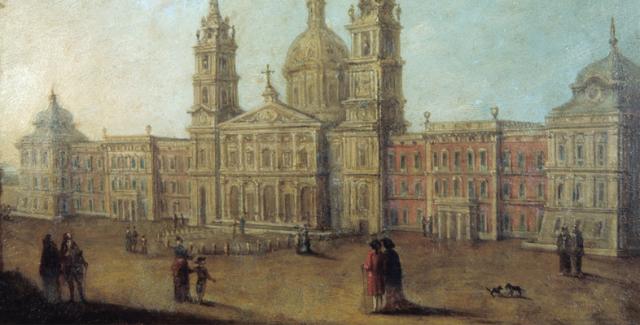
Erguido numa lógica de afirmação do poder real, o Real Paço de Mafra está intimamente ligado à figura de D. João V. Mas a adaptação a novos tempos, a evolução do gosto, o terramoto de 1755 e as campanhas de Napoleão vão determinar a forma como o Paço vai sendo (ou não) habitado ao longo do século XVIII. Outro monarca, D. João VI, deixará também a sua marca neste que era um dos seus Paços favoritos. Conheça neste curso esta e outras dimensões da história do Palácio.

Self Paced
Self-Paced
Greek and Roman Mythology (Coursera) Coursera
University of Pennsylvania

Greek and Roman Mythology (Coursera)

Myths are traditional stories that have endured over a long time. Some of them have to do with events of great importance, such as the founding of a nation. Others tell the stories of great heroes and heroines and their exploits and courage in the face of adversity. Still others are simple tales about otherwise unremarkable people who get into trouble or do some great deed. What are we to make of all these tales, and why do people seem to like to hear them? This course will focus on the myths of ancient Greece and Rome, as a way of exploring the nature of myth and the function it plays for individuals, societies, and nations. We will also pay some attention to the way the Greeks and Romans themselves understood their own myths.

Aug 24th 2026
5-12 Weeks
Introduction to Ancient Egypt and Its Civilization (Coursera) Coursera
University of Pennsylvania

Introduction to Ancient Egypt and Its Civilization (Coursera)

Colossal pyramids, imposing temples, golden treasures, enigmatic hieroglyphs, powerful pharaohs, strange gods, and mysterious mummies are features of Ancient Egyptian culture that have fascinated people over the millennia. The Bible refers to its gods, rulers, and pyramids. Neighboring cultures in the ancient Near East and Mediterranean wrote about its god-like kings and its seemingly endless supply of gold. The Greeks and Romans describe aspects of Egypt's culture and history.

Aug 24th 2026
5-12 Weeks
The Holocaust - An Introduction (I): Nazi Germany: Ideology, The Jews and the World (Coursera) Coursera
Tel Aviv University,Yad Vashem

The Holocaust - An Introduction (I): Nazi Germany: Ideology, The Jews and the World (Coursera)

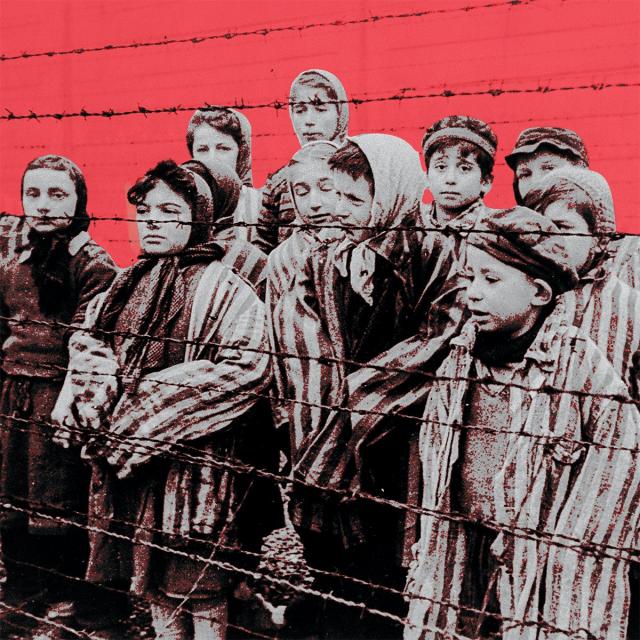
The Holocaust was an inconceivable historical event, which forever robbed Western culture of its innocence. As civilized human beings, we fail to understand how events of such horror could have taken place, and how an idea so inhumanly warped could have spread like wildfire through an entire continent, instigating the systematic annihilation of millions of Jews. This free online course was produced jointly by Tel Aviv University and Yad Vashem – the World Holocaust Remembrance Center. The course tracks the history of the Holocaust and has two parts.

Aug 23rd 2026
3 Weeks
The Talmud: A Methodological Introduction (Coursera) Coursera
Northwestern University

The Talmud: A Methodological Introduction (Coursera)

The Talmud is one of the richest and most complicated works of literature the world has ever known. Since being composed around 1500 years ago it has inspired not only religious reverence but significant intellectual engagement. In this course learners will be introduced to the unique characteristics of this text and the challenges that inhere in studying it while studying a chapter of the Talmud.

Aug 24th 2026
5-12 Weeks
Indigenous Canada (Coursera) Coursera
University of Alberta

Indigenous Canada (Coursera)

Indigenous Canada is a 12-lesson Massive Open Online Course (MOOC) that explores Indigenous histories and contemporary issues in Canada. From an Indigenous perspective, this course explores key issues facing Indigenous peoples today from a historical and critical perspective highlighting national and local Indigenous-settler relations.

Aug 24th 2026
5-12 Weeks
The History of Modern Israel – Part I: From an Idea to a State (Coursera) Coursera
Tel Aviv University

The History of Modern Israel – Part I: From an Idea to a State (Coursera)

How did the State of Israel come to be? How is it that an idea, introduced in 19th century Europe, became a reality? And how does that reality prevail in the harsh complexities of the Middle East? Presented by Professor Eyal Naveh, with additional units from Professor Asher Sussers' "The Emergence of the Modern Middle East" course, This course will take you on a journey through the history of Modern Israel. In this 1st part of the course we will explore: How did the 19th century idea of a Jewish state become a reality? So the next time you hear about Israel in the news, you will be informed enough about the history of this area to comprehend the many sides and narratives that interact to shape the complex reality of Israel today.

Aug 24th 2026
3 Weeks
Paradoxes of War (Coursera) Coursera
Princeton University

Paradoxes of War (Coursera)

The Paradoxes of War teaches us to understand that war is not only a normal part of human existence, but is arguably one of the most important factors in making us who we are. Through this course, I hope that you will come to appreciate that war is both a natural expression of common human emotions and interactions and a constitutive part of how we cohere as groups. That is, war is paradoxically an expression of our basest animal nature and the exemplar of our most vaunted and valued civilized virtues.

Aug 24th 2026
13-24 Weeks