FUN

Agroressources et agro-industries durables (FUN)

Agroressources et agro-industries durables (FUN)

Coproduit par l'INP Toulouse et l'INSA Toulouse, ce cours est ouvert sur 6 semaines et vous propose de découvrir ce que sont les agroressources. Pourquoi en parler ? Quelle utilité ? Comment les transformer et les valoriser ? Les agroressources sont des matières premières issues de l'agriculture. Vous découvrirez au cours de ce MOOC le potentiel de valorisation de ces matières issues du carbone renouvelable au travers de leurs utilisations, leurs impacts économiques, environnementaux et sociétaux.

Vous appréhenderez ainsi leurs principales caractéristiques les conduisant à des applications industrielles, les procédés de transformation, leurs conditions d'usage en compatibilité avec les règlementations, leur impact environnemental et sociétal au travers de l'analyse de cycle de vie (ACV) et de l'éco-conception, leur valorisation au travers des produits industriels biosourcés (lubrifiants, solvants, carburants, antioxydants, conservateurs,…).

Ce MOOC s'adresse à un public élargi : curieux, étudiants, enseignants, chercheurs, chefs d'entreprises et décideurs politiques.
Enjeux du cours :
Il se veut un support technique et scientifique simplifié permettant d'acquérir les informations pour aborder plus en profondeur :

  • les contextes et enjeux de l'utilisation des agroressources,
  • les ressources et leurs usages,
  • les procédés de raffinage et de transformation des agroressources vers des produits d'usage,
  • l'évaluation de leur empreinte environnementale.

L'intégration de ces informations devrait permettre :

  • de mieux identifier l'existence des produits biosourcés déjà présents dans notre proche environnement,
  • de mieux comprendre leur processus d'obtention, leur intérêt en termes économiques en fonction de leurs usages,
  • de mieux appréhender leur capacité à être recyclés, réutilisés dans des circuits courts de proximité ou à plus grande échelle,
  • de mieux répondre aux interrogations du citoyen en termes de développement durable et d'éco responsabilité.

Nous vous souhaitons un bon apprentissage et une bonne immersion dans le monde des agroressources !


Go to Class
MOOC List is learner-supported. When you buy through links on our site, we may earn an affiliate commission.

Related Courses

NECTAR : Nématodes Cultures Taxonomie Arthropodes (FUN) FUN
Montpellier SupAgro

NECTAR : Nématodes Cultures Taxonomie Arthropodes (FUN)

La taxonomie est une Science biologique élémentaire et fondamentale. Les arthropodes et nématodes constituent la grande majorité des espèces de la planète. Leurs connaissances et identifications présentent donc des enjeux majeurs pour la préservation et la gestion de la biodiversité. / Taxonomy is a fundamental and elementary science. Arthropods and nematodes constitute the majority of species on earth. Being able identify them is thus critical for biodiversity conservation and management.

Oct 15th 2021
5-12 Weeks
ODS y sostenibilidad: una mirada desde los colegios (Coursera) Coursera
Universidad de los Andes

ODS y sostenibilidad: una mirada desde los colegios (Coursera)

En este curso veremos cómo podemos generar cambios y transformaciones (a nivel individual, organizacional y social) para la sostenibilidad desde la educación formal y no-formal. Partiremos del concepto de los Objetivos de Desarrollo Sostenible (ODS) como un marco potente para generar reflexiones críticas, que nos lleven a generar acciones colectivas desde la escuela en pro de la sostenibilidad.

Nov 23rd 2026
4 Weeks
Dynamiques des paysages (FUN) FUN
Université de Rennes 1

Dynamiques des paysages (FUN)

Le paysage désigne "une partie de territoire telle que perçue par les populations, dont le caractère résulte de l'action de facteurs naturels et/ou humains et de leurs interrelations" (convention européenne du paysage). Partout sur la planète, les paysages peuvent évoluer rapidement. On parle de dynamiques des paysages. Artificialisation des sols, urbanisation, pratiques agricoles, fonte des glaciers, élévation du niveau de la mer, avancées des déserts, etc. sont autant de changements qui imposent la prise en compte du paysage dans les politiques publiques au niveau international.

No sessions available
5-12 Weeks
Natural Attenuation of Groundwater Contaminants: New Paradigms, Technologies, and Applications (Coursera) Coursera
Rice University

Natural Attenuation of Groundwater Contaminants: New Paradigms, Technologies, and Applications (Coursera)

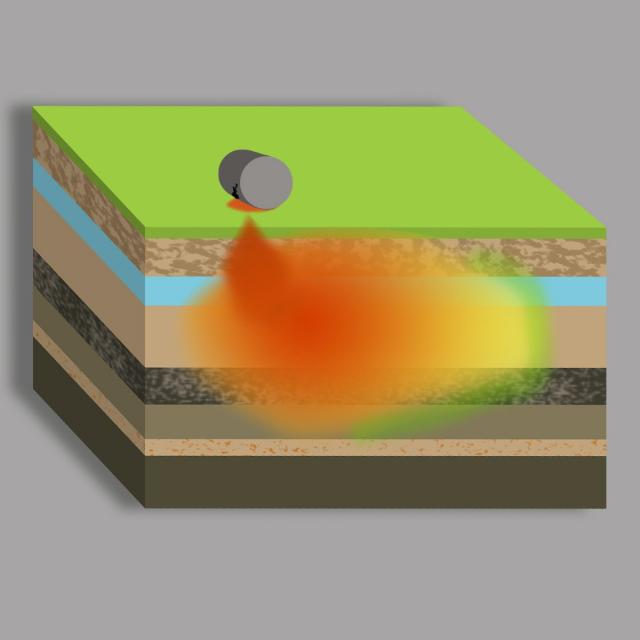
Cleaning up the large number of groundwater contamination sites is a significant and complex environmental challenge. The environmental industry is continuously looking for remediation methods that are both effective and cost-efficient. Over the past 10 years there have been amazing, important developments in our understanding of key attenuation processes and technologies for evaluating natural attenuation processes, and a changing institutional perspective on when and where Monitored Natural Attenuation (MNA) may be applied.

Nov 23rd 2026
5-12 Weeks
Environmental Management & Ethics (Coursera) Coursera
Technical University of Denmark - DTU

Environmental Management & Ethics (Coursera)

Decision-makers often turn to scientists and engineers to assist them to navigate through complex environmental, health and societal challenges pervaded by systemic uncertainty, ambiguity and ethical implications. This course prepares you to meet the requests and demands of current and future decision-makers and in this course, you will analyze ethical challenges associated with environmental dilemmas and apply different decision making tools relevant to environmental management and regulation.

Nov 23rd 2026
5-12 Weeks
Introduction to Sustainability (Coursera) Coursera
University of Illinois at Urbana-Champaign

Introduction to Sustainability (Coursera)

This course introduces the academic approach of Sustainability and explores how today’s human societies can endure in the face of global change, ecosystem degradation and resource limitations. The course focuses on key knowledge areas of sustainability theory and practice, including population, ecosystems, global change, energy, agriculture, water, environmental economics and policy, ethics, and cultural history.

Nov 23rd 2026
5-12 Weeks
Challenges of Agribusiness Management (Coursera) Coursera
Università Bocconi

Challenges of Agribusiness Management (Coursera)

The goal of this course is to understand the challenges and opportunities of agribusiness nowadays. From farms to retailers, from input providers to traders, all the diverse players of this value chain interact a complex business environment in which nature, policy, technology and management strategies have to be considered to overcome future challenges and seize upcoming opportunities.

Nov 16th 2026
5-12 Weeks
The Sustainable Development Goals – A global, transdisciplinary vision for the future (Coursera) Coursera
University of Copenhagen

The Sustainable Development Goals – A global, transdisciplinary vision for the future (Coursera)

In 2015, the UN launched the 17 Sustainable Development Goals (SDGs). Adopted by 193 member states, the goals represent an important international step in setting humanity on a trajectory towards sustainable development. Within this course, you will get a historical overview of how sustainability has been understood, as well as a thorough introduction to the SDGs – what they are, how progress can be measured, and how the SDGs are relevant for the management of the global systems supporting humanity. The course will examine how various societal actors are responding to and implementing the SDGs.

Nov 22nd 2026
3 Weeks
Strong sustainability and Europe (FUN) FUN
Université Clermont Auvergne

Strong sustainability and Europe (FUN)

Sustainable development, popularized by the Brundtland Report, was defined at the end of the 1980s in three spheres (economic, environmental and social). It is this representation that continues today to be disseminated to the public and to large companies. The objective of this MOOC is to question the major challenges of development for Europe in a perspective of strong sustainability (energy, climate, biodiversity, food, mobility, agriculture, natural resources, education...) and to propose alternatives.

Sep 12th 2022
5-12 Weeks
An Introduction to Global Health (Coursera) Coursera
University of Copenhagen

An Introduction to Global Health (Coursera)

This course will provide you with an overview of the most important health challenges facing the world today. You will gain insight into how challenges have changed over time, we will discuss the likely determinants of such changes and examine future projections. Successful international strategies and programs promoting human health will be highlighted and global health governance structures will be mapped and the role of the key actors explored.

Nov 23rd 2026
5-12 Weeks