Writing READMEs (Udacity)

Offered by Udacity,
Writing READMEs (Udacity)

In this course, you’ll learn what documentation is and why it’s an important part of the development process. You'll learn how to build a well-structured README that you’ll be able to incorporate into your projects moving forward. By the end of this course, you will have written your very own README file using Markdown.

Class Deals by MOOC List - Click here and see Udacity's Active Discounts, Deals, and Promo Codes.

If you've ever written code or needed to examine somebody else's code, you know how challenging it can be to try to make sense of a new codebase without any context.
This course will show you how to make your code more approachable to the humans who will ultimately need to make meaning of your code.

What You Will Learn

Lesson 1
Writing READMEs

  • Learn what documentation is and who it's for.
  • Learn what parts make up a great README file.
  • Use Markdown to write a README file quickly and easily.

Prerequisites and Requirements
This course is for anybody who writes code or works with others who do. The only prerequisites are:

  • A basic understanding of HTML
  • A basic understanding of git and GitHub (helpful, but not required!)
Go to Class
MOOC List is learner-supported. When you buy through links on our site, we may earn an affiliate commission.

Related Courses

Python Basics: Automation and Bots (Coursera) Coursera
University of California, Davis

Python Basics: Automation and Bots (Coursera)

Manipulating the flow of how your code runs is the major part of coding and learning to think in code. We'll experience turning logic into useful work by automatically reading all of Shakespeare, and by setting Python up to give you a call on the phone. In technical terms, the parts of Python you will learn are for loops, list comprehensions, and conditional statements, while at a higher level we'll get a lot on code style and other common ideas and practices that surround the specifics of how to code.

Nov 23rd 2026
4 Weeks
Browser Rendering Optimization (Udacity) Udacity
Udacity,Google

Browser Rendering Optimization (Udacity)

Building 60 FPS Web Apps. Performance matters to users. Web developers need to build apps that react quickly and render smoothly. Google performance guru Paul Lewis is here to help you destroy jank and create web apps that maintain 60 frames per second performance. You'll leave this course with the tools you need to profile apps and identify the causes of jank. You'll explore the browser's rendering pipeline and uncover patterns that make it easy to build performant apps.

Self Paced
Self-Paced
JavaScript Design Patterns (Udacity) Udacity
Udacity

JavaScript Design Patterns (Udacity)

Organizing Code in a Disorganized World. This course covers methods for organizing your code, both conceptually and literally. You’ll learn the importance of separating concerns when writing JavaScript, gaining hands-on experience along the way. Separating concerns can be done with or without an organizational library or framework. We’ll learn how to separate concerns without one, and then we’ll explore an organizational library together. You’ll also learn strategies for exploring other libraries and frameworks on your own.

Self Paced
Self-Paced
AI for Efficient Programming: Harnessing the Power of LLMs (Coursera) Coursera
Fred Hutchinson Cancer Center

AI for Efficient Programming: Harnessing the Power of LLMs (Coursera)

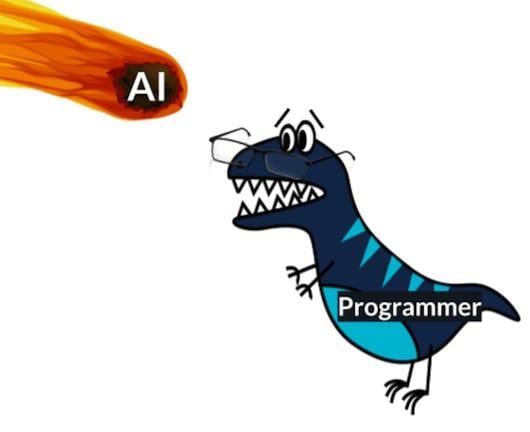
This course on Artificial Intelligence (AI) for software development explores the use of AI large language models such as ChatGPT, Bard, and others and their potential benefits and challenges. Through examples and hands-on activities, you will develop an understanding of the ways in which AI can speed up software development tasks and free up time for more creative and strategic work.

Nov 30th 2026
4 Weeks
Learn HTML and CSS (Coursera) Coursera
Scrimba

Learn HTML and CSS (Coursera)

This course is perfect if you want to learn how to code websites from scratch. You will learn the basics of HTML and CSS through interactive challenges. Along the way, you will build multiple projects, like a Google.com clone, a Space Exploration page, and a fun birthday site filled with GIFs. While most of the challenges are done in Scrimba's interactive editor, you will also learn how to use professional tools like VS Code for code editing, GitHub for hosting your code, and Netlify for deploying your projects to the world wide web.

Dec 7th 2026
5-12 Weeks
Fundamentals of Web Development (Coursera) Coursera
Illinois Tech

Fundamentals of Web Development (Coursera)

This course will cover the creation of Web pages and sites using HTML, CSS, Javascript, jQuery, and graphical applications as well as the client and server architecture of the Internet and related web technologies. The creation and deployment of modern, standards-compliant web pages are addressed. Students create and deploy a Web site with multiple pages and cross-linked structures.

Nov 30th 2026
5-12 Weeks
Applied Data Science Capstone (Coursera) Coursera
IBM

Applied Data Science Capstone (Coursera)

This capstone project course will give you a taste of what data scientists go through in real life when working with data. You will learn about location data and different location data providers, such as Foursquare. You will learn how to make RESTful API calls to the Foursquare API to retrieve data about venues in different neighborhoods around the world. You will also learn how to be creative in situations where data are not readily available by scraping web data and parsing HTML code. You will utilize Python and its pandas library to manipulate data, which will help you refine your skills for exploring and analyzing data. Finally, you will be required to use the Folium library to great maps of geospatial data and to communicate your results and findings.

Nov 23rd 2026
5-12 Weeks
Documentation and Usability for Cancer Informatics (Coursera) Coursera
Johns Hopkins University

Documentation and Usability for Cancer Informatics (Coursera)

Cancer datasets are plentiful, complicated, and hold information that may be critical for the next research advancements. In order to use these data to their full potential, researchers are dependent on the specialized data tools that are continually being published and developed. Bioinformatics tools can often be unfriendly to their users, who often have little to no background in programming (Bolchini et al. 2008). The usability and quality of the documentation of a tool can be a major factor in how efficiently a researcher is able to obtain useful findings for the next steps of their research.

Nov 30th 2026
4 Weeks
Learn Bootstrap (Coursera) Coursera
Scrimba

Learn Bootstrap (Coursera)

This instructional course guides you through the essential knowledge required to build comprehensive websites using Bootstrap v4. Bootstrap is an open-source front-end framework designed for responsive development, prioritizing mobile-first websites and web applications. The Scrimba course offers interactive code engagement within tutorials, providing an opportunity to reinforce concepts as you learn.

Nov 30th 2026
1 Week
Gen AI for Code Generation for Python (Coursera) Coursera
Edureka

Gen AI for Code Generation for Python (Coursera)

Welcome to the 'Gen AI for Code Generation for Python' course, where you'll embark on a journey to explore and develop your skills in the art of code generation with Generative AI. Throughout this short course, you will delve into various techniques for generating Python code effortlessly, ranging from simple scripts to complete end-to-end projects.

Dec 7th 2026
1 Week