EdX

Supply Chain Management Tools & Techniques (edX)

Supply Chain Management Tools & Techniques (edX)

Learn skills and tools that support supply chain operation, including Aggregate Planning, Sales Order Fulfillment, Lean, Sustainability and Team Dynamics - part of the ISCEA CSCA - Certified Supply Chain Analyst - Internationally Recognized Certificate. Supply chains are complex and keeping them both operating and improving is a great challenge. This course is designed to provide a broad set of tools currently used in the industry to make their supply chains efficient and competitive.

Class Deals by MOOC List - Click here and see EdX's Active Discounts, Deals, and Promo Codes.

This course is part of the edX Professional Certificate program Certified Supply Chain Analyst (CSCA), offered by ISCEA. This course prepares you for the ISCEA Certified Supply Chain Analyst (CSCA) Exam on edX and is a requirement for becoming ISCEA certified. To become an ISCEA Certified Supply Chain Analyst (CSCA), you must complete all three preparatory courses and successfully pass the CSCA Exam.
From the operations perspective, the course provides an introduction to Sales Order Fulfillment and Aggregate Planning, along with the planning strategies to produce what the market demands.
From the continuous improvement perspective, the course explains the importance of Lean and Six Sigma and sustainability in the supply chain; including life cycle analysis and environmental considerations. The course concludes with team dynamics, covering customer-supplier relationships and best practices for engaging with customers.

What you'll learn

  • Aggregate planning within supply and operations planning
  • Sales order fulfillment in the context of logistics management
  • Lean and continuous improvement tools that can be used for supply chain optimization and quality management
  • The arguments required to introduce, in the decision making process, the concept of sustainability while maintaining a competitive advantage
  • The principles of customer relationship management, supplier relationship management and team dynamics in the context of supply chain management

Syllabus

Aggregate Planning

  • Objective
  • Required Information
  • Strategies
  • Methods
  • Examples

Sales Order Fulfillment

  • MRP Input and Output
  • Gross and Net Requirements
  • MRP Management
  • Legacy of Our Planning Processes
  • Demand Driven Requirements Planning

Lean and Continuous Improvement Tools

  • What is Lean?
  • Characteristics of Lean
  • Origins of Lean
  • Tools & Techniques
  • Fishbone, Scatter Diagrams, 5Why's, SPC, SPC etc.
  • What is Six Sigma?
  • Six Sigma Project Team•Define-Measure-Analyze-Improve-Control (DMAIC)

Sustainability

  • What is sustainability?
  • Product life cycle considerations
  • Utilize a systems view
  • Goals for environmentally friendly designs
  • Guidelines for Environmentally Friendly Designs
  • Production process considerations
  • Environmentally Friendly Production Processes
  • Reduce, reuse, recycle

Team Dynamics

  • Organizational Structures
  • Team Dynamics
  • Customer-Supplier Relationships
  • Manage Customer Relationships
  • Practices for Dealing with Customers
  • Collect Customer Information
  • Understand Customer Needs
  • Guiding Principles in Supplier Relationships
  • Practices for dealing with customers
Go to Class
MOOC List is learner-supported. When you buy through links on our site, we may earn an affiliate commission.

Related Courses

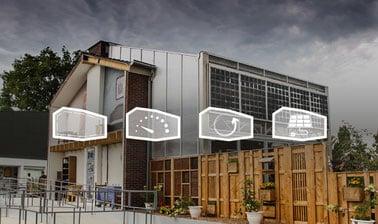
Sustainable Supply Chain Planning, Sourcing, and Procurement (edX) EdX
International Supply Chain Education Alliance,ISCEA

Sustainable Supply Chain Planning, Sourcing, and Procurement (edX)

Learn the fundamental concepts of planning, sourcing, and procurement with applied sustainable techniques. The course will begin with content on how to integrate sustainability and circularity into planning and sourcing. The course demonstrates the importance of efficiency and long-term planning to ensure the minimization of waste and the maximization of productive Supply Chain flow.

Self Paced
Self-Paced
System Design for Supply Chain Management and Logistics (edX) EdX
Chalmers University of Technology,ChalmersX

System Design for Supply Chain Management and Logistics (edX)

Learn how leading supply chains are designed, what makes them competitive and how to use the SCOR model for analysis to increase your business’s ROI. Logistics and supply chain structures can be found in virtually any system. In this business and management course you will learn not only what makes leading systems competitive but also how to design, or redesign, your own system.

Self Paced
Self-Paced
Sustainable Food Systems: A Mediterranean Perspective (edX) EdX
SDGAcademyX,SDG Academy

Sustainable Food Systems: A Mediterranean Perspective (edX)

How do we produce more, better quality, and safer food while simultaneously achieving social and environmental goals? The Mediterranean region is one of the most biodiverse in the world, home to a complex and intricate patchwork of cultures, climates, and cuisines. Food systems in the region -- represented worldwide by the "Mediterranean diet" -- are equally complex, demanding analysis across the political, social, cultural, economic and nutritional spectrums from landscape to table.

Self Paced
Self-Paced
Master Control in Supply Chain Management and Logistics (edX) EdX
Chalmers University of Technology,ChalmersX

Master Control in Supply Chain Management and Logistics (edX)

Boost your logistics skills in this hands-on course on how to master and control your supply chain to enhance your organisation’s productivity. Logistics and supply chain structures can be found in virtually any system. A supply chain is a complex environment with a multitude of forces and variables with various degrees of dependence. Unforeseen events are frequent and in order to achieve a competitive supply chain, constant supervision is needed.

Self Paced
Self-Paced
Sustainability in Architecture: An Interdisciplinary Introduction (edX) EdX
Universitat Politècnica de València,UPValenciaX

Sustainability in Architecture: An Interdisciplinary Introduction (edX)

This course introduces the basic elements and trends that define sustainability practices in Architecture today. It follows an interdisciplinary approach that includes performance assessment and urban policies. This course offers an interdisciplinary approach to sustainability in Architecture. Learners will be introduced to the basic elements of sustainability assessments (first model layer), as well as trends informing the space today.

Self Paced
Self-Paced
Circular Economy: An Introduction (edX) EdX
Delft University of Technology,DelftX

Circular Economy: An Introduction (edX)

Ready to make a difference? Learn how to contribute to a sustainable economic system by implementing novel business and design approaches! Our global society is not sustainable. We all know about the challenges we’re facing: waste, climate change, resource scarcity, loss of biodiversity. At the same time, we want to sustain our economies and offer opportunities for a growing world population. This course is about providing solutions we really believe in: a Circular Economy.

Self Paced
Self-Paced
Iniciación a la evaluación del impacto ambiental (edX) EdX
Universitat Politècnica de València,UPValenciaX

Iniciación a la evaluación del impacto ambiental (edX)

La evaluación de impacto ambiental constituye el instrumento más adecuado para la preservación y defensa del medio ambiente atendiendo al principio de sostenibilidad. El objetivo de este curso es sensibilizar sobre la necesidad de estudiar y prever adecuadamente las consecuencias de las actuaciones humanas sobre el medio ambiente.

Self Paced
Self-Paced
Sustainable Packaging in a Circular Economy (edX) EdX
Delft University of Technology,DelftX

Sustainable Packaging in a Circular Economy (edX)

Learn how to apply the principles of the circular economy to sustainable packaging systems. It has become almost impossible to imagine what our lives would be like without the many benefits of packaging - just think about the different packaging and single-use items you use on a daily basis. Yet as our global population grows in size and affluence, both our collective demand for packaging materials and the waste we generate as a result will increasedramatically.

Self Paced
Self-Paced