SQL for Data Science (Coursera)

SQL for Data Science (Coursera)

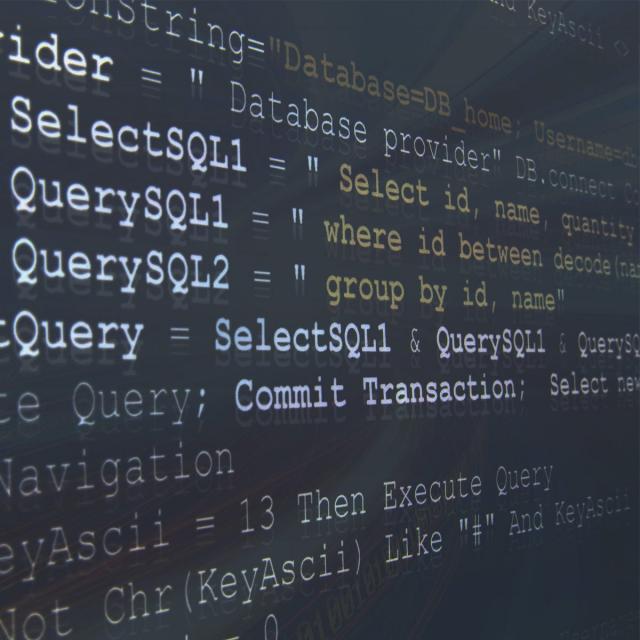
This course is designed to give you a primer in the fundamentals of SQL and working with data so that you can begin analyzing it for data science purposes. You will begin to ask the right questions and come up with good answers to deliver valuable insights for your organization. This course starts with the basics and assumes you do not have any knowledge or skills in SQL. It will build on that foundation and gradually have you write both simple and complex queries to help you select data from tables. You'll start to work with different types of data like strings and numbers and discuss methods to filter and pare down your results.

Class Deals by MOOC List - Click here and see Coursera's Active Discounts, Deals, and Promo Codes.

As data collection has increased exponentially, so has the need for people skilled at using and interacting with data; to be able to think critically, and provide insights to make better decisions and optimize their businesses. This is a data scientist, “part mathematician, part computer scientist, and part trend spotter” (SAS Institute, Inc.). According to Glassdoor, being a data scientist is the best job in America; with a median base salary of $110,000 and thousands of job openings at a time. The skills necessary to be a good data scientist include being able to retrieve and work with data, and to do that you need to be well versed in SQL, the standard language for communicating with database systems.
You will create new tables and be able to move data into them. You will learn common operators and how to combine the data. You will use case statements and concepts like data governance and profiling. You will discuss topics on data, and practice using real-world programming assignments. You will interpret the structure, meaning, and relationships in source data and use SQL as a professional to shape your data for targeted analysis purposes.
Although we do not have any specific prerequisites or software requirements to take this course, you a simple text editor is recommended for the final project. So what are you waiting for? This is your first step in landing a job in the best occupation in the US and soon the world!

What You Will Learn

  • Identify a subset of data needed from a column or set of columns and write a SQL query to limit to those results.
  • Use SQL commands to filter, sort, and summarize data.
  • Create an analysis table from multiple queries using the UNION operator.
  • Manipulate strings, dates, & numeric data using functions to integrate data from different sources into fields with the correct format for analysis.

Course 1 of 4 in the Learn SQL Basics for Data Science Specialization.

Syllabus

WEEK 1
Getting Started and Selecting & Retrieving Data with SQL
In this module, you will be able to define SQL and discuss how SQL differs from other computer languages. You will be able to compare and contrast the roles of a database administrator and a data scientist, and explain the differences between one-to-one, one-to-many, and many-to-many relationships with databases. You will be able to use the SELECT statement and talk about some basic syntax rules. You will be able to add comments in your code and synthesize its importance.

WEEK 2
Filtering, Sorting, and Calculating Data with SQL
In this module, you will be able to use several more new clauses and operators including WHERE, BETWEEN, IN, OR, NOT, LIKE, ORDER BY, and GROUP BY. You will be able to use the wildcard function to search for more specific or parts of records, including their advantages and disadvantages, and how best to use them. You will be able to discuss how to use basic math operators, as well as aggregate functions like AVERAGE, COUNT, MAX, MIN, and others to begin analyzing our data.

WEEK 3
Subqueries and Joins in SQL
In this module, you will be able to discuss subqueries, including their advantages and disadvantages, and when to use them. You will be able to recall the concept of a key field and discuss how these help us link data together with JOINs. You will be able to identify and define several types of JOINs, including the Cartesian join, an inner join, left and right joins, full outer joins, and a self join. You will be able to use aliases and pre-qualifiers to make your SQL code cleaner and efficient.

WEEK 4
Modifying and Analyzing Data with SQL
In this module, you will be able to discuss how to modify strings by concatenating, trimming, changing the case, and using the substring function. You will be able to discuss the date and time strings specifically. You will be able to use case statements and finish this module by discussing data governance and profiling. You will also be able to apply fundamental principles when using SQL for data science. You'll be able to use tips and tricks to apply SQL in a data science context.

Go to Class
MOOC List is learner-supported. When you buy through links on our site, we may earn an affiliate commission.

Related Courses

Digital Marketing Analytics in Practice (Coursera) Coursera
University of Illinois at Urbana-Champaign

Digital Marketing Analytics in Practice (Coursera)

Successfully marketing brands today requires a well-balanced blend of art and science. This course introduces students to the science of web analytics while casting a keen eye toward the artful use of numbers found in the digital space. The goal is to provide the foundation needed to apply data analytics to real-world challenges marketers confront daily. Students will learn to identify the web analytic tool right for their specific needs; understand valid and reliable ways to collect, analyze, and visualize data from the web; and utilize data in decision making for agencies, organizations or clients.

Jun 1st 2026
4 Weeks
Python Project for Data Science (Coursera) Coursera
IBM

Python Project for Data Science (Coursera)

This mini-course is intended to for you to demonstrate foundational Python skills for working with data. The completion of this course involves working on a hands-on project where you will develop a simple dashboard using Python. This course is part of the IBM Data Science Professional Certificate and the IBM Data Analytics Professional Certificate.

Jun 4th 2026
1 Week
Foundations of marketing analytics (Coursera) Coursera
ESSEC Business School

Foundations of marketing analytics (Coursera)

Who is this course for? This course is designed for students, business analysts, and data scientists who want to apply statistical knowledge and techniques to business contexts. For example, it may be suited to experienced statisticians, analysts, engineers who want to move more into a business role, in particular in marketing. You will find this course exciting and rewarding if you already have a background in statistics, can use R or another programming language and are familiar with databases and data analysis techniques such as regression, classification, and clustering. However, it contains a number of recitals and R Studio tutorials which will consolidate your competences, enable you to play more freely with data and explore new features and statistical functions in R.

Jun 1st 2026
5-12 Weeks
Exploratory Data Analysis (Coursera) Coursera
Johns Hopkins University

Exploratory Data Analysis (Coursera)

This course covers the essential exploratory techniques for summarizing data. These techniques are typically applied before formal modeling commences and can help inform the development of more complex statistical models. Exploratory techniques are also important for eliminating or sharpening potential hypotheses about the world that can be addressed by the data.

Jun 1st 2026
4 Weeks
Machine Learning Foundations: A Case Study Approach (Coursera) Coursera
University of Washington

Machine Learning Foundations: A Case Study Approach (Coursera)

Do you have data and wonder what it can tell you? Do you need a deeper understanding of the core ways in which machine learning can improve your business? Do you want to be able to converse with specialists about anything from regression and classification to deep learning and recommender systems? In this course, you will get hands-on experience with machine learning from a series of practical case-studies.

Jun 1st 2026
5-12 Weeks
The Data Scientist's Toolbox (Coursera) Coursera
Johns Hopkins University

The Data Scientist's Toolbox (Coursera)

In this course you will get an introduction to the main tools and ideas in the data scientist's toolbox. The course gives an overview of the data, questions, and tools that data analysts and data scientists work with. There are two components to this course. The first is a conceptual introduction to the ideas behind turning data into actionable knowledge. The second is a practical introduction to the tools that will be used in the program like version control, markdown, git, GitHub, R, and RStudio.

Jun 1st 2026
4 Weeks
Introduction to Big Data (Coursera) Coursera
University of California, San Diego

Introduction to Big Data (Coursera)

Interested in increasing your knowledge of the Big Data landscape? This course is for those new to data science and interested in understanding why the Big Data Era has come to be. It is for those who want to become conversant with the terminology and the core concepts behind big data problems, applications, and systems. It is for those who want to start thinking about how Big Data might be useful in their business or career. It provides an introduction to one of the most common frameworks, Hadoop, that has made big data analysis easier and more accessible -- increasing the potential for data to transform our world!

Jun 1st 2026
3 Weeks
Database Management Essentials (Coursera) Coursera
University of Colorado System

Database Management Essentials (Coursera)

Database Management Essentials provides the foundation you need for a career in database development, data warehousing, or business intelligence, as well as for the entire Data Warehousing for Business Intelligence specialization. In this course, you will create relational databases, write SQL statements to extract information to satisfy business reporting requests, create entity relationship diagrams (ERDs) to design databases, and analyze table designs for excessive redundancy.

Jun 1st 2026
5-12 Weeks
Data Science Companion (Coursera) Coursera
MathWorks

Data Science Companion (Coursera)

The Data Science Companion provides an introduction to data science. You will gain a quick background in data science and core machine learning concepts, such as regression and classification. You’ll be introduced to the practical knowledge of data processing and visualization using low-code solutions, as well as an overview of the ways to integrate multiple tools effectively to solve data science problems.

Jun 5th 2026
4 Weeks
Building a Data Science Team (Coursera) Coursera
Johns Hopkins University

Building a Data Science Team (Coursera)

Data science is a team sport. As a data science executive it is your job to recruit, organize, and manage the team to success. In this one-week course, we will cover how you can find the right people to fill out your data science team, how to organize them to give them the best chance to feel empowered and successful, and how to manage your team as it grows.

Jun 1st 2026
1 Week
Machine Learning for Data Analysis (Coursera) Coursera
Wesleyan University

Machine Learning for Data Analysis (Coursera)

Are you interested in predicting future outcomes using your data? This course helps you do just that! Machine learning is the process of developing, testing, and applying predictive algorithms to achieve this goal. Make sure to familiarize yourself with course 3 of this specialization before diving into these machine learning concepts. Building on Course 3, which introduces students to integral supervised machine learning concepts, this course will provide an overview of many additional concepts, techniques, and algorithms in machine learning, from basic classification to decision trees and clustering.

Jun 1st 2026
4 Weeks
Data Visualization and Communication with Tableau (Coursera) Coursera
Duke University

Data Visualization and Communication with Tableau (Coursera)

One of the skills that characterizes great business data analysts is the ability to communicate practical implications of quantitative analyses to any kind of audience member. Even the most sophisticated statistical analyses are not useful to a business if they do not lead to actionable advice, or if the answers to those business questions are not conveyed in a way that non-technical people can understand. In this course you will learn how to become a master at communicating business-relevant implications of data analyses.

Jun 1st 2026
5-12 Weeks