Software Product Management Capstone (Coursera)

Offered by University of Alberta,
Software Product Management Capstone (Coursera)

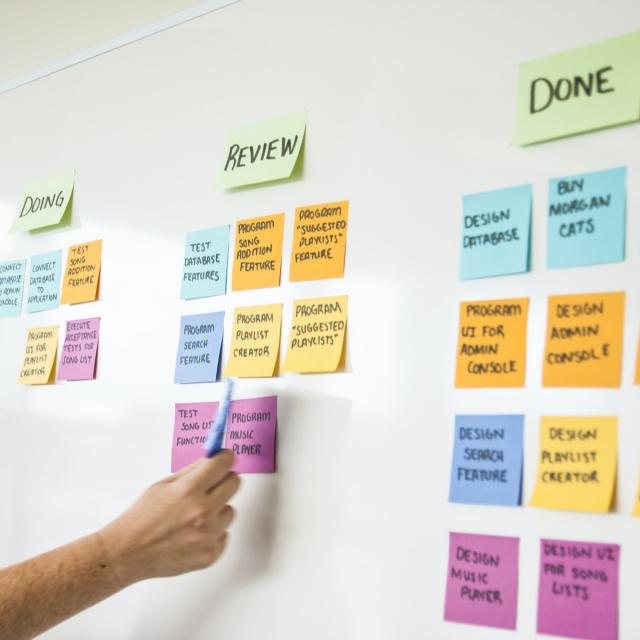
In this six-week capstone course, you will gain practical management experience in a safe, simulated software production setting. You will apply Agile practices and techniques to conquer industry-inspired challenges. Interacting with a realistic client, you will discern what they want and express what they truly need in software requirements to drive software production. Upon completing the capstone, you will be prepared to advance your career as a confident software product management professional.

Class Deals by MOOC List - Click here and see Coursera's Active Discounts, Deals, and Promo Codes.

What You Will Learn

  • Draw upon practical management experience in a simulated setting
  • Apply Agile practices and techniques to conquer industry-inspired challenges
  • Practice interaction with a realistic simulated client
  • Advance your career as a confident software product management professional

Course 6 of 6 in the Software Product Management Specialization

Syllabus

WEEK 1
Welcome to the first week of the capstone. This week, you will be primarily focusing on eliciting requirements. You will get to meet your client as well as collaborate with an expert advisor. You will also meet the development team that you will be working with. They will help you to clarify and elaborate on the information elicited from the client and expert. You will finish off the week by creating a Requirements Document.

WEEK 2
Now that the requirements are elicited, it’s now time to start refining those user stories! This week, you will conduct Requirements Technical Reviews on your peers Requirements Documents. You will also discuss risks with the development team and generate a risk plan.

WEEK 3
There’s a lot of work to be done this week to prepare for the first sprint. User stories need to be prioritized and assessed for risks, release and iteration plans need to be created, and design needs to begin. You will work with your team to get everything ready so that Sprint 1 can start promptly next week!

WEEK 4
This is your first development sprint! You will have stand-up meetings with the development team. Your team will also demo the product to the client and expert at the end of the week. There will be issues that need solving, plans to make for the next sprint, and monitoring that will need to be done!

WEEK 5
This is Sprint 2 of development. Similar to last week, there will be standups and other meetings. The team will also demo the product at the end of the sprint. You will be expected to monitor the progress of the project and prepare a plan for the third and final sprint--but a surprise twist at the end of the sprint might require you to be agile.

WEEK 6
With the trade show quickly approaching, you will need to work with the team to create an impressive working demo by the end of this sprint. With the added pressure, issues may arise. Will the team get the product completed in time?


Go to Class
MOOC List is learner-supported. When you buy through links on our site, we may earn an affiliate commission.

Related Courses

Introduction to Agile Development and Scrum (Coursera) Coursera
IBM

Introduction to Agile Development and Scrum (Coursera)

After successfully completing this course, you will be able to embrace the Agile concepts of adaptive planning, iterative development, and continuous improvement - resulting in early deliveries and value to customers. This course will benefit anyone who wants to get started with working the Agile way. It is particularly suitable for IT practitioners such as software developers, development managers, project managers, product managers, and executives.

Sep 21st 2026
4 Weeks
Development of Real-Time Systems (Coursera) Coursera
EIT Digital

Development of Real-Time Systems (Coursera)

This course is intended for the Master's student and computer engineer who likes practical programming and problem solving! After completing this course, you will have the knowledge to plan and set-up a real-time system both on paper and in practice. The course centers around the problem of achieving timing correctness in embedded systems, which means to guarantee that the system reacts within the real-time requirements.

Sep 21st 2026
5-12 Weeks
Code Yourself! An Introduction to Programming (Coursera) Coursera
University of Edinburgh,Universidad ORT Uruguay

Code Yourself! An Introduction to Programming (Coursera)

Have you ever wished you knew how to program, but had no idea where to start from? This course will teach you how to program in Scratch, an easy to use visual programming language. More importantly, it will introduce you to the fundamental principles of computing and it will help you think like a software engineer.

Sep 28th 2026
5-12 Weeks
Avatar Psychology for Designers (Coursera) Coursera
Michigan State University

Avatar Psychology for Designers (Coursera)

This course covers the latest and greatest psychological research on avatars and is relevant to current and future designers of any medium that includes user self-representations (e.g., video games, virtual worlds, robots, automobiles, social media, etc.). By taking this course, you will be able to define digital and non-digital avatars and identify how they are applicable in everyday life.

Sep 28th 2026
4 Weeks
Games, Sensors and Media (Coursera) Coursera
University of California, Irvine

Games, Sensors and Media (Coursera)

You will learn to make fluid digital interactive experiences that are suitable for gaming and use the advanced sensor hardware built into the iPhone and iPad. This includes drawing 2D graphics, playing sounds and music, integrating with Game Center, the iOS physics engine and detecting device orientation and location.

Sep 28th 2026
4 Weeks
The Arduino Platform and C Programming (Coursera) Coursera
University of California, Irvine

The Arduino Platform and C Programming (Coursera)

The Arduino is an open-source computer hardware/software platform for building digital devices and interactive objects that can sense and control the physical world around them. In this class you will learn how the Arduino platform works in terms of the physical board and libraries and the IDE (integrated development environment). You will also learn about shields, which are smaller boards that plug into the main Arduino board to perform other functions such as sensing light, heat, GPS tracking, or providing a user interface display. The course will also cover programming the Arduino using C code and accessing the pins on the board via the software to control external devices.

Sep 14th 2026
4 Weeks
Agile with Atlassian Jira (Coursera) Coursera
Atlassian

Agile with Atlassian Jira (Coursera)

Agile teams use “just enough” planning and an incremental approach to accomplishing the work of the team. Every project and every team uses a custom agile methodology. This course discusses common foundational principles and practices used by agile methodologies, providing the student a flexible set of tools to use in any role (e.g. product owner, scrum master, project manager, team member) on any agile team.

Sep 28th 2026
4 Weeks
Agile Meets Design Thinking (Coursera) Coursera
University of Virginia

Agile Meets Design Thinking (Coursera)

Despite everyone's good intentions, hard work and solid ideas, too many projects end up creating unneeded, unusable, and unsellable products. But it doesn't have to be this way. Agile and design thinking offer a different--and effective--approach to product development, one that results in valuable solutions to meaningful problems. In this course, you’ll learn how to determine what's valuable to a user early in the process--to frontload value--by focusing your team on testable narratives about the user and creating a strong shared perspective.

Sep 14th 2026
4 Weeks
Software Architecture for the Internet of Things (Coursera) Coursera
EIT Digital

Software Architecture for the Internet of Things (Coursera)

This course will teach you how to design futureproof systems that meet the requirements of IoT systems: systems that are secure, interoperable, modifiable and scalable. Moreover, you'll learn to apply best-in-class software architecture methods to help you design complex IoT and other applications. Lastly, you'll come to understand the business impact of the technical decisions that you make as an IoT system architect.

Sep 28th 2026
5-12 Weeks
Creative Programming for Digital Media & Mobile Apps (Coursera) Coursera
University of London,Goldsmiths, University of London

Creative Programming for Digital Media & Mobile Apps (Coursera)

This course is for anyone who would like to apply their technical skills to creative work ranging from video games to art installations to interactive music, and also for artists who would like to use programming in their artistic practice. This course will teach you how to develop and apply programming skills to creative work. This is an important skill within the development of creative mobile applications, digital music and video games. It will teach the technical skills needed to write software that make use of images, audio and graphics, and will concentrate on the application of these skills to creative projects. Additional resources will be provided for students with no programming background.

Sep 14th 2026
5-12 Weeks
Software Processes and Agile Practices (Coursera) Coursera
University of Alberta

Software Processes and Agile Practices (Coursera)

This course delves into a variety of processes to structure software development. It also covers the foundations of core Agile practices, such as Extreme Programming and Scrum. Upon successful completion of this course, you will be able to: distinguish between different process models for organizing software production; gauge the applicability of process models for a software development project; apply the fundamentals of Agile software development and management practices.

Sep 28th 2026
4 Weeks