Social Services for Families, Seniors and Those with Disabilities (Coursera)

Offered by Columbia University,
Social Services for Families, Seniors and Those with Disabilities (Coursera)

Course 4 discusses four populations: families, poor families, people with disabilities, and people as they age. This course addresses issues of power, oppression, and white supremacy. What You Will Learn: formulate practice strategies to overcome the historic biases in social welfare programs; distinguish the values inherent in each social policy initiative; differentiate alternative approaches to social policy problems; critique components of a social policy based on their effectiveness at meeting the goals stated in the initiative; develop social welfare policy analysis and reform proposals

Class Deals by MOOC List - Click here and see Coursera's Active Discounts, Deals, and Promo Codes.

-The first module identifies the needs of children and the role of the state in child development. We will explore changes in the family and the resulting debates about how to best support families and child development. We’ll appraise family leave and child care programs for their role in supporting paid work and in strengthening child development, as well as income support efforts including the child tax credit and proposals for a family allowance.
-The second module begins with a description of child poverty—both the forces leading to it and its effects. This module also describes public support programs and critiques the debates surrounding them.
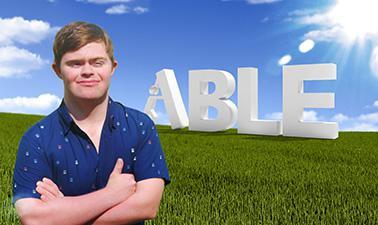
-The third module focuses on persons living with disabilities, evaluating the landmark Americans with Disabilities Act. We will also critique the processes of establishing a disability social insurance program and the public aid programs that make people with disabilities eligible for income support and health support.
-The final module begins with a report on the aging of the U.S. population. Building on this, we’ll examine social insurance programs and public aid programs for seniors for their long-term viability, and assess the various reforms that have been proposed to stabilize these programs.
Course 4 of 5 in the Social Policy for Social Services & Health Practitioners Specialization.

Syllabus

WEEK 1
Policies for Families and Children
In this module, the learner will differentiate the various needs of families raising children in the contemporary world and will compare various approaches to providing safety, stimulation and resources to the family. The module will examine childcare, employment and income supports

WEEK 2
Policies for Poor Families and Children
In this module, the learner will analyze the effects of poverty on the life and development of children. The module will examine safety net programs to address child and family poverty including: TANF, SNAP, WIC and the EITC

WEEK 3
Policies for Persons with Disabilities
In this module, the learner will evaluate US policy for people living with disabilities. The module will describe the civil protections for people with disabilities and will differentiate the major public programs that support people living with disabilities.

WEEK 4
Policies for Older Adults
This module will evaluate the population changes occurring in the aging US population and its implications for future social and health policy. The module will analyze the social insurance system for older Americans and will critique various solutions to addressing the graying of the US

Go to Class
MOOC List is learner-supported. When you buy through links on our site, we may earn an affiliate commission.

Related Courses

Power, Politics, and Influence at Work (FutureLearn) FutureLearn
University of Manchester

Power, Politics, and Influence at Work (FutureLearn)

Discover the causes of global employment inequalities, how workers gain a voice through unions, and the future of work itself. Help build workers’ rights and a better future for employment and society. With the world of work in unprecedented flux, the role of workers’ rights has never been more pressing, as society grapples with issues such as how to ensure better employment equity and safety.

May 2nd 2022
5-12 Weeks
Mécanique du point matériel (Coursera) Coursera
École Polytechnique Fédérale de Lausanne

Mécanique du point matériel (Coursera)

Pour illustrer les concepts introduits dans la première partie, on traite ici des problèmes pour lesquels le système mécanique peut être considéré comme un point matériel. Cette partie couvre notamment les problèmes à traiter en coordonnées cylindriques ou sphériques, le problème des orbites des planètes et les référentiels accélérés.

May 18th 2026
5-12 Weeks
Social Model of Disability (FutureLearn) FutureLearn
University of Leeds

Social Model of Disability (FutureLearn)

Explore the social model of disability and learn how to create a more equitable society with the University of Leeds. Gain an introduction to the social model of disability. The social model of disability is a way of viewing the world, developed by disabled people. On this two-week course, you’ll learn what disability is and learn to identify the barriers that disabled people face around the world.

Feb 16th 2026
2 Weeks
Providing Harm Reduction Services for Drug Users and Sex Workers (edX) EdX
ZHAWx,ZHAW Zurich University of Applied Sciences

Providing Harm Reduction Services for Drug Users and Sex Workers (edX)

Learn the professional and methodological competencies for working with drug users and sex workers according to the principles of human rights. Did you ever ask yourself how the perspective of substance users and sex workers differs from your own? How can drug consumption rooms work, or how can sex work be practised in a self-determined manner? These and other questions will be explored in the MOOC «Harm Reduction Services for Drug Users and Sex Workers».

Mar 4th 2024
5-12 Weeks
Through my Eyes – Intellectual Disability Healthcare around the World (edX) EdX
University of Queensland,UQx

Through my Eyes – Intellectual Disability Healthcare around the World (edX)

Learn, from personal stories, the daily life and challenges faced by those with intellectual disabilities. This health course focuses on the stories of people with intellectual disabilities around the world, as well as their families and supporters. You will learn about the challenges and aid received in healthcare for people with intellectual disabilities, including their experience of specific syndromes and communication difficulties, and how they stay healthy.

Self Paced
Self-Paced
La petite culture numérique : le développement du tout-petit à l'ère numérique (FUN) FUN
Université de Paris

La petite culture numérique : le développement du tout-petit à l'ère numérique (FUN)

Dans une démarche interdisciplinaire, le MOOC “La petite culture numérique : le développement du tout-petit à l’ère numérique” réunit de nombreux acteurs et actrices de la petite enfance (chercheur•e•s, professionnel.le.s de petite enfance, designers, acteurs et actrices politiques, etc). En cinq épisodes, ce MOOC questionne la relation du jeune enfant à la culture numérique et encourage l’éveil de l’esprit critique de chacun.e autour d’un sujet encore en pleine exploration. Plus qu’un simple partage de connaissances, il s’agit de créer avec tou.te.s les participant.e.s une communauté apprenante de la petite enfance au XXIème siècle.

Sep 30th 2021
5-12 Weeks
Essentials of child and adolescent psychiatry across the world (FUN) FUN
Université Paris-Saclay

Essentials of child and adolescent psychiatry across the world (FUN)

This MOOC, proposed by the IACAPAP (International Association for Child and Adolescent Psychiatry and Allied Professions), is intended for people who want to learn the most basic notions in child and adolescent psychiatry. The main disorders (depression, autism, attention deficit with hyperactivity disorder, etc.) are tackled, like more general topics (development, the psychiatric interview, treatments, etc.). Professors come from all the continents and try to give a comprehensive picture of child and adolescent psychiatry.

May 2nd 2022
5-12 Weeks
Disability and a Good Life: Working with Disability (FutureLearn) FutureLearn
UNSW Sydney - University of New South Wales

Disability and a Good Life: Working with Disability (FutureLearn)

Learn how disability intersects with human rights, and how a good life can be made possible for everyone. 20% of the global population has a disability, which means most of us will have an experience of disability in our lives, whether it be personally, through our family and friends, or in our workplaces and communities. But what is disability? It’s often assumed that people with disabilities can’t have a good life. But what is a good life?

No sessions available
5-12 Weeks
Babies in Mind: Why the Parent's Mind Matters (FutureLearn) FutureLearn
The University of Warwick

Babies in Mind: Why the Parent's Mind Matters (FutureLearn)

Find out how parents and caregivers influence children’s minds, from conception through infancy, with this free online course. This course will explore how the mind of the parent influences the developing mind of the child, from conception through infancy and into later life. We will take you on a journey that begins in pregnancy, exploring the importance of the ability of the mother-to-be to think about her baby while still in utero, alongside the impact of emotions such as anxiety and depression.

No sessions available
4 Weeks
Education for All: Disability, Diversity and Inclusion (FutureLearn) FutureLearn
University of Cape Town

Education for All: Disability, Diversity and Inclusion (FutureLearn)

Discover ways to make education more inclusive, especially in areas where resources are limited. Learn practical strategies for making education inclusive. Millions of children around the world are excluded from access to education because of a disability - robbing them of their potential and diminishing our society. On this course you will learn about inclusive education, understanding what barriers there are to learning and how to challenge them.

Jul 25th 2022
5-12 Weeks