Rust Fundamentals (Coursera)

Offered by Duke University,
Rust Fundamentals (Coursera)

This comprehensive Rust programming course welcomes learners of all levels, including beginners and those with some programming experience. No prior knowledge of Rust is required, making it accessible to coding novices. Throughout the course, you will gain a solid foundation in Rust programming and develop proficiency in advanced concepts, enabling you to write efficient, reliable, and high-performance code.

Class Deals by MOOC List - Click here and see Coursera's Active Discounts, Deals, and Promo Codes.

You will understand the core concepts and syntax of Rust, learn effective code organization, error handling techniques, and explore Rust's package manager for efficient project management. By completing this course, you will have the skills to develop reliable and high-performance applications, regardless of your prior programming experience.

What you'll learn

  • Apply Rust's core concepts like ownership, borrowing, and lifetimes to write efficient, reliable, and safe code.
  • Use Rust's advanced features like enums, structs, traits, and generics to build robust applications.
  • Develop, document, test and debug Rust projects using Cargo, Rust Analyzer, and other tools in the Rust ecosystem.

Syllabus

Installing Rust and Setting Up Your Text Editor
This week, you will learn how to optimize your Rust development workflow using powerful tools such as programming suggestions, prompts with Copilot, and GitHub Codespaces. By diving into the lessons on programming with suggestions, using prompts with Copilot, and exploring the fundamentals of Codespaces, you will acquire the skills to streamline your coding process and collaborate more efficiently with others.

Rust Fundamentals
This week, you will dive into the essential concepts of control flow, error handling, and functions in Rust programming. By exploring the lessons on conditional statements, loops (including the while and for loops), break and continue statements, match control flow, and error handling, you will gain a solid understanding of how to effectively control the flow of your code and handle errors. Additionally, you will explore the fundamentals of functions in Rust, including unit functions, return values, using arguments, and the borrowing concept.

Using Structs, Types, and Enums
This week, you will learn about various data structures and types in Rust. We'll cover defining structs, creating instances, and associated functions. Additionally, you'll explore string manipulation using String and str types. The course will also touch upon vectors, covering value retrieval and element addition. You'll gain familiarity with enums, including the Option enum and its applications, as well as using vectors with enums. Lastly, we'll focus on exhaustive matches for handling enum cases. Practical assessments throughout the course will reinforce your understanding of Rust's data structures and types.

Applying Rust
This week you will explore advanced topics related to code organization, testing, documentation, and library development. By delving into the lessons on verifying code with doctest, working with public and private modules, managing public and private fields, organizing test files, writing tests for your code, testing private code, using test failure messages effectively, and documenting your code, you will acquire the necessary skills to create robust and well-structured Rust projects.
Go to Class
MOOC List is learner-supported. When you buy through links on our site, we may earn an affiliate commission.

Related Courses

Software Testing for Developers (Coursera) Coursera
Codio

Software Testing for Developers (Coursera)

Code and run software tests websites without installing anything! This course is designed for learners who have some experience with JavaScript but a novice to software testing. The modules in this course covers the fundamentals of testing with Jest; popular testing paradigms like test-driven development, behavior-driven development, user accepting testing, etc.; and commonly used tools like JMeter, Postman, and Cucumber.

Sep 28th 2026
3 Weeks
Interprofessional Healthcare Informatics (Coursera) Coursera
University of Minnesota

Interprofessional Healthcare Informatics (Coursera)

Interprofessional Healthcare Informatics is a graduate-level, hands-on interactive exploration of real informatics tools and techniques offered by the University of Minnesota and the University of Minnesota's National Center for Interprofessional Practice and Education. We will be incorporating technology-enabled educational innovations to bring the subject matter to life. Over the 10 modules, we will create a vital online learning community and a working healthcare informatics network.

Oct 12th 2026
5-12 Weeks
Learn Software Testing Certification course (Eduonix) Eduonix
Eduonix Learning Solutions Pvt. Ltd.

Learn Software Testing Certification course (Eduonix)

Software Testing is one of the most important and critical component of Software development life cycle. The testing team is ultimately responsible of Software quality and forms the bedrock before it goes out to actual users and to market place. Over the years with innovative development techniques the software testing and quality assurance field has undergone a sea change. With new techniques like TDD(Test driven development) taking hold in industry the software developers must understand the nuances of new approaches to software quality. This is a free course with a MOOC List coupon.

Self Paced
Self-Paced
Software Analysis & Testing (Udacity) Udacity
Georgia Institute of Technology,Udacity

Software Analysis & Testing (Udacity)

This course covers the theory and practice of software analysis, which lies at the heart of many software development processes such as diagnosing bugs, testing, debugging, and more. It presents diverse techniques, each with their own strengths and limitations, for automating tasks such as testing, debugging, and finding bugs in complex real-world programs. These techniques include dataflow analysis, constraint-based analysis, type systems, model checking, symbolic execution, and more. The course teaches the principles underlying these techniques as well as imparts hands-on experience with using and implementing tools based on these techniques.

Self Paced
Self-Paced
Automation in the AWS Cloud (Coursera) Coursera
AWS

Automation in the AWS Cloud (Coursera)

Automation in the Cloud can simplify processes, enable agility and scalability, and help you deploy faster. But how should you master these topics to enhance your career potential? The course kicks off by introducing automation in the cloud, comparing the differences between on-premises and cloud. We'll answer why automation is so powerful and you'll get hands-on by working with AWS CLI.

Sep 21st 2026
3 Weeks
Software Engineering: Implementation and Testing (Coursera) Coursera
The Hong Kong University of Science and Technology - HKUST

Software Engineering: Implementation and Testing (Coursera)

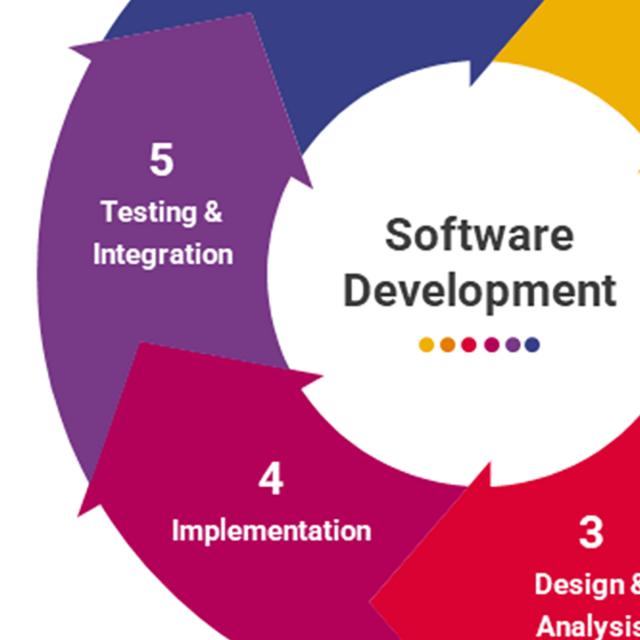
Software Development Life Cycle (SDLC) is the process of developing software through planning, requirement analysis, design, implementation, testing, and maintenance. This course focuses on the implementation and testing phases of SDLC, and you will examine different software development processes for large software systems development, and understand the strengths (pros) and weaknesses (cons) of different software development processes.

Sep 28th 2026
5-12 Weeks
DevOps on AWS and Project Management (Coursera) Coursera
AWS

DevOps on AWS and Project Management (Coursera)

Curious about how software gets built, tested, and deployed? Do you wonder how a team of multiple people work on a code base? You've heard about DevOps, but are you sure you understand what it means? If you've wondered about these questions, this course is for you. We’ll cover the basic steps you need to take to dive into the wonderful world of DevOps and project management.

Sep 21st 2026
4 Weeks
Intellectual Humility: Theory (Coursera) Coursera
University of Edinburgh

Intellectual Humility: Theory (Coursera)

Faced with difficult questions people often tend to dismiss and marginalize dissent. Political and moral disagreements can be incredibly polarizing, and sometimes even dangerous. And whether it’s Christian fundamentalism, Islamic extremism, or militant atheism, religious dialogue remains tinted by arrogance, dogma, and ignorance. The world needs more people who are sensitive to reasons both for and against their beliefs, and are willing to consider the possibility that their political, religious and moral beliefs might be mistaken. The world needs more intellectual humility.

Sep 28th 2026
3 Weeks