EdX

Question Reality! Science, philosophy, and the search for meaning (edX)

Offered by DartmouthX,
Question Reality! Science, philosophy, and the search for meaning (edX)

What is reality? Explore how physics and philosophy have changed our perspective on the nature of the universe, matter, and mind over time. How much can we know of the physical world? Can we know everything? Or are there fundamental limits to how much we can explain? If there are limits, to what extent can we explain the nature of physical reality? RealityX investigates the limits of knowledge and what we can and cannot know of the world and ourselves.

Class Deals by MOOC List - Click here and see EdX's Active Discounts, Deals, and Promo Codes.

We will trace the evolution of ideas about the nature of reality in philosophy and the natural sciences through the ages. Starting with the philosophers of Ancient Greece and ending with cutting edge theories about the universe, quantum physics, and the nature of consciousness.

Learners who complete this course will be able to:
A. Communicate with others about the latest scientific discoveries in various disciplines including cosmology, quantum physics, mathematics, machine intelligence and cognitive science.
B. Identify key points in history where scientific advances changed humanity’s philosophy and understanding of the nature of reality and our place in the Universe.
C. Reflect on and examine their own worldview and identify if any changes occurred during this course.
D. Confidently argue about scientific evidence, philosophical viewpoints, and others’ interpretations of both.
E. Demonstrate how the scientific method works, its limitations, and how scientists use it to construct knowledge about physical reality.
Join world-renowned physicist and author Marcelo Gleiser and leading experts as we explore how philosophers and physicists from Plato to Einstein and many others have attempted to explain the nature of the world and of reality.
This course will be offered in both English and Portuguese. Videos will have subtitles,discussions will be supported in both languages, as will all assignments.

What you'll learn:

  • The latest scientific discoveries in cosmology, quantum physics, and cognitive science.
  • How scientific ideas about the nature of reality changed over time.
  • How to reflect on and examine your worldview.
  • How to argue about scientific evidence and philosophical viewpoints.
  • How the scientific method is used it to describe the world.
Go to Class
MOOC List is learner-supported. When you buy through links on our site, we may earn an affiliate commission.

Related Courses

Fundamentos de Mecánica para Ingeniería (edX) EdX
Universitat Politècnica de València,UPValenciaX

Fundamentos de Mecánica para Ingeniería (edX)

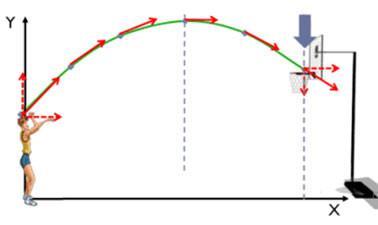
Estudiaremos la cinemática y la dinámica del punto, los conceptos de trabajo y potencia y la energía mecánica. Se aborda el estudio del universo físico analizando objetos en movimiento. Se definen y analizan todas las magnitudes y leyes físicas que permiten describir geométrica y causalmente el movimiento de cuerpos representados por un punto.

Self Paced
Self-Paced
Super-Earths And Life (edX) EdX
HarvardX,Harvard University

Super-Earths And Life (edX)

Learn about the Earth, life, and how we can search for life elsewhere in the universe. Are we alone in this universe? What new information and observations on exoplanets have we discovered? In the past decade, astronomers have made incredible advances in the discovery of planets outside our solar system. Thirty years ago, we knew only of the planets in our own solar system. Now we know of thousands circling nearby stars.

Self Paced
Self-Paced
Cavity Quantum Optomechanics (edX) EdX
École Polytechnique Fédérale de Lausanne,EPFLx

Cavity Quantum Optomechanics (edX)

Fundamentals of optomechanics. Basic principles, recent developments and applications. Optomechanics is the study of the interaction between light and mechanical systems which can result in the manipulation of the state of both light and the mechanics. The nature of this interaction gives rise to a wide range of applications in both fundamental physics and technological advancements. In this course, you will learn the concepts and tools required for conducting research in the field of cavity optomechanics.

Self Paced
Self-Paced
Advanced Transport Phenomena (edX) EdX
Delft University of Technology,DelftX

Advanced Transport Phenomena (edX)

Learn how to tackle complex mass and heat transfer problems and apply the results in your own environment. How can you reduce the energy loss of your home? What is the underlying science of energy loss in pipes? Which heat and mass transfer problems do we have to tackle to make consumer products? In this engineering course, you will learn about the engineering principles that play an important role in all of these and more phenomena. You will learn about microbalances, radiation, convection, diffusion and more and their applications in everyday life.

Self Paced
Self-Paced
Introduction to Quantum Computing for Everyone (edX) EdX
University of Chicago,UChicagoX

Introduction to Quantum Computing for Everyone (edX)

This first course in quantum computing is for novices and requires learners to have only basic algebra. It covers the future impacts of quantum computing, provides intuitive introductions of quantum physics phenomenon, and progresses from single operations to a complete algorithm. Quantum computing is coming closer to reality, with 80+ bit machines in active use. This course provides an intuitive introduction to the impacts, underlying phenomenon, and programming principles that underlie quantum computing.

Self Paced
Self-Paced
The Quantum Internet and Quantum Computers: How Will They Change the World? (edX) EdX
Delft University of Technology,DelftX

The Quantum Internet and Quantum Computers: How Will They Change the World? (edX)

Discover quantum computers and the quantum internet. Learn the principles and promises behind these developments and how they will impact our future. There is no doubt that quantum computers and the quantum internet will have a great impact on our world. But we don’t yet know quite how. As with traditional computers - we will only see the effects in the decades to come.This course will provide you with a basic understanding of quantum computing and the quantum internet. Together, we’ll peek into the fascinating world of quantum phenomena, such as qubits, superposition, and entanglement.

Self Paced
Self-Paced
Advanced statistical physics (edX) EdX
École Polytechnique Fédérale de Lausanne,EPFLx

Advanced statistical physics (edX)

We explore statistical physics in both classical and open quantum systems. Additionally, we will cover probabilistic data analysis that is extremely useful in many applications. This course covers non-equilibrium statistical processes and the treatment of fluctuation dissipation relations by Einstein, Boltzmann and Kubo. Moreover, the fundamentals of Markov processes, stochastic differential and Fokker Planck equations, mesoscopic master equation, etc will be treated in detail. Prior knowledge of statistical physics is highly recommended but not required.

Self Paced
Self-Paced
Science & Cooking: From Haute Cuisine to Soft Matter Science (chemistry) (edX) EdX
HarvardX,Harvard University

Science & Cooking: From Haute Cuisine to Soft Matter Science (chemistry) (edX)

Top chefs and Harvard researchers explore how everyday cooking and haute cuisine can illuminate basic principles in chemistry, physics, and engineering. Learn about food molecules and how chemical reactions can affect food texture and flavor. During each module of this course, chefs reveal the secrets behind some of their most famous culinary creations — often right in their own restaurants. Inspired by such cooking mastery, the Harvard team will then explain the science behind the recipe.

Self Paced
Self-Paced
The Einstein Revolution (edX) EdX
HarvardX,Harvard University

The Einstein Revolution (edX)

Traces Albert Einstein’s engagement with relativity, quantum mechanics, Nazism, nuclear weapons, philosophy, the arts, and technology. Albert Einstein has become the icon of modern science. Following his scientific, cultural, philosophical, and political trajectory, this course aims to track the changing role of physics in the 20th and 21st centuries.

Self Paced
Self-Paced