Programacion para todos con Scratch (UOC)

Programacion para todos con Scratch (UOC)

Consiste en la introducción al software Scratch y los fundamentos del construccionismo y el pensamiento computacional. El curso empieza con una introducción sobre los fundamentos de Scratch: el construccionismo y el pensamiento computacional. A partir de ahí el curso es muy práctico, se explica el funcionamiento básico de Scratch y se descubren todas sus potencialidades a partir de actividades guiadas.

Además de aprender a usar Scratch, a lo largo del curso se verán herramientas que permitirán la introducción a niños y niñas el uso de Scratch como formador de una manera casi autónoma y se realizarán diferentes actividades para trabajar los conceptos aprendidos en el curso. También se mostrará cómo puede usarse Scratch para interactuar con diferentes dispositivos físicos, así como otros entornos de programación similares a Scratch que pueden usarse tanto en un aula como en casa.
Índice de contenidos:

  • Antecedentes de Scratch: Logo y construccionismo.
  • Scratch y el pensamiento computacional.
  • Introducción a Scratch.
  • Primeros pasos con Scratch.
  • Scratch Cards.
  • Aprendiendo Scratch por proyectos.
  • Conectar Scratch con el mundo físico.
  • Programar después de Scratch.
Note: This course is currently not available.

Related Courses

Learn to teach with automatic assessments (JuezLTI) Other Providers
C.I.F.P. Carlos III,Karlstad University,Bursa Il Milli Egitim Mudurlugu,INESTEC,Entornos de Formación - EDF

Learn to teach with automatic assessments (JuezLTI)

Come and join teachers around the world and learn how to teach with automatic programming assessments using JuezLTI. JuezLTI is a tool to support computer science teaching, and allows the automatic assessment of programming exercises, databases and markup languages. In this course you will learn how to setup the LTI tool in your LMS, how to create exercises or import them from Authorkit and discuss with other teachers around the world how to integrate it in your teaching. The course is aimed at teachers programming teachers in vocational schools or higher education institutions.

Nov 14th 2022
4 Weeks
Big Data Analysis with Scala and Spark (Coursera) Coursera
École Polytechnique Fédérale de Lausanne

Big Data Analysis with Scala and Spark (Coursera)

Manipulating big data distributed over a cluster using functional concepts is rampant in industry, and is arguably one of the first widespread industrial uses of functional ideas. This is evidenced by the popularity of MapReduce and Hadoop, and most recently Apache Spark, a fast, in-memory distributed collections framework written in Scala. In this course, we'll see how the data parallel paradigm can be extended to the distributed case, using Spark throughout.

Oct 12th 2026
4 Weeks
Program Arcade Games - Learn Computer Science (Simpson College) Other Providers
Simpson College

Program Arcade Games - Learn Computer Science (Simpson College)

This is a first semester course in learning how to program. Are you here because you want to create your own games? Excellent! But you might soon find that this looks like work. We all know we'd rather skip work and go farming for gold in WoW or Eve or some other game, right? So why learn to program? What does a person get out of it?

Self Paced
Self-Paced
COBOL Programming with VSCode (Coursera) Coursera
IBM

COBOL Programming with VSCode (Coursera)

Professor Tak Auyeung of American River College, said it beautifully, “A programming language is not a fashion statement” it is used for a purpose. Whether it is to add new features, modify logic, create APIs to integrate it into other applications, or implement modern development practices, businesses around the world need application developers who know COBOL.

Oct 12th 2026
3 Weeks
Programming Languages, Part A (Coursera) Coursera
University of Washington

Programming Languages, Part A (Coursera)

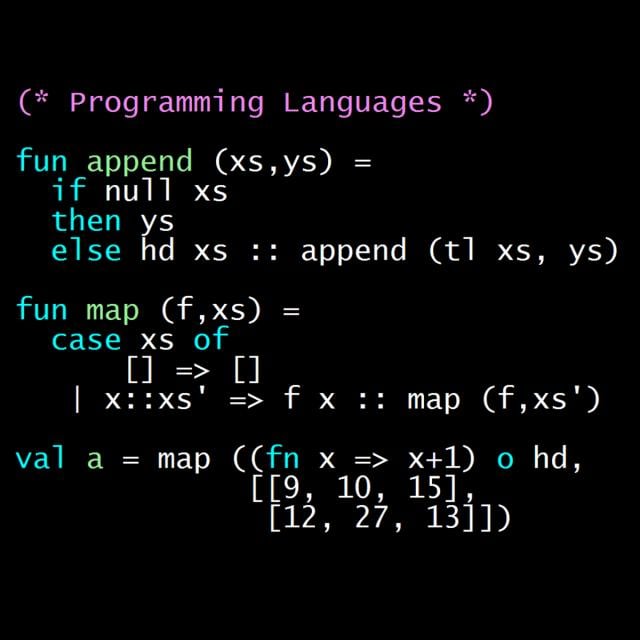
This course is an introduction to the basic concepts of programming languages, with a strong emphasis on functional programming. The course uses the languages ML, Racket, and Ruby as vehicles for teaching the concepts, but the real intent is to teach enough about how any language “fits together” to make you more effective programming in any language -- and in learning new ones.

Oct 5th 2026
5-12 Weeks
City Design (Stepic) Other Providers
Stepic

City Design (Stepic)

City Design online course shows the fundamentals of city planning, building and exploitation via funny short video lectures (like the one above) and a variety of brief assignments for self-control. It is ideal for people who want to know about designing the cities before starting professional readings or to draw inspiration.

Mar 1st 2014
5-12 Weeks
Learn HTML and CSS (Coursera) Coursera
Scrimba

Learn HTML and CSS (Coursera)

This course is perfect if you want to learn how to code websites from scratch. You will learn the basics of HTML and CSS through interactive challenges. Along the way, you will build multiple projects, like a Google.com clone, a Space Exploration page, and a fun birthday site filled with GIFs. While most of the challenges are done in Scrimba's interactive editor, you will also learn how to use professional tools like VS Code for code editing, GitHub for hosting your code, and Netlify for deploying your projects to the world wide web.

Oct 12th 2026
5-12 Weeks
Learn Imba (Coursera) Coursera
Scrimba

Learn Imba (Coursera)

In this class, you'll dive into Imba, the programming language used to build scrimba.com. Imba, a compile-to-JavaScript language, packs a punch with nifty features for whipping up web apps, including built-in tags and styles. We'll cover the ABCs of Imba syntax and work on creating a Dopamine Box app. By the finish line, you'll be armed with the skills to construct your very own web app UI using Imba.

Oct 12th 2026
1 Week
Principles of Computing (Part 2) (Coursera) Coursera
Rice University

Principles of Computing (Part 2) (Coursera)

This two-part course introduces the basic mathematical and programming principles that underlie much of Computer Science. Understanding these principles is crucial to the process of creating efficient and well-structured solutions for computational problems. To get hands-on experience working with these concepts, we will use the Python programming language. The main focus of the class will be weekly mini-projects that build upon the mathematical and programming principles that are taught in the class.

Oct 5th 2026
4 Weeks